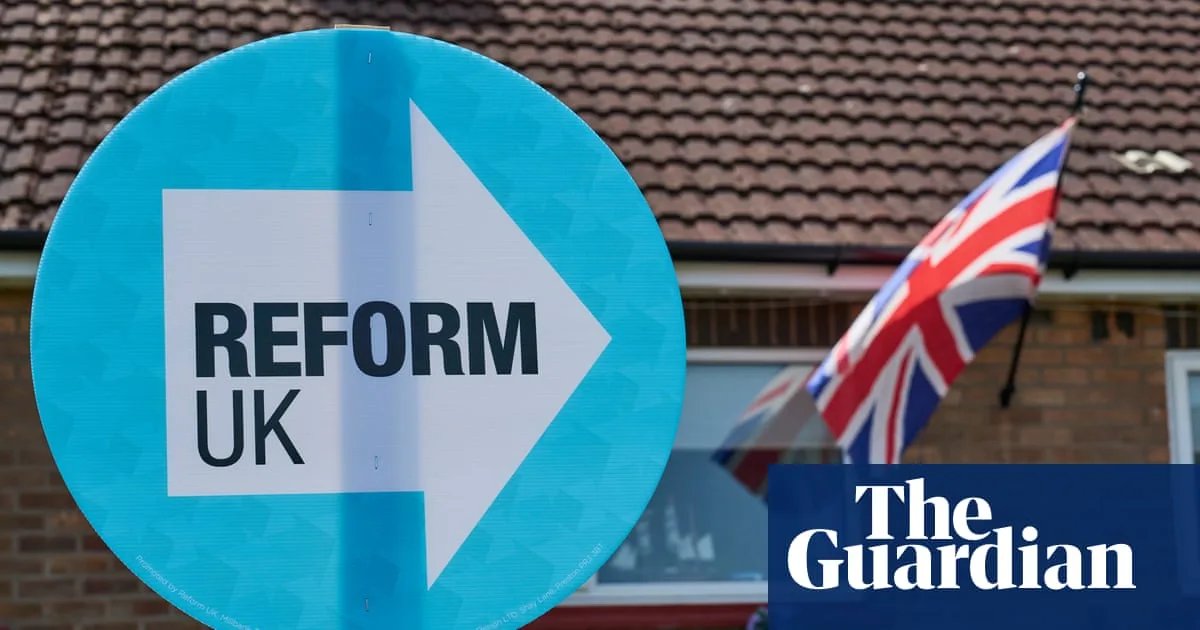
Reform UK's Electoral Setback Signals a More Aggressive Political Strategy Ahead
Reform UK's Setback Signals Aggressive Strategy Ahead

Reform UK Faces Electoral Turmoil, Prompting Calls for Voting Reform

The recent by-election outcomes in Gorton and Denton have placed Reform UK in significant political difficulty, suggesting the party may adopt increasingly combative tactics as a result. These results should compel the Government to seriously consider implementing an alternative vote system before the next general election, or risk descending into electoral chaos, as noted by commentator David Aaronovitch.

By-Election Analysis: Protest Votes Versus Historic Shifts

In the lead-up to the Gorton and Denton by-elections, a key debate emerged among political observers: would a victory by the Greens or Reform UK pose a greater threat to Labour? Some argued that a Green win could signal the rise of a viable left-wing alternative, potentially splitting or even replacing Labour, reminiscent of Labour's eclipse of the Liberals in 1922. Others, including Aaronovitch, contended that a Reform victory might inject new momentum into the party's bid to become the governing force at the next general election, whereas a Green triumph could merely represent a fleeting protest vote.

This perspective likely resonates with the remaining Conservatives, who breathed a sigh of relief at Reform candidate Matt Goodwin's defeat. By-elections often generate more hysteria than history, and their outcomes rarely predict future electoral trends. For instance, the SDP's 1981 Crosby by-election win did not break the political mould, and Prime Minister Margaret Thatcher went on to secure a landslide victory in the subsequent election. Similarly, Labour's 2021 Hartlepool by-election loss did not spell the end for Keir Starmer's leadership.

Wide Pickt banner — collaborative shopping lists app for Telegram, phone mockup with grocery list

The pragmatic reality is that governments are chosen only at general elections. The loss of Gorton has minimal impact on Labour's parliamentary majority, and barring a party split, the next election is not mandated until mid-2029. Voters in recent local elections, such as those in Kent, Warwickshire, Leicestershire, and Durham, are now grappling with the consequences of electing Reform councils, highlighting the distinction between protest voting and wielding actual power. Similar reflections may arise regarding Green councils after upcoming local elections.

Gorton's Significance: A Protest Vote in Context

In the age of social media, commentators often exaggerate results as epochal rather than merely interesting. However, the Gorton outcome, occurring three years before a national vote, is a classic example of a protest vote. Unlike Reform UK, many voters remain unclear about the Greens' policies, and few anticipate them forming a government. In Gorton, an area with one of Britain's largest Muslim populations, the Gaza conflict reportedly played a more prominent role in the campaign than climate change, raising questions about the Greens' core purpose. If their polling strength persists, substantive scrutiny of their platform may follow.

For Reform UK, the party secured second place in a seat that posed challenges due to its demographic makeup, where some supporters advocate for deportations. Initially confident of victory, Reform now alleges electoral irregularities involving Muslim voters, echoing Trump-style complaints without formal investigations. This adds to growing perceptions, supported by polls, that Reform may have reached its peak popularity.

Labour's Position and Leadership Dynamics

Labour currently faces political doldrums, but its future trajectory hinges on internal decisions. Starmer is unlikely to step down unless pressured by cabinet colleagues or personal choice. Deputy Leader Angela Rayner's call for bolder government action does not equate to a leadership coup. An imminent leadership contest would be counterproductive, as any successor would confront the same challenges Starmer faces, with no easy solutions despite abundant political promises. A prudent potential candidate might wait another 18 months, hoping to convince Starmer he has fulfilled his duty.

Pickt after-article banner — collaborative shopping lists app with family illustration

In the medium term, signs of an economic upturn offer some hope, though its sufficiency to revive Labour's fortunes remains uncertain. To move beyond superficial horse-race politics, the broader issue is the electoral system's inability to accommodate voters' resistance to two-party politics. In 2024, it produced Labour's disproportionately large majority, and by 2029, it could result in the election of a government least preferred by most voters.

Urgent Need for Electoral Reform

Fifteen years ago, a poorly executed referendum on changing the voting system, involving figures like Nick Clegg, David Cameron, and Ed Miliband, led to the rejection of the alternative vote (AV), which allows vote transfers based on preferences. Labour now has an opportunity to demonstrate courage by using its majority to introduce AV for the 2029 election. Failure to act could precipitate political chaos, underscoring the urgency of electoral reform to ensure fair representation and stability in British politics.