Trump's Calculated 'Unstable' Persona Aimed at Iran Negotiations
A new report from The Wall Street Journal reveals that President Donald Trump intentionally crafted an image of instability and insult toward Iran, believing this controversial approach would compel the nation to negotiate an end to the ongoing conflict. According to administration officials who spoke with the publication, Trump thought appearing dangerously off-kilter would make Iranian leaders hasten to the bargaining table.
Controversial Social Media Posts as Strategic Tools
The unorthodox tactics reportedly manifested in a series of inflammatory social media posts this month concerning the vital Strait of Hormuz. In one particularly striking message on April 5, the president commanded Iran to "open the F***in' Strait, you crazy b*******, or you'll be living in Hell," concluding with the unexpected phrase "Praise be to Allah."
Another post on April 7 contained an even more dire threat, warning that "a whole civilization will die tonight" unless Iran agreed to open the strategic waterway. Remarkably, a two-week ceasefire was announced that very evening, less than ninety minutes before Trump's stated deadline expired.

Internal Reactions and Strategic Rationale
When questioned by an adviser about his unusual messaging, Trump reportedly explained that he had personally devised the idea to include religious references like praising Allah specifically to appear offensive and unfiltered. He believed this type of language would resonate with Iranian leadership and prompt them to respond.
The president later inquired about how his gambit was "playing," according to the Journal's sources. Secretary of State Marco Rubio reportedly told associates privately that the president's provocative language might actually succeed in bringing Iran to negotiations.
However, not all administration officials were aware of or approved these tactics. Some of the posts were made without the knowledge of the national security team and did not form part of any formal security plan, an administration official revealed.
Bipartisan Criticism and International Response
The president's posts sparked outrage across the political spectrum, alienating even some of his traditional defenders in conservative media. Senate Minority Leader Chuck Schumer declared at the time, "This is an extremely sick person." Former Republican congresswoman Marjorie Taylor Greene wrote on social media, "We cannot kill an entire civilization. This is evil and madness."
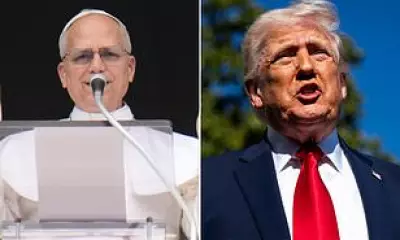
The conflict inspired Pope Leo to issue an Easter message calling for peace, which prompted a furious backlash from the White House. "Let those who have weapons lay them down!" the first American Pope told worshippers in Vatican City. "Let those who have the power to unleash wars choose peace!"
Uncertain Future as Ceasefire Nears Expiration
With the temporary ceasefire set to expire and Iran once again closing the Strait of Hormuz, the future of the conflict appears deeply uncertain. On Saturday, Tehran declared the recently reopened strait was closed again, while tankers approaching the vital waterway reported facing attacks.
Iran stated it would continue blocking the strait as long as the U.S. maintains its blockade of Iranian ports. Although a related ceasefire between Israel and Lebanon reached on Friday appears to be holding, the U.S.-Iran agreement expires next week with no clear progress visible.
Mohammad Bagher Ghalibaf, Iran's parliamentary speaker and top negotiator, said on state television that the U.S. and Iran remain far from a final agreement. White House Press Secretary Karoline Leavitt defended the administration's approach, telling the Journal that President Trump "remained a steady leader our country needs" while accomplishing the goal of denying Iran nuclear weapons capability.
Despite the diplomatic challenges, White House officials maintain hope that a "breakthrough" in negotiations could emerge in the coming days, according to the Journal's reporting.