Reform UK Elite Gather for Controversial Book Launch in London
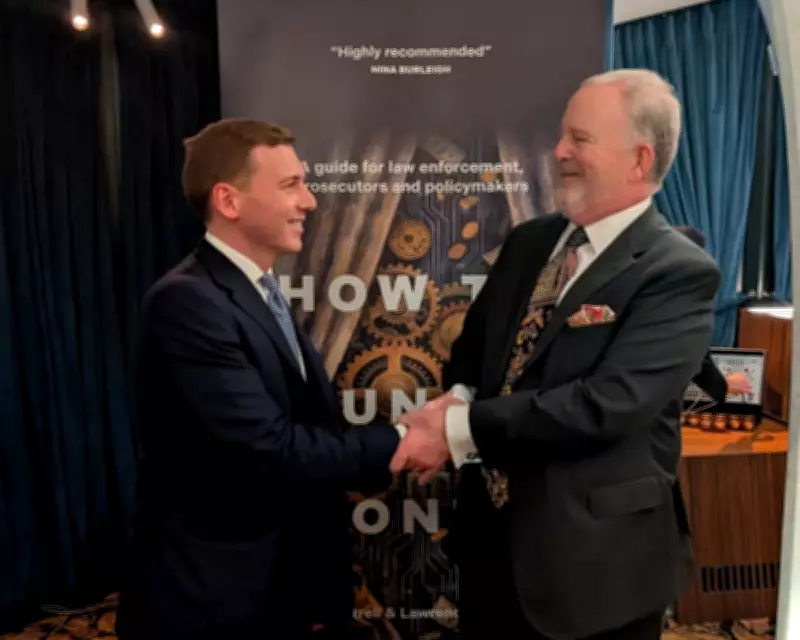
Senior figures from Reform UK, including the party leader Nigel Farage, were present at the launch event for the new book titled How to Launder Money. The gathering took place at the luxurious Raffles hotel on Whitehall in London, drawing attention due to the provocative nature of the publication and its connections to political circles.
Authors with Noteworthy Backgrounds
The book is co-authored by George Cottrell and Lawrence Burke Files. Cottrell, a close aide to Nigel Farage, has a controversial past, having served several months in a United States prison after being convicted of wire fraud in 2017. At the launch party, Cottrell humorously referenced this period, noting that his research for the book involved insights that are, in part, documented by the FBI.
Lawrence Burke Files brings over four decades of experience in finance, primarily as an investigator and expert in due diligence, including a former role as director of corporate finance at American National investment bank.

High-Profile Attendees and Political Connections
The event was attended by numerous prominent Reform UK members, such as MP Richard Tice, party treasurer Nick Candy, and London mayoral candidate Laila Cunningham. Other notable guests included GB News presenter and former Brexit party MEP Martin Daubney, as well as James Orr, a Cambridge University philosophy professor and senior adviser to Farage.
In his remarks, Cottrell clarified that the book does not aim to assist criminals, stating, "There's nothing in this book that will assist money launderers or criminals." He added a lighthearted comment about his extensive research, much of which is held by federal authorities.
Book Content and Critical Perspectives
Published by Biteback, which is owned by Lord Ashcroft, the book is subtitled A Guide for Law Enforcement, Prosecutors and Policymakers. Its promotional text describes it as offering an inside story from criminals who already understand money laundering techniques.
In the introduction, the authors criticize anti-money laundering laws as "a convoluted failure" that burdens legitimate businesses. They argue that de-banking practices have evolved from addressing money-laundering risks to being influenced by social belief systems, citing Nigel Farage's experience with Coutts bank as an example of how politically exposed persons are affected.
Legal and Personal Histories Explored
The book delves into Cottrell's personal history, noting his early exposure to finance and subsequent political involvement. It details his arrest in 2016 by IRS officers at the Republican National Convention, where he was with Farage and other British Brexiteers. Cottrell served eight months in prison, with most charges dropped as part of a plea deal where he provided information to federal agents.
Since his release, Cottrell has worked as an international political consultant, engaged in philanthropy, and managed his political consultancy, Geostrategy.com.
Authors' Intentions and Broader Implications
Lawrence Burke Files explained to the Guardian that the book aims to foster a conversation about money laundering by sharing knowledge that criminals already possess with law enforcement and the public. He stated, "It's also a call to review the failures and perverse impacts they have had on people, finance and international development. We hope it will be a catalyst to start the discussions to make a difference."
The authors emphasize that they are not endorsing crime but rather seeking to highlight systemic issues in financial regulations and enforcement.