UK Parliament to Debate Motion for Release of Prince Andrew's Confidential Documents
The United Kingdom Parliament is poised to engage in a significant debate on Tuesday, addressing calls for enhanced accountability from a prominent member of the royal family. This development follows the recent arrest of the former Prince Andrew and his documented connections to the convicted sex offender Jeffrey Epstein, compelling British society to critically reassess its traditional deference toward the monarchy.
Motion Calls for Transparency in Trade Envoy Appointment
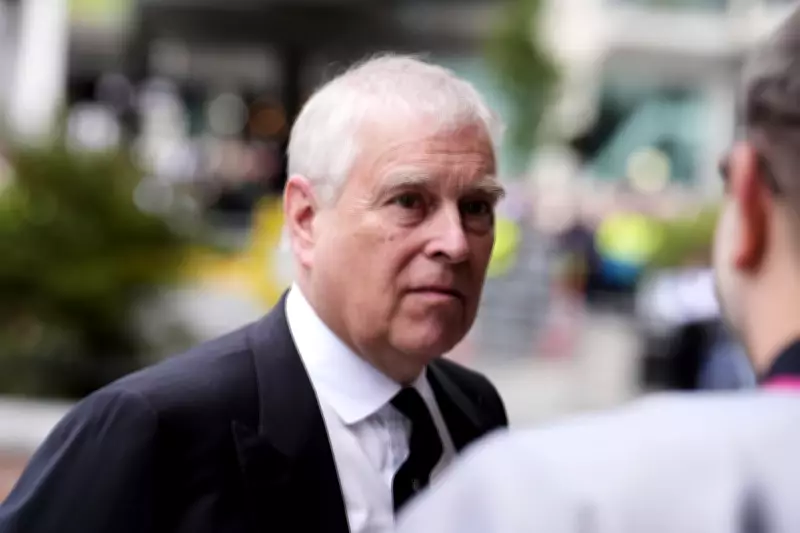
Lawmakers will confront this contentious issue directly when they consider a parliamentary motion demanding the disclosure of confidential documents pertaining to Andrew's appointment as Britain's special envoy for international trade in 2001. The younger brother of King Charles III, who was stripped of his princely title last year due to revelations about his relationship with Epstein, was arrested last week on suspicion of misconduct in public office.
The allegations suggest that Andrew shared confidential documents with Epstein during his tenure as trade envoy. Now known as Andrew Mountbatten-Windsor, he was released without charge, though investigations continue. This parliamentary debate represents a notable departure for the House of Commons, where historical rules have traditionally prohibited members of Parliament from criticizing royal family members.

Liberal Democrats Push for Accountability
Ed Davey, leader of the Liberal Democrats and the lawmaker who introduced the motion, aims to challenge this longstanding convention. "One thing the Liberal Democrats stand for is to hold the powerful to account," Davey stated in an interview with the BBC. "And I think we've seen too often in the past that people, because of their title or their friends or whatever, have not been properly held to account."
The timing of this debate coincides with the U.S. Justice Department's release of millions of pages of documents related to Epstein, revealing how the wealthy financier leveraged an international network of affluent and influential associates to gain power and sexually exploit young women. The repercussions have resonated particularly strongly in the UK, where the scandal has prompted serious questions about power dynamics within the aristocracy, senior political circles, and influential business sectors collectively known as "the Establishment."
Broader Investigations and Arrests
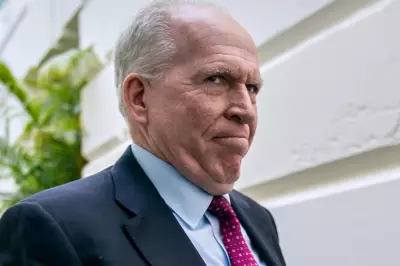
In related developments, British police arrested Peter Mandelson on Monday, a former government minister who later served as ambassador to the United States. Mandelson was detained on suspicion of misconduct in public office, linked to allegations that he also shared confidential information with Epstein. After more than nine hours of questioning, he was released early Tuesday morning without charge, with investigations ongoing.
Both Mountbatten-Windsor and Mandelson have previously denied any wrongdoing, though neither has spoken publicly about the current investigations. Epstein died in custody in 2019 while awaiting trial on sex trafficking charges. For the House of Windsor, Tuesday's parliamentary debate reflects an escalating crisis that shows no signs of diminishing.
Monarchy's Response and Public Scrutiny
Buckingham Palace has attempted to insulate the monarchy from the scandal by drawing a clear distinction between Mountbatten-Windsor and the rest of the royal family. In addition to removing his royal titles, King Charles compelled his brother to vacate the 30-room estate near Windsor Castle where he had resided rent-free for over two decades.
However, these measures may prove insufficient to quell mounting demands for systemic change. The campaign group Republic, which has long advocated for replacing the monarchy with an elected head of state, has emerged as one of the most vocal proponents of reform.

Constitutional Implications and Historical Parallels
While the UK's constitutional monarchy no longer exercises direct political power, it retains substantial influence at the pinnacle of British society. The king serves as a symbol of continuity, acting as head of state for Britain and fourteen other independent nations with historical ties to the former British Empire. Working members of the royal family support this role through hundreds of annual public appearances, visiting charities, military bases, and community organizations that continue to seek their engagement.
Commentators have drawn parallels between the current pressures facing the House of Windsor and the 1936 abdication crisis, when King Edward VIII relinquished the throne to marry American divorcee Wallis Simpson. Royal historian Anna Whitelock noted in the Sunday Times, "Unlike the last significant family crisis of the modern monarchy, the abdication of 1936, this is not an immediate matter of constitutional crisis, yet its implications may well prove more significant for the monarchy, and so they should. It is the last of our public institutions to face the full glare of public scrutiny, with questions raised about its role, purpose, governance, financing and accountability."