Papal Pardon Scandal: How Pope Francis's Visit Triggered Orban's Downfall
Papal Visit Scandal Led to Orban's Crushing Defeat in Hungary

The Unravelling of Viktor Orbán: A Papal Visit's Unforeseen Consequences

Political analysts examining the crushing defeat of Viktor Orbán's right-wing government in Hungary's recent election have identified multiple factors, including his antagonism toward the European Union, close ties to Vladimir Putin, failure to engage younger voters, and widespread perceptions of political corruption. However, these elements were equally present during Orbán's decisive victory in the 2022 election, which solidified his seemingly unassailable position.

A Stronger Position Undermined

Paradoxically, Orbán entered the 2026 election cycle in a potentially stronger political stance than in 2022, with an ally in the White House—Donald Trump—rather than a foe like Joe Biden. Even a last-minute campaign rally featuring U.S. Vice President J.D. Vance, though polls suggested it may have backfired, underscored his international connections. The critical question remains: what changed in the four years since Fidesz nearly obliterated the opposition?

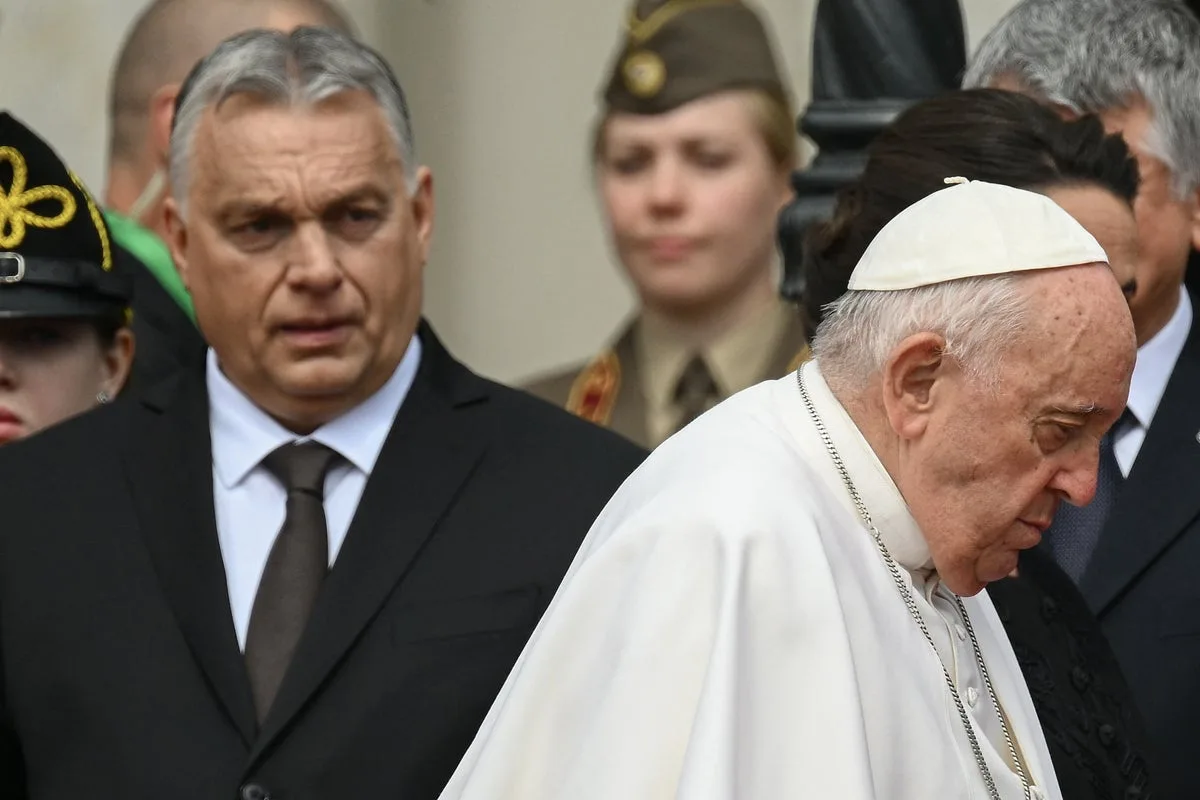
The answer lies in an unexpected catalyst: the official visit of Pope Francis to Hungary in April 2023. Intended as a crowning endorsement of Orbán's Catholic, pro-family, and anti-LGBTQ+ policies, the visit instead ignited a scandal that exposed deep-seated corruption within Fidesz and ultimately propelled Péter Magyar to replace Orbán as prime minister.

Wide Pickt banner — collaborative shopping lists app for Telegram, phone mockup with grocery list

An Unlikely Diplomatic Endeavour

Pope Francis's trip to Hungary was politically improbable, given the stark ideological differences between the pontiff and Orbán, particularly on migration. Yet, Francis held a personal affinity for Hungary, stemming from his time as head of the Jesuits in Argentina, where he befriended Hungarian nuns who fled after the 1956 uprising and learned their language.

Orbán's skilled ambassador to the Holy See, Eduard Habsburg—a descendant of the Austro-Hungarian royal family—fostered a warm relationship with the Pope. This diplomacy had previously facilitated a surprising alliance with the late Pope in seeking a peaceful resolution to the Ukraine war, rather than supporting military actions.

The Clemency Scandal and Its Fallout

While the visit itself was successful, its aftermath catastrophically loosened Orbán's iron grip on power. In an effort to align with Pope Francis's theme of mercy, the Hungarian government granted clemency to 25 criminals. This decision proved politically disastrous when it emerged that one pardoned individual was Endre Kónya, former deputy director of the Kossuth Zsuzsa Children's Home in Bicske, who had intimidated children into withholding evidence of sexual abuse and paedophilia to protect his superior.

Public outrage erupted, with reports indicating that the pardon resulted from pressure by Zoltán Balog, a former archbishop turned politician and Orbán ally. The scandal forced the resignation of two key female figures in Fidesz: Katalin Novák, Hungary's president and a potential heir to Orbán, who had granted the clemency, and Judit Varga, the justice minister who presented the pardon list. Both were compelled by Orbán to resign in early 2024, ending their political careers and marking the beginning of his rapid decline.

Péter Magyar's Ascent and Coalition Building

The resignations had immediate repercussions, particularly regarding Varga. At the time, she was spearheading efforts to form a right-wing, anti-EU coalition for the European Parliament elections, collaborating with parties like Giorgia Meloni's Fratelli d'Italia. Her removal derailed these initiatives.

More significantly, Varga's failing marriage to ambitious lawyer and politician Péter Magyar coincided with her career collapse. Following their separation, Magyar launched a social media campaign exposing Fidesz's alleged corruption and secrets. As the new leader of the centre-right Tisza Party, he became the focal point of massive anti-corruption demonstrations and eventually led the coalition that toppled Orbán.

Crucially, unlike previous left-wing opponents, Magyar's conservative centre-right stance made him a more formidable challenger. His victory establishes a more moderate, pro-EU government in Hungary, eliminating the last anti-Brussels administration in the bloc.

Pickt after-article banner — collaborative shopping lists app with family illustration

Broader Implications for Global Politics

Orbán's downfall, driven by scandal and political hubris, dismantles an intellectual network that sustained right-wing movements globally, including links to Likud in Israel, Trump's MAGA movement in the U.S., and circles around Nigel Farage and Reform in the UK. Additionally, it enables the EU to adopt a tougher stance against Putin over Ukraine and removes the last European leader with direct access to Trump.

Ultimately, the papal visit intended to cement Orbán's legacy instead became the catalyst for his unravelling, demonstrating how unforeseen events can reshape political landscapes dramatically.




