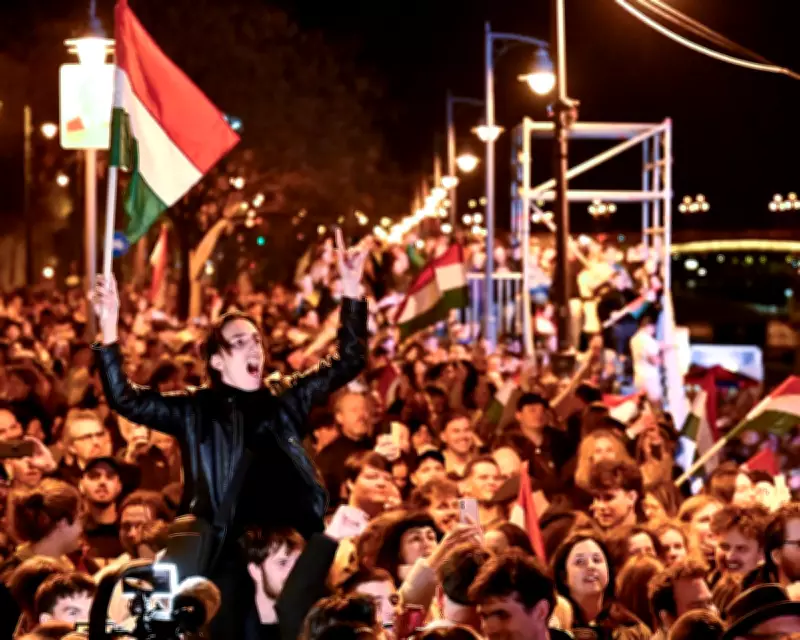
Celebrations Erupt in Budapest as Orbán's Reign Ends
Streets in Budapest were filled with jubilant crowds on Sunday following the announcement of Hungary's election results. The defeat of long-serving Prime Minister Viktor Orbán by Péter Magyar's conservative Tisza party represents a significant shift in the political landscape, not just for Hungary but for the entire European Union.
A Blow to the Global Hard-Right Movement
Orbán's loss deals a substantial setback to right-wing populists across Europe and beyond. For years, he served as an inspiration and ally to figures such as Italy's Giorgia Meloni, France's Marine Le Pen, and Austria's Herbert Kickl, who had proclaimed a "patriotic wind" blowing across the continent. However, this election outcome suggests that wind may be changing direction.
The Hungarian leader's defeat occurred despite extensive gerrymandering, constitutional alterations, and widespread corruption that had entrenched his Fidesz party in power. His brand of "illiberal democracy," promoted through state-backed think tanks and media, had gained traction globally, including in the United Kingdom.

Implications for the UK and Nigel Farage
In Britain, the result could have ripple effects for Reform UK and its leader, Nigel Farage, who once hailed Orbán as "the strongest leader in Europe." Farage's party, currently polling at around 25%, faces uncertainty as political tides shift. Psephologist Peter Kellner notes that Reform has overtaken Labour as the party voters would most likely oppose, a factor that could influence tactical voting in future elections.
Farage's connections to Orbán and his past admiration for Vladimir Putin have drawn criticism, especially as public sentiment in the UK shows only 16% favour Donald Trump, whom Farage has supported. The election outcome may prompt a reassessment among conservative commentators and politicians who had aligned with Orbán's ideology.
Broader European Context and Future Elections
Orbán's downfall coincides with a potential turning point against hard-right populism in Europe. The rise of such movements had seen them secure roughly a quarter of European Parliament seats in 2024 and hold power in several countries. Magyar's victory, while not socially liberal, returns Hungary to the mainstream of the EU, challenging the post-war self-image of Europe as a bastion of liberal democracy.
Looking ahead, a series of European elections next year will determine whether this shift is confined to Hungary or resonates across the continent. For now, the result offers a glimmer of hope for those advocating democratic values and a rejection of authoritarian tendencies.
Warnings for Labour and Conservative Alliances
Despite the positive news for anti-populist forces, there are cautions for the UK's Labour Party. Political scientist Prof Rob Ford warns against complacency, noting that Labour risks a historic defeat if it does not remain vigilant. The party's current lead in polls does not guarantee long-term success, especially as Reform UK gains traction.
Additionally, revelations about Hungarian state funding to UK think tanks, such as the Roger Scruton Legacy Foundation, highlight the interconnectedness of right-wing networks. This raises questions about the erosion of traditional barriers between conservatism and the far right in British politics.
As Europe navigates this pivotal moment, the Hungarian election serves as a reminder of the fragility of democratic institutions and the ongoing struggle against populist forces. The celebrations in Budapest may herald a broader backlash, sending hard-right ideologies back to the fringes where many believe they belong.