Orbán's Defeat in Hungary: A Victory for Liberal Democracy
When future historians chronicle the stunning electoral overthrow of Viktor Orbán on 12 April 2026, they will likely highlight symbols of excess that defined his regime. Drones captured zebras roaming the sprawling grounds of a countryside palace belonging to Orbán's extended family, while 72 gilded toilet brushes, purchased at a cost of nearly €10,000, adorned a lavish renovation of Hungary's central bank. For opponents, these details epitomised the rampant corruption among cronies of Orbán's ruling Fidesz party, which drained Hungary's economy and earned it the ranking as the most corrupt country in the European Union.
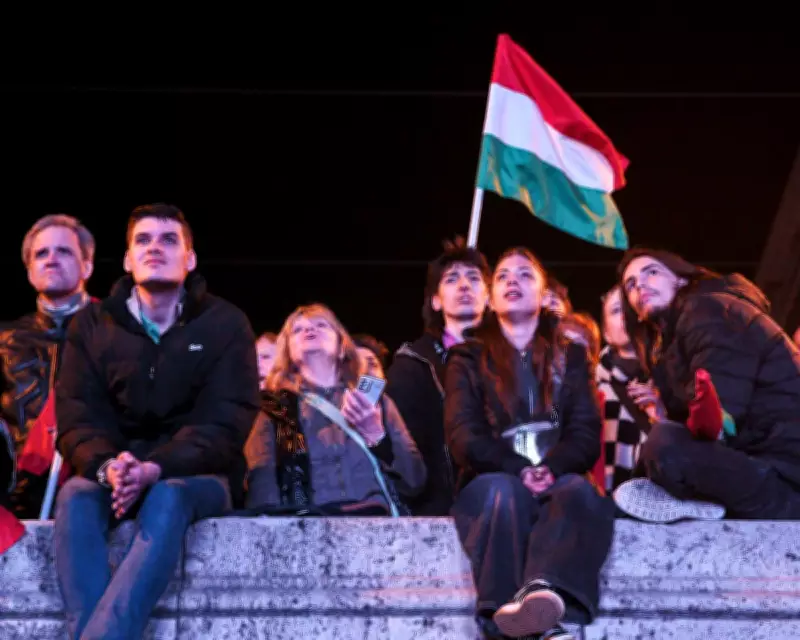
In the end, it was disgust with this corruption and its impact on livelihoods that drove Sunday's election rout. The landslide achieved by Péter Magyar's Tisza party, despite an electoral system designed to favour Fidesz, suggests these eye-popping excesses were merely the last straws for a population desperate to reclaim their nation as a functioning democracy. Orbán's right-wing populist rule, which cast a shadow over Europe for almost 16 years, ended without a fight within hours of the polls closing, delivering the best news the continent's beleaguered liberal democratic leaders could have hoped for.
Implications Beyond Hungary's Borders
How will the end of Orbán's self-styled "illiberal democracy" now reverberate beyond Hungary's borders? A panel of experts offers a hopeful perspective. As Guardian Europe columnist Nathalie Tocci summarised, "This marks a victory for liberalism in the world, even more than in Hungary itself." Historian Timothy Garton Ash, who covered the collapse of communism in Hungary in 1989, echoed similar optimism, noting the critical question is whether Hungary can become the first country to pull its democracy back from such far-reaching populist erosion and whether Europe has the political will to support this success.

After 16 years of Hungary behaving like a rogue state within the EU, an important reset is now on the cards. Orbán's Hungary had lost all trust, becoming a geopolitical Trojan horse or, as Garton Ash describes it, "Putin's man in Brussels." The incoming prime minister, Péter Magyar, is no liberal; he was in the Fidesz government before breaking ranks in 2024. However, with 70% of the seats in parliament—a crucial supermajority needed to dismantle Orbán's system—Magyar is committed to restoring democratic institutions. On Monday, he vowed to pursue those who "plundered, looted, betrayed, indebted, and ruined" his country, declaring an outbreak of peace with the EU, which most Hungarians appear to desire.
Global Repercussions and Cautions
Orbán's exit is not the outcome Russia wanted, as Vladimir Putin has lost his closest ally in Europe. Ukraine's president Volodymyr Zelenskyy called it "the victory of light over darkness." In his first post-election press conference, Magyar played down expectations of any dramatic rupture with Moscow, stating, "If Vladimir Putin calls, I'll pick up the phone," and adding, "We cannot change geography." During the campaign, however, he framed the vote as a choice between east and west, and Hungarians decisively chose the western path.
Conversely, Donald Trump, Orbán's other superpower backer, invested unusual political capital in keeping Orbán in power. Hungary has served as a laboratory for the global Maga movement, offering a blueprint for the Trumpian project in the US. The loss of this spiritual leader and stronghold is a significant blow. As Robert Tait suggested, it carries "symbolic and psychological significance for American politics" out of all proportion to Hungary's modest size and distance from the US.
Yet, experts caution against assuming Hungary's election marks the start of a broader trend. Cas Mudde, a political scientist specialising in the far right, warned that a similar defeat for the eurosceptic far right cannot be expected in upcoming elections, such as the French presidential contest next year. Hungary's contest was fought principally on domestic issues, including the cost of living and healthcare. Nevertheless, the outcome disproves fatalistic discourses that overstate the weakness of democracy, and for now, there are no European far-right disrupters of Orbán's stature to fill his shoes.

Lessons for Progressives and the Future
Democrats and progressives should draw the right conclusions from Magyar's win, according to Zsuzsanna Végh of the German Marshall Fund of the United States thinktank. "While this was a very consequential election, the result offers no forecast for other European elections in the coming year. Orbán's defeat was driven first and foremost by domestic factors such as the cost of living," she explained. Sociologist Tibor Dessewffy of Eötvös Loránd University in Budapest added, "It turns out that hospital supplies mattered more to voters in Hungary than conspiracy theories about Brussels."
For many progressives, the nearly 80% turnout and emphatic margin of victory in Hungary are uplifting, demonstrating that if people are galvanised to oppose authoritarianism, they will succeed. Tellingly, Végh notes that Magyar veered away from far-right topics, focusing instead on cost of living, healthcare, and other domestic issues. Guardian columnist Polly Toynbee remains hopeful that Hungarian voters have rolled back the "forces of darkness." Whether Orbán's defeat ignites a fire across the continent could become clear within months, with key elections upcoming in Italy, Spain, Poland, and France. As Toynbee advised, progressives should probably make the most of the good news now.