NSW Government Faces Court Challenge Over Protest Powers During Israeli President's Visit
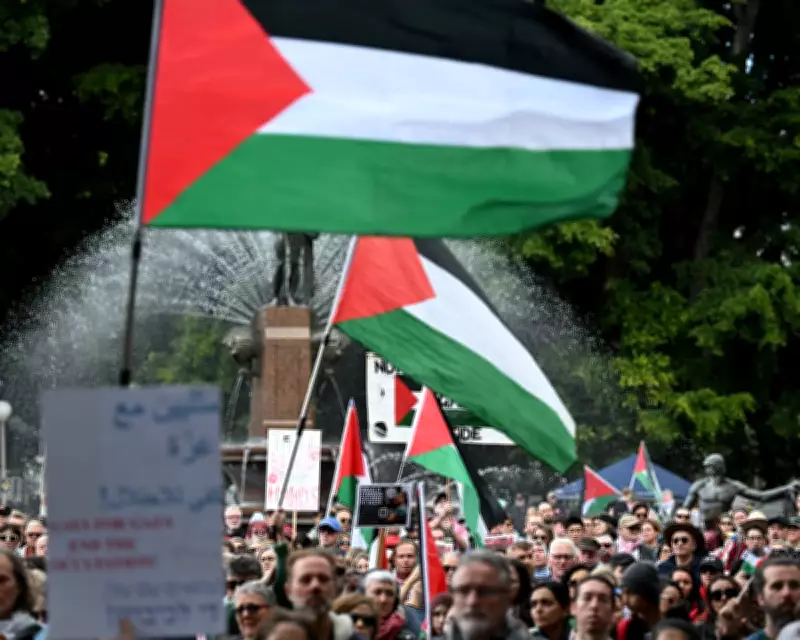
The New South Wales government has been accused of improperly using sweeping police powers to suppress protests during Israeli president Isaac Herzog's visit, with Palestine Action Group lawyers arguing in the supreme court that the measures serve as a "backdoor way" of banning legitimate political expression. The urgent hearing on Monday came ahead of a planned protest march from Town Hall to state parliament, where activists opposed to Herzog's visit intended to demonstrate.
Broad Powers and Legal Arguments
Under a "major event" declaration, police have been granted additional authority until Thursday in sections of Sydney's CBD and eastern suburbs. These powers include moving people on, closing specific locations, and issuing orders to prevent disruption or risks to public safety. Police may search anyone within the designated area or as a condition of entry, with non-compliance potentially resulting in fines of up to $5,500.
Felicity Graham, representing the Palestine Action Group alongside Peter Lange SC, contended that the government had misused the act to curtail protests. She pointed to government statements from Saturday, which emphasized preventing conflict between mourners, visitors, and protesters, and noted comments from sports minister Steve Kamper about avoiding international news coverage that could damage the state's reputation. "This is about stopping legitimate political expression against a controversial visiting head of state from a country facing genocide charges at the international court of justice," Graham argued.

Government Defense and Judicial Scrutiny
In response, Brendan Lim SC, acting for the government, defended the declaration as necessary for securing the safety of President Herzog, dignitaries, and the community amid heightened terrorism threats and community tensions. He asserted that the legislation's undefined term "event" should be interpreted broadly to encompass security concerns, not protest suppression. Lim highlighted that police had excluded Hyde Park from the declaration, suggesting this demonstrated a focus on safety rather than banning protests.
Justice Robertson Wright questioned the motivations behind the declaration, considering security risks following the Bondi terror attack, where 15 people were murdered during a Hanukah celebration. However, Graham countered that the geographical breadth of the declaration—covering large parts of Sydney over four days—lacked specificity and effectively targeted protests. Lange added that the powers were unreasonable, allowing police to search residents in the eastern suburbs without clear justification.
Protest Plans and Ongoing Restrictions
The court was expected to rule on the legality of the government's use of major event powers by 4pm, with the protest scheduled to begin at Town Hall at 5.30pm. Additionally, the Palestine Action Group faced another hurdle: a public assembly restriction declaration extended by police on Tuesday, which prevents authorizing protests in designated areas without risk of arrest. This area includes Town Hall and parts of the CBD and eastern suburbs, though Hyde Park remains excluded.
The case underscores tensions between state security measures and civil liberties, with activists arguing that broad powers infringe on democratic rights to protest. As global attention focuses on Israel's actions, the outcome could set a precedent for how governments balance public safety with freedom of expression during high-profile visits.