No Kings Protests: A Massive Yet Amorphous Movement Challenges Trump Era
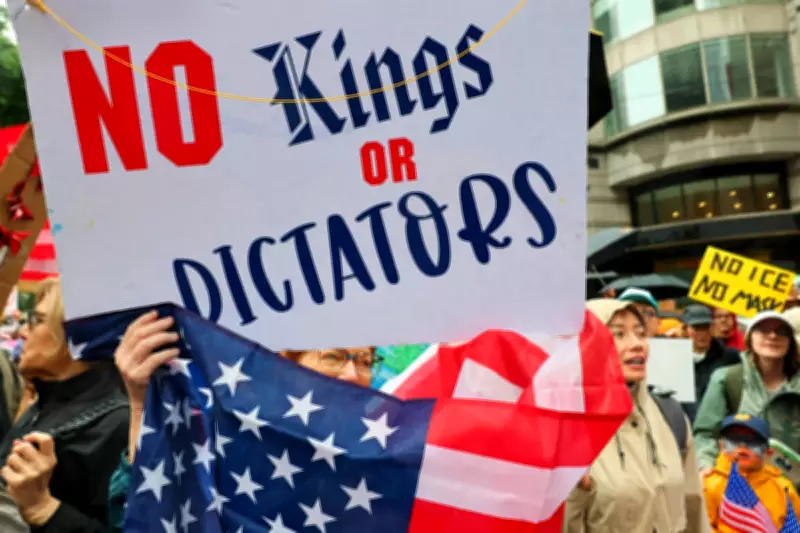
On 14 June 2025, thousands of demonstrators marched along Fifth Avenue in New York City as part of the No Kings protest, a powerful visual statement captured by photographer Michael M Santiago. This event heralds the third wave of No Kings rallies, anticipated to draw millions across the United States and at least 15 other countries. The movement, formally launched in June to oppose Trump administration policies, has seen rapid growth, with its October protest attracting an estimated 7 million participants. Organizers predict Saturday's events will mark the biggest protest in American history.
Broad Objectives and Leaderless Structure Spark Debate
Despite its impressive scale, the No Kings movement operates without a central leader and embraces a wide range of causes, from immigration raids to environmental rollbacks, without advancing specific policy demands. Social movements experts acknowledge its momentum but question whether clearer goals are necessary for sustained impact. Hahrie Han, a political scientist at Johns Hopkins University, notes, "The bigger challenge is, once they're there, how do you keep them there, and then how do you channel that engagement in collective ways?"
Organizers, however, defend these choices as intentional. Hunter Dunn of the 50501 movement explains, "The name No Kings is, in and of itself, a demand. It is a direct repudiation of this administration, of this regime, of its unconstitutional, illegal, immoral and frankly profane actions." Leah Greenberg, co-founder of Indivisible, adds that No Kings was conceived as a "container" to unite diverse grievances against authoritarianism, responding to what she calls "elite collapse" under Trump.

Decentralized Approach and Historical Comparisons
The movement's decentralized structure involves hundreds of labor unions, religious groups, and grassroots organizations, deliberately avoiding a leadership hierarchy. Dunn argues, "You can't beat a cult of personality with another larger cult of personality. What you need to do is organize people from the ground up." Yet, critics point to historical examples like the Montgomery bus boycott, which combined grassroots action with negotiable leadership, and contrast it with Occupy Wall Street's dissolution due to a lack of credible representation.
Han emphasizes, "Scale is often a proxy for power. But it is not power itself. And what the research shows is that just because you pull a lot of people into action doesn't mean that action turns into the kind of influence for change that you want." Organizers counter that No Kings is part of a broader "relay race" of resistance, handing off to local efforts like election defense and mutual aid.
Policy Platform Absence and Measuring Success
Critics have highlighted the absence of a policy platform as a potential flaw, but Marcus Board Jr., a political scientist at Howard University, argues that traditional metrics like legislative wins are outdated. He states, "The legislative and federal route made us think that we could change the world without changing people. That's just not the case." Greenberg measures success by post-protest engagement, asking, "Are we absorbing more people? Are we trying new tactics? Are we getting more people into the fight?"
As No Kings continues to capture frustrations with issues ranging from ICE raids to election security, its ability to translate mass mobilization into lasting influence remains a key question for observers and participants alike.