
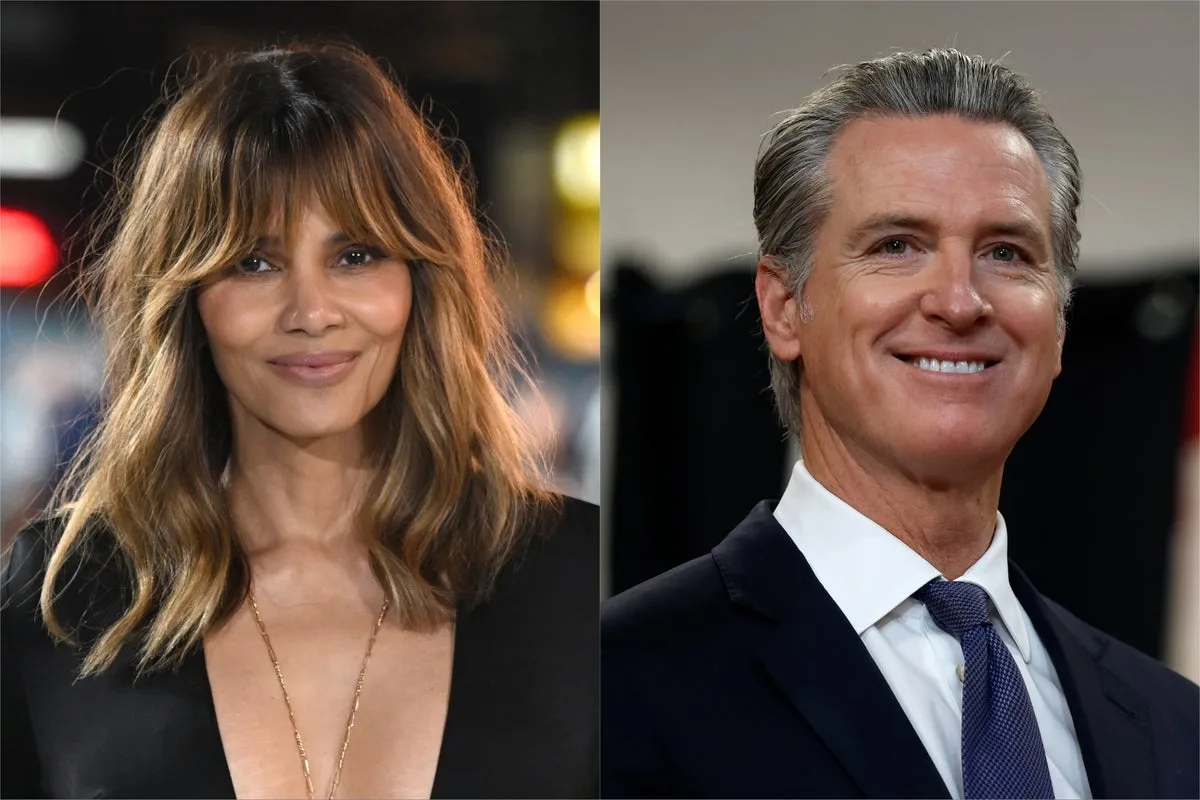
Halle Berry has said she is still waiting for California Governor Gavin Newsom to reach out to her after she criticised his decision to veto the Menopause Care Equity Act. The Oscar-winning actor publicly condemned Newsom at The New York Times' Dealbook conference in December, to which he later responded, saying he had included the proposal in the state budget.
In an interview with The Cut published on Tuesday, Berry said she had yet to hear from him. “It's disturbing when people say they're going to do things and then they don't,” she said. “But he heard what I said. If he is going to run to be our next president, he can't sleep on women. Wake up, Gavin.”
Hours later, a spokesperson for Newsom told The Independent: “Ms. Berry’s remarks are very unfortunate given the Governor’s proposal put forward to support menopause care through the state budget, just as he said he would do in his veto message on AB 432.”
Berry, who is approaching 60, explained her motivation for championing the issue. “Fighting for women's health feels like a formidable cause for my second act... Women are as confused as I am on this midlife journey and I felt like I had to do something,” she told The Cut.
The Menopause Care Equity Act, passed by the legislature and vetoed last year, would increase health care coverage and education for women experiencing menopause symptoms. Newsom described the bill as “too far-reaching,” but Berry argued that insurance premiums would not substantially change. In a Time magazine column in November, she wrote that the veto displayed “a failure of Gov. Newsom’s commitment to women.”
A previous statement from the governor's office said he “has deep admiration for Ms. Berry’s advocacy” and shares her goal of expanding access, but explained the veto was because the bill “would have unintentionally raised health care costs for millions of working women and working families already stretched thin.”




