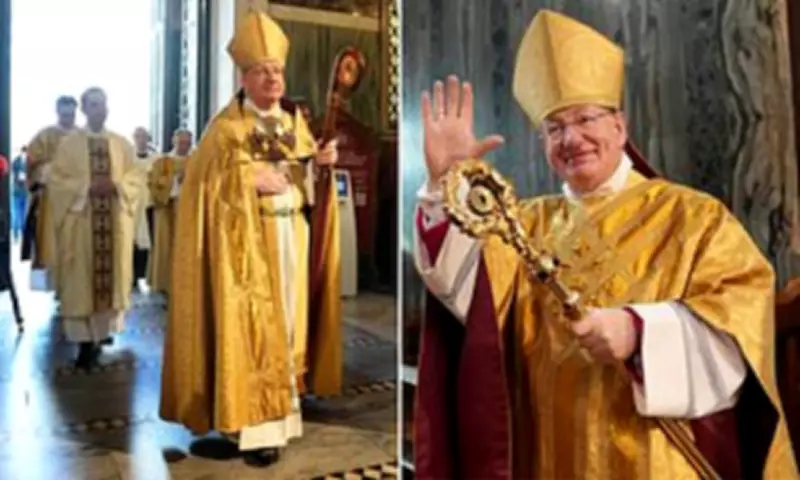
In a significant ceremony at Westminster Cathedral in central London, the Catholic Church has formally installed a new spiritual leader for England and Wales. Bishop Richard Moth was officially inaugurated as the 12th Archbishop of Westminster before a congregation of approximately two thousand faithful on Saturday.
A Ceremony Marked by Reflection and Responsibility
The installation mass commenced shortly after midday, with Archbishop Moth kneeling at the cathedral's Great West Door. He then blessed a line of attendees with holy water before processing solemnly down the nave. This ritualistic beginning marked the start of his leadership over the Catholic community in England and Wales.
Addressing Institutional Failures Head-On
In his installation homily, Archbishop Moth demonstrated a clear awareness of the controversies that have plagued the Catholic Church in recent years. "This work of evangelisation is vital, but it is fragile and adversely impacted by our failures in love, power and self-control," he stated candidly.

The new archbishop specifically addressed the Church's historical shortcomings regarding abuse victims: "Here I am most aware of every occasion on which members of the Church, or the Church as a whole, have failed, most especially when the vulnerable have been abused."
He emphasized that such failures require "listening to and learning from those who have suffered so grievously and a continuing commitment to ensuring that our communities are places where all are safe in their encounter with Christ and with one another."
Replacing a Controversial Predecessor
Archbishop Moth succeeds Cardinal Vincent Nichols, who retired at age 80 after holding the position since 2009. Cardinal Nichols' tenure concluded under a cloud of controversy following a damning report by the Independent Inquiry into Child Sexual Abuse (IICSA).
The 2020 report criticized Cardinal Nichols for seemingly prioritizing the Church's reputation over his duty to victims of sexual abuse. It further noted he demonstrated "no acknowledgement of any personal responsibility to lead or influence change." These findings prompted calls for his resignation, though he remained in position until his retirement.
Ecumenical Support and Shared Responsibilities
The installation ceremony included a homily from Dame Sarah Mullally, the new Archbishop of Canterbury and leader of the Church of England. She praised Archbishop Moth's "deep concern for the dignity of every person" and noted their shared responsibility as presidents of Churches Together in England.
"In a world marked by division and uncertainty, the call to unity flows from the heart of the Gospel itself," Dame Sarah remarked. "Our traditions are not weakened by friendship, they are deepened when we walk together in charity, honesty and truth."
Background and Future Challenges
Before his appointment to Westminster in December, Archbishop Moth served as Bishop of Arundel and Brighton for ten years. He previously held the position of Catholic Bishop of the Forces from 2009 to 2015. As Archbishop of Westminster, he now assumes the presidency of the Bishops' Conference of England and Wales, becoming the primary spokesman and figurehead for approximately four million Catholics across the United Kingdom.
In his installation address, Archbishop Moth outlined the pressing issues he intends to address: "We need not fear the great questions of our time: the need for all peoples to live in peace; the value and dignity of every person; the right to life at every stage; the protection of the vulnerable; the plight of the refugee and the dispossessed; and the protection of our common home."
Upon his appointment announcement in December, Archbishop Moth indicated he would speak out on societal matters including migration. He also acknowledged his predecessor's controversial legacy with diplomatic phrasing, noting Cardinal Nichols was now moving on to "slightly more restful pastures."

A Transition of Leadership
Cardinal Nichols had offered his resignation at the customary age of 75 but was asked to remain by the late Pope Francis. He participated in the conclave that elected Pope Leo XIV in May following Pope Francis's death. Cardinal Nichols described the new pontiff as a gentle and calm person capable of resolving difficulties "in a way that didn't leave enemies behind him."
When Archbishop Moth's appointment was announced, Cardinal Nichols expressed delight, stating: "Archbishop-elect Richard will bring to our Diocese many gifts and considerable episcopal experience from his years of ministry in the Diocese of Arundel and Brighton, and before that as Bishop of the Forces."
Archbishop Moth responded with gratitude: "I am greatly moved by the trust Pope Leo has placed in me. As I prepare to move to the diocese, I am so grateful for the support being given to me by Cardinal Vincent Nichols at this time. He has given dedicated service to the diocese and will be missed greatly."
The installation mass concluded with Archbishop Moth leaving the cathedral to applause at approximately 2:15 PM, following Friday's service of solemn vespers attended by clergy and representatives from schools, parishes, and Catholic organizations within the Westminster diocese.