Netanyahu and Trump Already Divided as Iran Conflict Intensifies
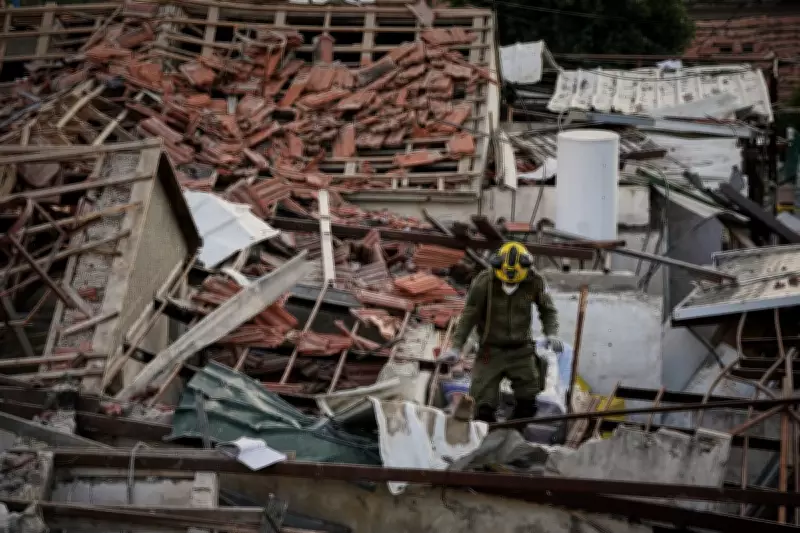
At a synagogue in Beit Shemesh, where a half-ton Iranian ballistic missile evaded Israel's sophisticated air defences and destroyed a bomb shelter, killing eleven people, the local appetite for war remains strong—for now. The attack, which occurred on Tuesday, March 3, 2026, represents Iran's deadliest assault on Israel to date, flattening not only the shelter but also neighbouring housing and wounding dozens.
Devastation and Resilience in Beit Shemesh
As sirens blared in the morning following the strike, residents emerged from shelters after three distant booms indicated successful missile interceptions. This contrasted sharply with the previous day's tragedy, where the missile's direct hit left a large depression in the ground where the public shelter once stood. Among the dead were three teenage siblings and a mother and son, who had sought safety there in vain.
Mordechai Shadi, a 42-year-old civil servant living opposite the destruction, explained, "The shelter can protect you if the missile lands nearby, even next door. But not if it's a direct hit on the building you are in." Despite losing close friends and neighbours, and with his own roof damaged by blast waves, Shadi's faith in the war against Iran, initiated by Donald Trump and Prime Minister Benjamin Netanyahu, remains unshaken. As a religious Jew in a city where 80% share his background, he stated, "It's right that Iran was attacked. There was no other option."

This sentiment is widespread. Dror Azulai, a 50-year-old secular electrician and neighbour, echoed, "It should have been done a long time ago. [Iran] is a country that threatens the world." The attack's force shattered windows and damaged houses up to 200 metres away, yet local resolve appears steadfast.
Strategic Divisions Between US and Israeli Leadership
However, clarity on the war's objectives and costs remains elusive. The alliance's initial days saw success, with intelligence leading to the decapitation of Ayatollah Khomeini and senior officials, advancing the war's timeline. Yet, Iran's retaliation has confined millions of Israelis to shelters and closed schools, demonstrating the regime's preparedness despite depleted military resources.
The signals from US and Israeli leaders are mixed. Trump, without explicit terms, seems to favour regime change, while Defence Secretary Pete Hegseth stated goals are confined to ending Iran's nuclear programme. This divergence highlights a potential rift: Netanyahu aims to topple Tehran's regime to shift regional power and bolster his election prospects, whereas Trump, wary of prolonged conflicts, may prefer a quicker resolution.
Amos Harel, Haaretz's military analyst, notes Netanyahu's desire to "go all the way" contrasts with Trump's aversion to long wars, even within his MAGA base. Netanyahu's political survival hinges on US support, making Trump's decisions pivotal. The prime minister faces voter blame for the Hamas attacks of October 7, 2023, adding pressure to secure a decisive victory.
Public Support Tested by War's Toll
In Beit Shemesh, Gili Perez, a 50-year-old landlady, offers a nuanced perspective. She supports the war's initiation, citing the Iranian leadership's intransigence, but fears a forever war. "People can't go out of their houses half the time. The schools are shut," she said, noting her 16-year-old son sleeps in their shelter. "We're used to everything in Israel, but three years of war is enough."
While the war currently enjoys public popularity, the question lingers: are Israelis ready to pay the price if Netanyahu prolongs the conflict for his political triumph? The devastation in Beit Shemesh underscores the human cost, as rescue workers and military personnel continue operations amid ongoing threats. As the conflict escalates, the alliance's unity and strategic coherence will be tested, with outcomes uncertain and stakes perilously high.