MPs Express Shock at £40bn Parliament Overhaul Proposals
Plans for a futuristic overhaul of the Houses of Parliament, with potential costs soaring up to £40 billion, have been greeted with profound shock by MPs today. Striking new blueprints for addressing the crumbling buildings at the very heart of British democracy have been published in a detailed report, revealing ambitious visions for the historic site.
Two Radical Options Presented for Parliamentary Restoration
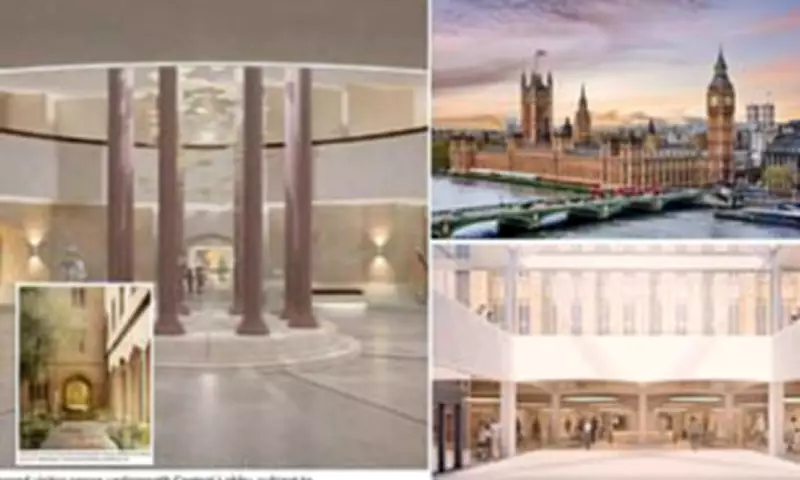
Artist's impressions within the report illustrate how the upgrade could transform the parliamentary estate. The plans envision the creation of spacious underground atriums with expansive glassy ceilings, alongside plush new courtyards designed for MPs to meet constituents more effectively.
The report recommends two distinct options for politicians to choose between:
- Full Decant Option: This would see MPs move out of Parliament entirely for a period of eight to ten years, while peers could be relocated for up to fifteen years. This comprehensive approach is estimated to cost taxpayers approximately £15.6 billion.
- Partial Relocation Option: This alternative would involve MPs remaining on the historic site, but peers would be moved to a nearby building, such as the QE2 conference centre. This facility would be extensively fitted out with necessary amenities, including catering outlets and a dedicated library.
According to the report, the complete project could take between 38 and 61 years to finish, with total costs potentially reaching up to £39.2 billion. Notably, it appears that neither proposed option would involve keeping the Parliamentary bar open—a venue currently renowned as a hotbed of political plotting and intrigue.
Decades of Wrangling Over the Crumbling Estate
Wrangling over what to do about the Westminster estate—widely regarded as a mouse-infested fire risk and plagued by persistent power cuts and heating failures—has been ongoing for decades. MPs and peers are now being asked to agree to 'initial' restoration works at the Houses of Parliament, which would last seven years and cost up to £3 billion.
Following this initial phase, a decision on which of the two recommended long-term options to pursue would be made early in the next decade. The proposals state that the cost of repairing and maintaining the Palace of Westminster is currently 'unsustainable', with weekly expenditure running at £1.5 million.
The estate faces severe challenges, including a failure of heating in a large part of the House of Lords, significant problems with the sewerage system, and an ongoing loss of toilets in areas containing reinforced autoclaved aerated concrete. Since 2016, there have been 36 fire incidents, 12 asbestos incidents, and 19 stonemasonry incidents recorded.
Political Backlash and Concerns Over Costs
Shadow Commons leader Jesse Norman immediately condemned the plans, stating: 'The Costed Proposals Report is asking parliamentarians to approve eye-watering expenditures of up to £19 billion pounds on a project with unclear governance, limited scrutiny and low confidence of effective project or cost management.'
In a letter released to the R&R Client Board from December, Mr Norman wrote: 'These numbers are, I would suggest, an order of magnitude higher than any current public expectation.' He cautioned that the process appeared to be an attempt to 'rush' MPs into a decision, warning: 'All in all, the result could be a disastrously adverse public and political reaction, not merely against the R&R project, but against the institution of Parliament itself.'
Proposed Works and Long-Term Vision
The phase one works would include refurbishing the interior of the Victoria Tower, constructing a jetty on the Thames for deliveries by river, and commencing underground construction on tunnel shafts. A full decant would see Commons business begin to move to the so-called Northern Estate—located outside the palace but nearby—and the Lords relocating to the nearby QEII conference centre from 2032.
The debate over how to revamp the Houses of Parliament has persisted for years, primarily due to the staggering expected cost of the project and deep concerns about the deteriorating condition of the historic buildings on this World Heritage Site. While MPs and peers agreed on a plan in 2018 for both the Commons and Lords to move to temporary facilities, this was subsequently revisited amid escalating cost concerns.
The client board has stated it is 'all too aware of the very high costs involved in an infrastructure programme of this scale, complexity and duration' and will seek advice from the National Audit Office, Public Accounts Committee, and HM Treasury. They argue that the restoration would also bring 'significant economic benefits', supporting thousands of jobs and apprenticeships across the UK, from modern construction specialists to traditional craftspeople.