Australian MPs Propose Jail Terms for Flag Burning
Two federal parliamentarians have introduced separate bills to criminalise the burning of the Australian flag, arguing the act is not a "harmless protest" and pointing to numerous countries where similar actions are outlawed. Nationals backbencher Pat Conaghan and independent MP Rebekha Sharkie are spearheading the legislative push following an incident at an Invasion Day rally in Brisbane last month.
Incident Sparks Legislative Response
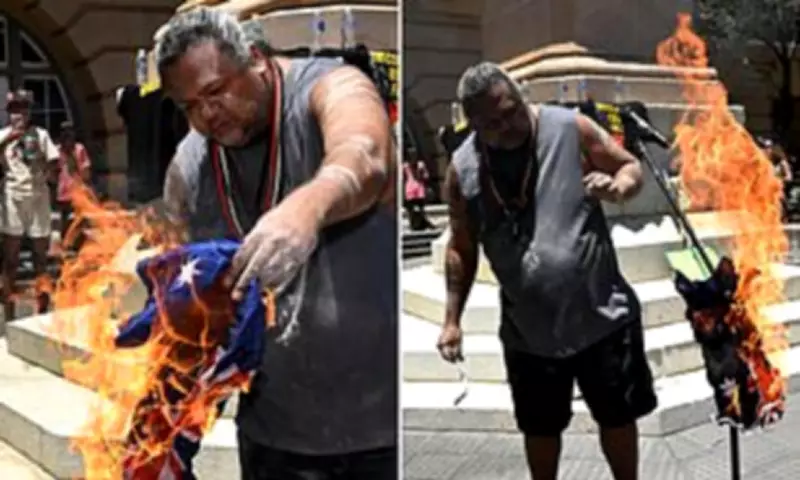
The proposed legislation comes after Indigenous leader Moojidji set the Australian flag alight while addressing a crowd during Invasion Day protests. Moojidji stated he burned the flag to challenge Australia's legal legitimacy, an action that was met with cheers from rally attendees. This event has catalysed the current parliamentary effort to establish legal consequences for flag desecration.
Sharkie's Comprehensive Flag Protection Bill
Independent MP Rebekha Sharkie has taken a particularly comprehensive approach by including not just the Australian national flag but also the Aboriginal and Torres Strait Islander flags in her proposed legislation. Her bill would impose severe penalties for offenders, including a maximum two-year prison sentence for first offences and a mandatory minimum one-year sentence for subsequent violations.

Sharkie has extensively researched international precedents, noting that flag burning is already criminalised in many nations worldwide. "Burning a national flag is a criminal offence in many nations," Sharkie declared. "Across Asia, it's an offence in India, the Philippines, Singapore, South Korea, or indeed, Israel."
She further elaborated on global comparisons: "Across the Americas, whether you're in Argentina, Brazil, Cuba or Mexico, or even Nicaragua, it recognises that to burn or desecrate the national flag is a criminal offence. And in New Zealand, our neighbours, it carries up to a $5,000 fine."
Freedom of Expression Debate
When questioned by media about potential conflicts with freedom of expression, Sharkie firmly rejected the notion that flag burning constitutes protected speech. "Burning of a national flag is not a freedom of expression. It's an action designed to divide and incite hatred," she asserted. "I recognise the importance of political expression, but there's a clear line between legitimate protest and burning a flag to deliberately inflame division."
Sharkie emphasised that her legislation aims to protect Australia's protest traditions while drawing clear boundaries: "Australians have a long and proud tradition of free speech and peaceful protest, and this bill doesn't seek to undermine that."
Conaghan's Parallel Legislative Effort
Nationals MP Pat Conaghan has introduced a separate amendment to the Criminal Code that would prohibit burning, destruction, desecration or other serious dishonouring of both the Australian National Flag and the Australian Red Ensign, which serves as Australia's maritime flag.
Conaghan argued passionately in Parliament that national symbols deserve legal protection: "Mr Speaker, the Australian flag and the Australian Red Ensign are not abstract ideas. They are not props for political theatre. They are national symbols earned through sacrifice, service and a shared history. And when those symbols are burned or deliberately desecrated, it is not an act of harmless protest."
He continued with emotional emphasis: "It is an act that strikes at the heart of our nation, our respect and our cohesion. That is why we must seriously consider making the burning or desecration of the Australian flag and the Australian Ensign a criminal offence."
Proposed Penalties and Public Support
Conaghan's amendment proposes significant penalties for offenders, including fines of up to $16,500 or twelve months imprisonment for first offences. Repeat offenders would face mandatory minimum sentences of twelve months, while non-citizens could have their visas cancelled as an additional consequence.
The Nationals MP cited public support for his position, referencing his 2023 constituency survey which showed strong backing for celebrating Australia Day on January 26th. "Millions of Australians" support his bill according to Conaghan's parliamentary statements.

High-Profile Support and Political Divisions
Swimming legend Dawn Fraser has emerged as a vocal supporter of criminalising flag burning, telling media: "I think anyone who burns our flag does not respect our country. And if they don't respect our country, if they come from another country they should be sent back. But if they are Australians and they've burnt our flag, they should go straight to jail."
Queensland Premier David Crisafulli condemned the Invasion Day protest incident as "disgraceful" and confirmed he would support a federal ban on flag burning, while acknowledging the matter falls outside state jurisdiction. "It's a symbol of who we are as a nation," he stated. "We should be proud of that."
Sharkie highlighted political divisions on the issue, noting that the Albanese government previously rejected an opposition amendment to anti-hate law reforms that would have criminalised flag burning. "The government didn't accept that," she revealed. "So this bill actually seeks to bring us all together to look at all three national flags and say the same rule should apply. And it also draws a line in the sand that says this behaviour is unacceptable."
Broader Context and Parliamentary Process
Federal political leaders remain divided on the issue, with some warning against escalating tensions while others argue national symbols deserve explicit legal protection. Supporters of the Invasion Day protest maintain that flag burning constitutes legitimate political expression, while figures like Senator Pauline Hanson have labelled flag burners "un-Australian."
Both legislative proposals are scheduled for parliamentary debate, setting the stage for a significant national conversation about the boundaries of protest, the protection of national symbols, and the balance between free expression and social cohesion in contemporary Australia.