Morgan McSweeney Resigns as Keir Starmer's Chief of Staff Amid Mandelson-Epstein Scandal
Morgan McSweeney has resigned from his position as chief of staff to Prime Minister Keir Starmer, following intense scrutiny over his role in advising the appointment of Lord Peter Mandelson as ambassador to Washington. McSweeney's resignation comes in the wake of revelations linking Mandelson to convicted sex offender Jeffrey Epstein, a scandal that has rocked the Labour Party and placed Starmer's leadership under severe pressure.
Taking Responsibility for Controversial Advice
In a statement confirming his departure, McSweeney admitted that his advice to appoint Mandelson was erroneous. "I advised the prime minister to make that appointment and I take full responsibility for that advice," he said, after a phone call with Starmer on Sunday. His resignation is seen as an attempt to shield the prime minister from further political fallout, but it has instead ignited a crisis within Labour ranks.
UK Press Reaction and Leadership Speculation
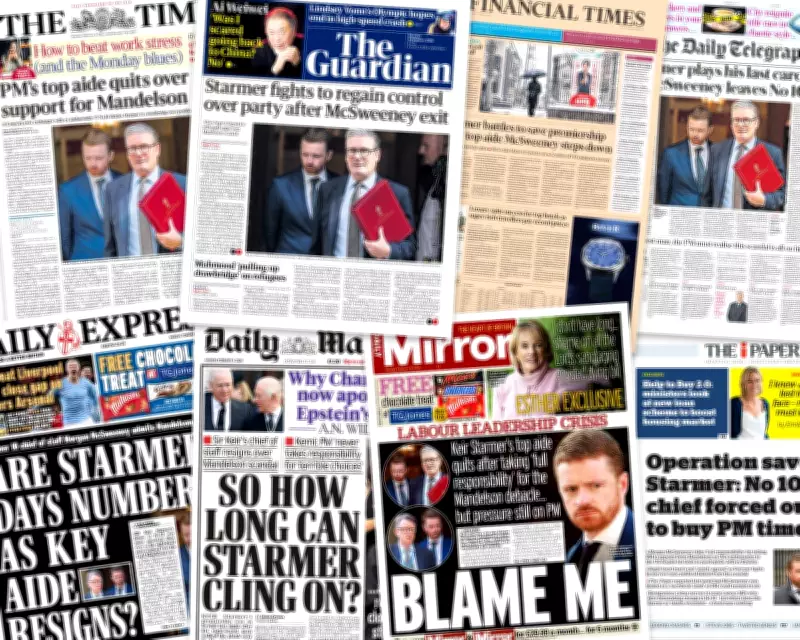
The resignation dominated the front pages of major British newspapers on Monday, with headlines highlighting the precarious position of Prime Minister Starmer. The Guardian framed the situation as "Starmer fights to regain control over party after McSweeney exit," noting that senior Labour sources believe the departure leaves Starmer dangerously exposed ahead of key policy challenges and the Gorton and Denton byelection.

The Telegraph splashed with "Starmer plays his last card as McSweeney leaves No10," reporting that the chief of staff's exit may not be sufficient to salvage Starmer's premiership. An unnamed Labour source commented, "Morgan has taken responsibility for the advice. But there were plenty of others pushing for it."
The Daily Mail posed the question, "So how long can Starmer cling on?" quoting Labour MP Brian Leishman, who called for a change in political direction from the top. The paper also noted that rivals such as Angela Rayner and Wes Streeting are positioning themselves for a potential leadership contest.
Internal Labour Crisis and Acting Appointments
The Mirror captured the moment with the headline "Blame me," describing it as a "Labour leadership crisis." The newspaper reported that Vidhya Alakeson and Jill Cuthbertson, who served as McSweeney's deputies, have been appointed as acting chiefs of staff in the interim.
The Times led with "PM's top aide quits over support for Mandelson," suggesting that Starmer had "sacrificed his closest political ally." An unnamed cabinet minister speculated on Starmer's future, stating, "We're asking the question of whether he will be there at the end of the week. There's a feeling he could stand down at any moment. The next 48 hours is going to be crucial."
Financial and Political Fallout
The Financial Times reported under the headline "Starmer battles to save premiership after top aide McSweeney steps down," highlighting that the prime minister now faces intense scrutiny from both within and outside the party. Conservative leader Kemi Badenoch remarked, "Keir Starmer has to take responsibility for his own terrible decisions."
The i Paper splashed with "Operation save Starmer: No 10 chief forced out to buy PM time," noting that while McSweeney's resignation might calm some nerves within Labour, others have described Starmer as "fatally wounded ... a dead man walking."
The Daily Express encapsulated the prevailing sentiment in Westminster with the question, "Are Starmer's days numbered as key aide resigns?" This query is expected to dominate political discussions in the coming days as Labour grapples with the aftermath of the scandal.
Broader Implications for the Labour Party
The resignation of Morgan McSweeney has not only triggered a leadership crisis but also raised questions about the Labour Party's internal decision-making processes. The Mandelson-Epstein scandal has exposed fissures within the party, with senior figures and backbenchers alike calling for accountability and a potential shift in political direction.

As Prime Minister Starmer navigates this turbulent period, the focus will remain on his ability to consolidate control and address the growing discontent within his party. The appointment of acting chiefs of staff may provide temporary stability, but the underlying issues stemming from the scandal are likely to persist, influencing Labour's strategy ahead of upcoming electoral challenges.