Starmer's Right-Hand Man Resigns – What This Means for the Prime Minister's Future
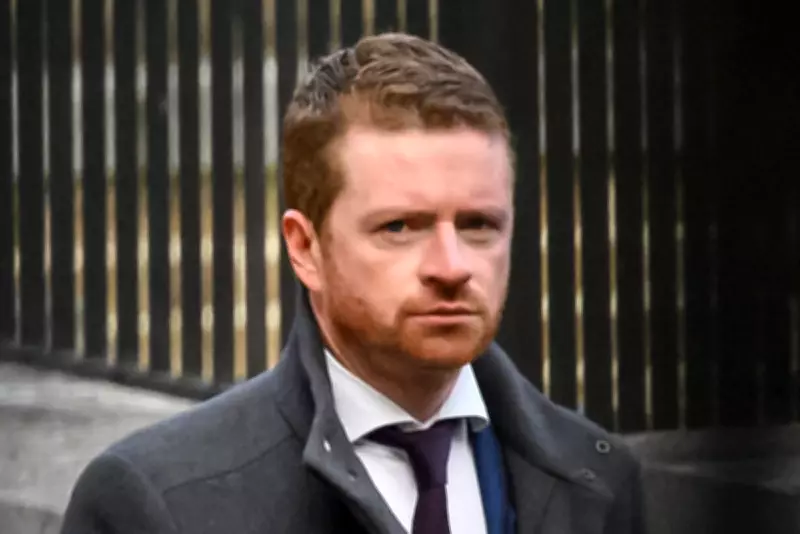
Many within the Labour Party had long called for Morgan McSweeney's removal as Downing Street chief of staff before his eventual resignation over the escalating Peter Mandelson scandal. Now, the critical question emerges: can Prime Minister Keir Starmer survive politically without his most influential aide? David Maddox examines the implications.
The Westminster Power Broker Exits Stage Left
The name Morgan McSweeney might not have been commonplace in pubs or school playgrounds, but within the Westminster bubble, he represented an obsession. His resignation marks the most significant casualty yet in the rapidly unfolding Mandelson scandal, which now threatens to engulf the prime minister himself.
The departure of the architect behind Sir Keir's leadership ascent, the mastermind of Labour's election victory, and the central figure in government operations leaves an already weakened prime minister dangerously exposed. Labour MPs consistently recognized McSweeney's formidable power and importance, viewing him either as a toxic presence at the heart of government or as a gateway to future advancement and promotion.

Toxicity and Control in Downing Street
Concerns about the toxic environment within the Downing Street operation under McSweeney's leadership grew so severe that ambitious young Labour special advisers explicitly told The Independent they would refuse to work there, preferring roles in peripheral departments instead. Just last week, one spad stated bluntly: "You wouldn't catch me dead there."
Cabinet ministers voiced private complaints, yet everyone understood the fundamental truth: without McSweeney, there would be no Starmer premiership, and vice versa. One trusted senior minister warned: "Keir has to sort out the toxicity in Downing Street or else we will get nowhere."
Whispers circulated through Westminster's corridors suggesting this was not truly Starmer's government at all, but rather McSweeney's administration—that the prime minister served essentially as a frontman for a project directed by an unelected official within Downing Street.
The Reshuffle That Revealed True Influence
Accounts from last year's ministerial reshuffle highlighted McSweeney's extraordinary influence. According to multiple sources, the three individuals removed from the cabinet were precisely those McSweeney wanted out.
While Angela Rayner ultimately resigned due to her tax affairs, there had been a prolonged, concerted campaign by the Blairite faction of the party—where McSweeney remained a key figure—to oust her. The question of who authorized the damaging leak of Rayner's immigration comments during a cabinet meeting just before summer points directly to McSweeney's approval.
Lucy Powell, now returned as party deputy leader following the election, was removed as Commons leader because, according to an ally, "she kept standing up to McSweeney and telling him he was wrong."
Ian Murray was replaced by Douglas Alexander as Scottish secretary due to what sources describe as "McSweeney's obsession with Blair-era figures." Alexander, a capable individual who served as minister and campaign chief under Tony Blair and Gordon Brown, represented McSweeney's desired cabinet addition, making Murray expendable.
Character Judgement Unravels in Mandelson Scandal
More troublingly, Paul Ovenden, one of McSweeney's key lieutenants, was dismissed from Downing Street after emails containing lurid remarks about veteran Labour MP Diane Abbott surfaced. Now, McSweeney's questionable character judgement has completely unraveled over his connections with Peter Mandelson.
The 48-year-old not only advocated forcefully for Mandelson's appointment as ambassador to the United States but also reportedly attempted to prevent his dismissal once scandal erupted.
From Corbyn Era to Downing Street Dominance
To comprehend the current political project, one must return to the Jeremy Corbyn years, when McSweeney stood at the forefront of efforts to rescue the Labour Party from descending permanently into far-left oblivion. As director of Labour Together, he effectively organized the fightback and personally selected Starmer as the individual to succeed Corbyn and redirect the party's course.

Labour's general election victory, which McSweeney managed, validated that project. Unfortunately, the party assumed office with remarkably limited policy planning. Everything began with McSweeney eliminating an obstacle to his authority—Sue Gray, who had been initially appointed as chief of staff before he replaced her.
Mounting Pressure and Leadership Vulnerability
As the welfare crisis intensified last year, with numerous Labour MPs threatening to vote against government policy, demands for McSweeney's removal grew increasingly loud. Those demands never truly subsided. The Mandelson scandal, however, propelled them to stratospheric levels.
Herein lies the fundamental problem: if this government functioned more as McSweeney's administration than Starmer's, the prime minister would struggle immensely to survive without his chief of staff. Without McSweeney, Starmer appears significantly weakened, making suggestions of an imminent leadership coup within weeks appear entirely realistic.
Starmer's Survival Strategy and Political Calendar
Sir Keir intends to brazenly weather the storm by appointing two insiders from the existing team—Vidhya Alakeson and Jill Cuthbertson—as joint chiefs of staff to replace McSweeney. He plans to maintain focus on cost-of-living issues and position himself centrally within the government's fightback narrative.
However, with the crucial Gorton and Denton by-election approaching on February 26th, followed by local and devolved elections on May 7th, Labour MPs may determine they desire a new occupant in Downing Street long before summer arrives. The prime minister's political survival now hangs in precarious balance following his most powerful ally's departure.