McSweeney's Departure Divides Labour Amid Starmer Leadership Turmoil
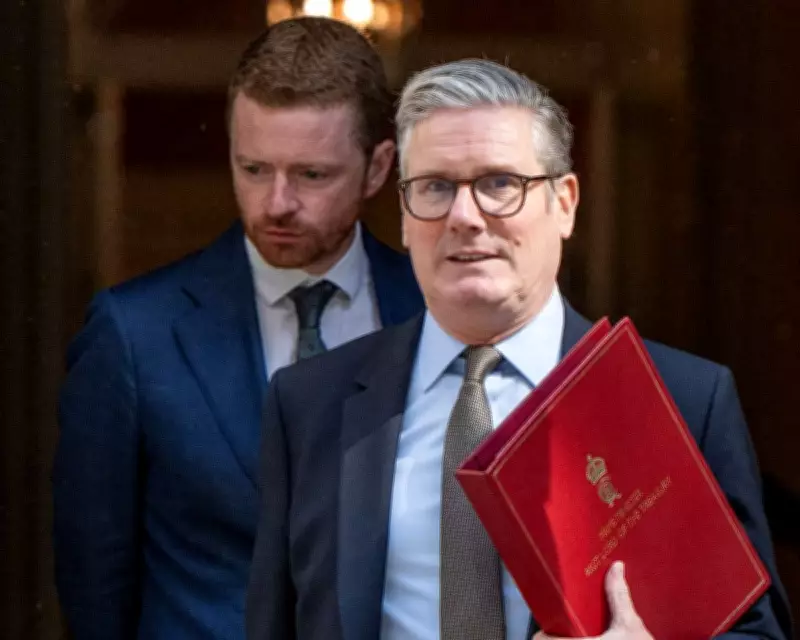
The resignation of Morgan McSweeney, Keir Starmer's long-serving chief of staff, has sent shockwaves through the Labour Party, exposing deep rifts over the prime minister's leadership and the direction of the government. McSweeney stepped down on Sunday following intense criticism over his advocacy for appointing Peter Mandelson as Washington ambassador, a move that has become a flashpoint for discontent among MPs.
Supporters Praise Resignation as an Act of Loyalty
To his allies, McSweeney's departure is seen as a selfless act to shield Starmer from escalating political fallout. They argue that his resignation demonstrates unwavering commitment to protecting the prime minister, even though the ultimate decision on Mandelson rested with Starmer. One supporter remarked, "There were numerous voices pushing for Mandelson's appointment. It's a tragedy that only the advisor has the courage to take responsibility." Another added, "We owe Morgan immense gratitude. He was instrumental in reviving Labour's electability and securing our historic 2024 landslide victory. Without him, we might still be facing political irrelevance."
Critics Decry Weakness and Unethical Behaviour
However, many Labour MPs view McSweeney's resignation as emblematic of Starmer's perceived passivity and leadership flaws. One MP stated, "Allowing Morgan to resign makes the PM appear even weaker. He should have dismissed him—now Starmer risks being dragged down alongside him." Critics accuse McSweeney of running a male-dominated cabal in Downing Street that sidelined elected members and prioritised internal factional battles over effective governance.

They also point to revelations about Labour Together, the thinktank McSweeney once led, which commissioned an investigation into journalists reporting on its funding. One Labour MP commented, "This aligns with Morgan's cowboy behaviour. There's a consistent pattern of indefensible actions." Clive Lewis, MP for Norwich South, argued, "McSweeney's resignation isn't a cleansing moment. He represents a political culture, forged under Blair and Mandelson, that has made Labour detached from ordinary people and cozy with corporate power."
Impact on Starmer's Political Survival
In the short term, McSweeney's exit may alleviate some pressure on Starmer, particularly from the Tribune group of soft-left MPs who had demanded his sacking. Yet, analysts warn that it could also remove a crucial buffer for the prime minister. Without his right-hand man, Starmer faces increased accountability for potential setbacks, such as losses in the upcoming Gorton and Denton byelection and local elections.
One MP noted, "Keir has lost his firewall. With nobody left to blame, he must shoulder more responsibility. But perhaps this also eliminates the need for such protection." Luke Sullivan, Starmer's former head of political strategy, observed, "This is a significant moment, but it mainly buys Starmer time. Morgan acted as a lightning rod, absorbing both praise and blame, which is unsustainable for an unelected figure."
Speculation Intensifies Over Starmer's Future
Leadership speculation is now at fever pitch, with critics unlikely to be deterred by McSweeney's departure. A leftwing backbencher predicted, "Like a wounded animal, this government will stagger on until it collapses, likely after the May local elections. Starmer might then resign citing those losses rather than the scandals involving Epstein and Mandelson." They added, "Starmer will be remembered as Labour's worst prime minister, a coward who evades responsibility and has damaged both the party and the country."
McSweeney's influence was profound, with some believing he handpicked Starmer for leadership through his role at Labour Together, rather than the reverse. His power in Downing Street was compared to Dominic Cummings under Boris Johnson, leading one source to quip that Starmer thought he was driving the train when, in reality, he was merely at the front of a driverless system.

As Labour grapples with this internal crisis, the resignation underscores broader tensions within the party, setting the stage for a contentious period ahead. The coming months will test Starmer's ability to navigate these challenges without his key strategist, with the political landscape poised for further upheaval.