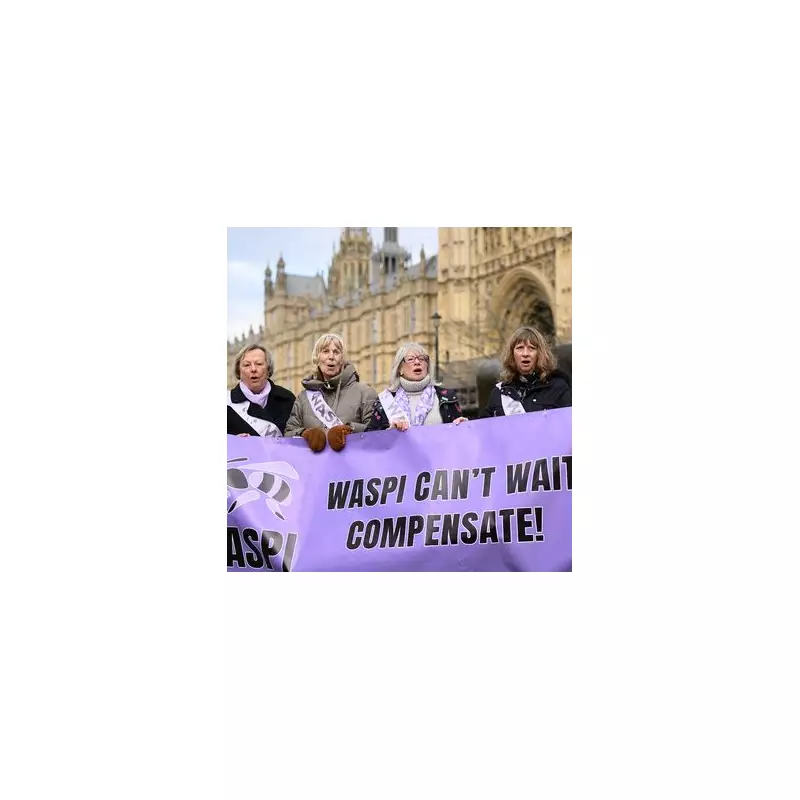
The Department for Work and Pensions has officially confirmed that a crucial decision regarding State Pension age compensation for women born in the 1950s will be delivered to Parliament before the beginning of March. This announcement brings renewed hope to the long-running campaign by the Women Against State Pension Inequality (WASPI) group, who have been fighting for financial redress after changes to their pension payments.
Parliamentary Update on Compensation Review
During a routine DWP oral questions session in Parliament on Monday, Pensions Minister Torsten Bell provided the significant update to MPs. The minister stated clearly that "a decision will be reported to the House before the beginning of March" regarding the review into State Pension age compensation for 1950s-born women.
This development follows Secretary of State Pat McFadden's announcement in November 2025 that the department would be re-taking a decision made in December 2024 concerning communications about State Pension age changes. The government has committed publicly to providing an update within three months of that December decision, establishing the March deadline now confirmed by the minister.

Cross-Party Pressure Mounts
The parliamentary session revealed substantial cross-party support for the WASPI campaign, with Liberal Democrat MP Lee Dillon informing the House that he was among 100 MPs who had signed a letter urging the government to act on behalf of affected women. Mr Dillon emphasised the strength of feeling in his constituency, stating he is "regularly contacted about this issue" by concerned constituents.
Last week, the WASPI campaign itself announced it had gathered support from 100 MPs for correspondence pressing the UK Government to "reach the right decision" for 1950s-born women financially impacted by State Pension age alterations. The correspondence specifically calls upon Work and Pensions Secretary Pat McFadden to provide an update on proposals by 2 March at the latest.
Distinguishing Between Communication and Policy Changes
Minister Bell took care to clarify the scope of the current review during the parliamentary exchange. He emphasised that the decision relates narrowly to the question of communication regarding State Pension age changes, rather than the policy changes themselves.
"We need to be clear about what is at stake here," Mr Bell stated. "This decision relates narrowly to the question of the communication of the State Pension age changes." He pointed out that for many women, the primary concern remains the actual increase and acceleration in State Pension age implemented by the coalition government in 2011.
Personal Stories Highlight Human Impact
The human impact of these pension changes was powerfully illustrated during the parliamentary session. Liberal Democrat MP Sarah Dyke shared the story of Miriam, a 70-year-old constituent from her Glastonbury and Somerton constituency who has lost approximately £50,000 after being unable to continue working and having to sell her property.
Ms Dyke revealed that over 8,000 women throughout her constituency have been affected by alterations to the State Pension age. "Miriam and women like her deserve fairness," she told the minister, asking whether the government would commit to properly compensating 1950s-born women and consult with the Parliamentary and Health Service Ombudsman before finalising their response.
Historical Context and Previous Recommendations
The current review follows a complex history of investigations and recommendations. A Parliamentary and Health Service Ombudsman report had previously suggested that compensation ranging between £1,000 and £2,950 per person might be appropriate for those impacted by how State Pension alterations had been communicated.
However, in December 2024, the UK Government acknowledged the ombudsman's determination of maladministration and issued an apology for delays in contacting women born in the 1950s. Despite this acknowledgement, the government concluded that a universal compensation programme, potentially costing taxpayers as much as £10.5 billion, could not be warranted at that time.

Looking Ahead to the March Decision
As the March deadline approaches, campaigners and affected women await what could be a landmark decision. The minister's confirmation that the DWP will report its findings before March begins provides a clear timeframe for resolution of this long-standing issue.
Minister Bell concluded his parliamentary remarks by reflecting on past mistakes: "We should not have seen an acceleration of the State Pension age where some women were only given five years' notice, but that was put in place by the coalition Government. We will not be making those mistakes." This statement suggests a more careful approach to pension communications going forward, regardless of the compensation decision due in March.