
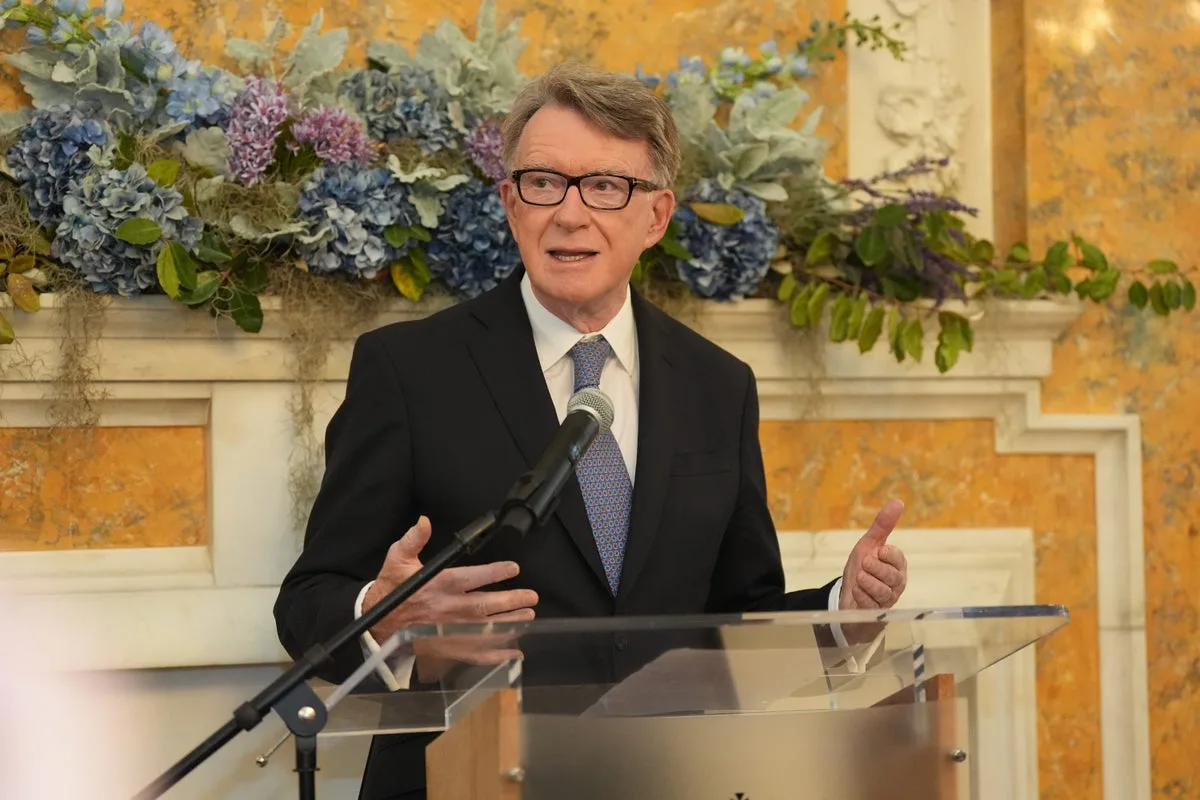
Lord Peter Mandelson faces the prospect of being stripped of his peerage amid a review of his links to the disgraced financier Jeffrey Epstein and fresh questions over lobbying activities. The former Labour grandee has already resigned his party membership, saying he wished to avoid causing further embarrassment to the party following the latest release of thousands of documents related to Epstein.
Lord Mandelson, once dubbed the Prince of Darkness, has staged numerous political comebacks over a career spanning four decades. He served in the cabinets of Sir Tony Blair and Gordon Brown, resigned twice, became a European commissioner, and returned to government in 2008 as business secretary. However, his appointment as Sir Keir Starmer's ambassador to Washington ended last year after scrutiny of his friendship with Epstein, with the prime minister ultimately removing him from the role.
New reports, including from The Sun and Bloomberg, have revealed emails in which Lord Mandelson expressed support for Epstein while he was under investigation for sexual offences. In one message, he wrote he was following Epstein closely and was available whenever needed, also urging him to remember the Art of War when dealing with prosecutors. Another message, sent shortly before Epstein was sentenced to 18 months in prison, advised him to fight for early release, and on the day before the sentence began, Lord Mandelson told Epstein he thought the world of him.
The peer has expressed deep regret over the association, saying he carried it on for far longer than he should have done. Yet the latest release of documents has brought further scrutiny, including email exchanges from December 2009 suggesting that, while business secretary, Lord Mandelson lobbied to change a tax on bankers' bonuses, with encouragement from Epstein. This raises the prospect of additional damaging information emerging as the review continues.
Questions over whether Lord Mandelson can once again mount a political recovery now appear more uncertain than ever. The removal from his ambassador post was seen as a departure from political life from which even he might not be able to bounce back, and the current review over his title and conduct suggests his career may be facing its most daunting challenge yet.




