Lord Mandelson's Arrest for Misconduct Sends Shockwaves Through British Politics
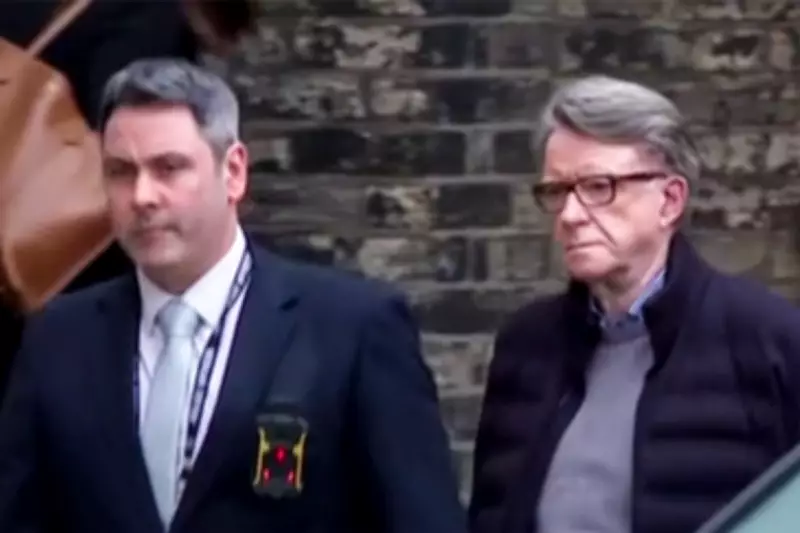
The arrest of Peter Mandelson on suspicion of misconduct in public office late this afternoon has delivered a staggering blow to the British political establishment. For those who recall the immense heights of his influence, the sight of this once-dominant figure being brought so low is nothing short of extraordinary.
A Political Titan Brought to Justice
While not as seismic as the arrest of Andrew Mountbatten-Windsor, Mandelson's detention still possesses a profound capacity to shock. Not long ago, the very idea of the 'Dark Lord' of Westminster accompanying detectives to a police station for questioning under caution would have been unthinkable. This is a man who held not one but three Labour prime ministers in his thrall, along with senior Tories who marvelled at his message manipulation and international connections.
No one operated more effectively in the shadows of power. Mandelson was instrumental in the cabal that propelled Tony Blair to the highest office and secured three general election victories. Even after being knocked back by scandal, he was rehabilitated by Gordon Brown. When Sir Keir Starmer secured the Labour leadership, he received a detailed memo from Mandelson outlining pathways to victory. The next morning, Starmer appeared at Mandelson's Camden door in a tracksuit, having cycled from his home, desperate to absorb more wisdom.

The Architect of New Labour's Direction
Mandelson's grip on political narratives was legendary. On the day of John Smith's death, he stalked the press corridor in the Commons, expressing sadness while simultaneously planting the seed that the next leader might be Blair rather than the widely expected Brown. Alongside Blair and Alastair Campbell, he drove the party away from Clause 4 and traditional unionisation, famously declaring that New Labour loved the "filthy rich."
He remained a brooding, perpetually plotting, imposing figure who preferred the shadows, standing on the edges at parties. People sought his blessing and advice, not the other way around. Now, both of Britain's twin pillars—government and monarchy—are cracking under the weight of scandal.
Broader Implications for British Public Life
As Andrew, formerly Prince, and Peter, resigned from the Lords but known as Lord for now, see their honours stripped, their liberty may be next. Both have been arrested on the same charge of misconduct in public office, developments previously thought impossible. This could signal a cleansing of epic proportions in British public life, yet too many unanswered questions and unpublished files relating to Jeffrey Epstein remain to be certain the buck stops here.
It is hard to imagine anyone higher—and there are few so mighty—being similarly felled, but others with grand reputations, treated deferentially and able to open locked doors, could yet emerge. What is clear is that on this side of the Atlantic, we are unafraid to strike down totems, even if they question our whole national way of life.
A Stark Contrast with American Accountability
Sir Keir Starmer's statement that "nobody is above the law" came shortly before news of Andrew's arrest broke. In the US, the great and good have not faced such glaring humiliation. The contrast is stark: the brother of our king and a political giant who was recently ambassador to Washington have been felled, while in America, not one former or current senior office-holder has been interviewed by police, let alone arrested.
It can be argued that Mandelson and Mountbatten-Windsor face questioning for abusing official roles, whereas in the Epstein material, business executives have been embarrassed or resigned, but no governmental figures have been accused of favours for the late convicted sex offender. This fine distinction may evaporate with closer scrutiny of millions of Epstein documents.
The Role of Public Opinion and Legal Action
Ultimately, the UK's court of public opinion has brought the pair down. In the States, the appetite for probing their biggest beasts is lacking—especially from Republicans and the White House, given Donald Trump's friendship with Epstein. Britain's law enforcers have not hesitated, with a clear steer from the prime minister to act as they see fit.

Our history, particularly recently, is littered with charges of cover-ups and obfuscation, perhaps explaining why we are acting now. What unfolds in the UK over Epstein is of greater consequence than anything in the US, where the press is cowed and prosecutors are blinkered. These are turbulent times, but if a positive emerges, it is that democracy in the UK is very much alive—a claim that cannot be made for present-day America.