Lord Triesman: A Life of Idealism Across Politics and Sport
David Triesman, Lord Triesman, has passed away at the age of 82, leaving behind a remarkable legacy that traversed the worlds of academia, trade unionism, politics, and football. His public life was characterised by a visionary idealism that began in his teenage years and propelled him through a diverse and often tumultuous career.
Early Career and Political Foundations
Born in Hitchin, Hertfordshire, and raised in a prefab in north London near Tottenham Hotspur's former White Hart Lane ground, Triesman was immersed in political debate from a young age. His parents, both Jewish communists, fostered an environment of radical thinking. His father, Michael, worked as an advertising manager for the Daily Worker, while his mother, Rita, was a teacher and actor. Triesman's second given name honoured Maxim Gorky, the Soviet socialist writer.
Educated at the Stationers' Company's school in Hornsey, he joined the Labour party at 16 and briefly worked in journalism before studying at the University of Essex. He graduated with a BA in philosophy and sociology in 1968, a year of student revolution across Europe. During this time, he was a founder member of the Radical Student Alliance, was briefly suspended for his activities, and acquired an MI5 file. Between 1970 and 1976, he was a member of the Communist party before rejoining Labour.

Academic and Trade Union Leadership
Triesman began his working life as an academic, earning a master's in philosophy at King's College, Cambridge. From 1970 to 1974, he worked as a senior researcher at the Institute of Psychiatry, London University, studying addiction. He then moved into the trade union world, first on secondment at the ASTMS (Association of Scientific, Technical and Managerial Staffs), and later as a lecturer and research director at South Bank Polytechnic (now London South Bank University) in 1975.
In 1984, he became national negotiating secretary for the lecturers' union Natfhe, and in 1993, he was appointed general secretary of the Association of University Teachers. This role paved the way for his entry into high-level politics.
Labour Party Leadership and Government Roles
Triesman was chosen by then-chair Charles Clarke to run the Labour party as general secretary from 2001 to 2003, a period leading up to the Iraq war. He helped stabilise party finances and bolster trade union support for Tony Blair, with whom he shared a friendship and a love of music, including playing the electric guitar. However, tensions emerged when Ian McCartney became chair in 2003, and his tenure was cut short due to personal publicity issues and the Labour loss in the Brent East byelection.
In 2003, he was promoted to the House of Lords and took on government roles, including in the whips' office and as a junior minister at the Foreign Office in 2005. Under Gordon Brown in 2007, he moved to the Department of Innovation, Universities and Skills, focusing on intellectual property and quality. He later served as shadow spokesman on business under Ed Miliband and for foreign affairs from 2011 to 2015.
Football Association Chairmanship and Controversy
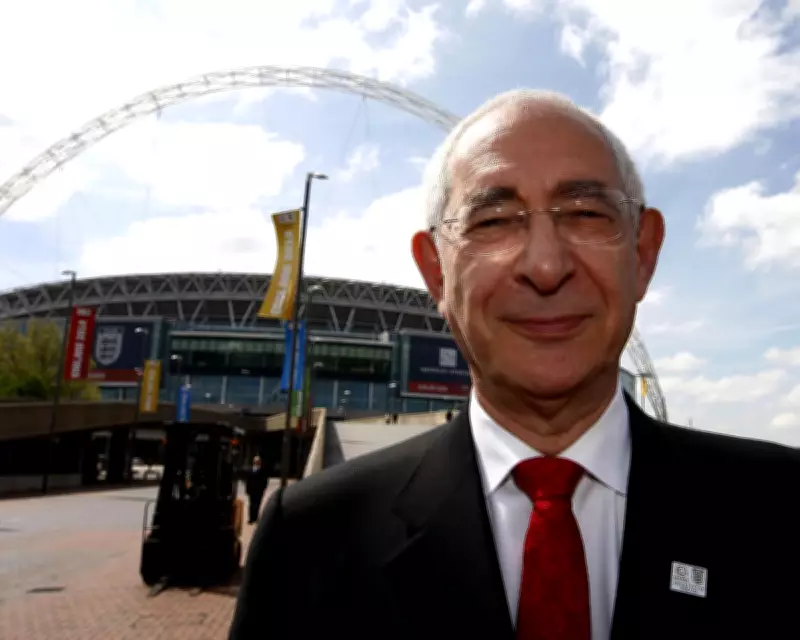
A qualified senior football referee who had played for Tottenham Hotspur's youth team in the 1960s, Triesman served as chair of the Football Association from 2008 to 2010. This role included chairing England's 2018 FIFA World Cup bid. However, his tenure ended abruptly in 2010 when he was forced to resign after a newspaper sting recorded him alleging bribery of referees by Spain and Russia ahead of that year's World Cup.
Despite this, he was praised for his integrity, particularly in 2011 when he testified before a parliamentary inquiry into football governance. An insider in the sport described him as "too straight, too honest and too nice" to succeed in such a position.
Later Life and Legacy
Triesman remained an active member of the Lords and various public bodies, and in 2011, he founded his own consultancy dealing in property and private equity. He held numerous academic awards and visiting fellowships, and accepted public appointments in education, affordable housing, industrial relations, finance, and regulation.

He is survived by his wife, Lucy Hooberman, a documentary film-maker whom he married in 2004, and their daughter, Ilona. Throughout his life, Triesman's search for fairness was his guiding principle, as he once said, "I take a pride in making things work." His career, though marked by challenges, reflected a steadfast commitment to idealism and public service.