
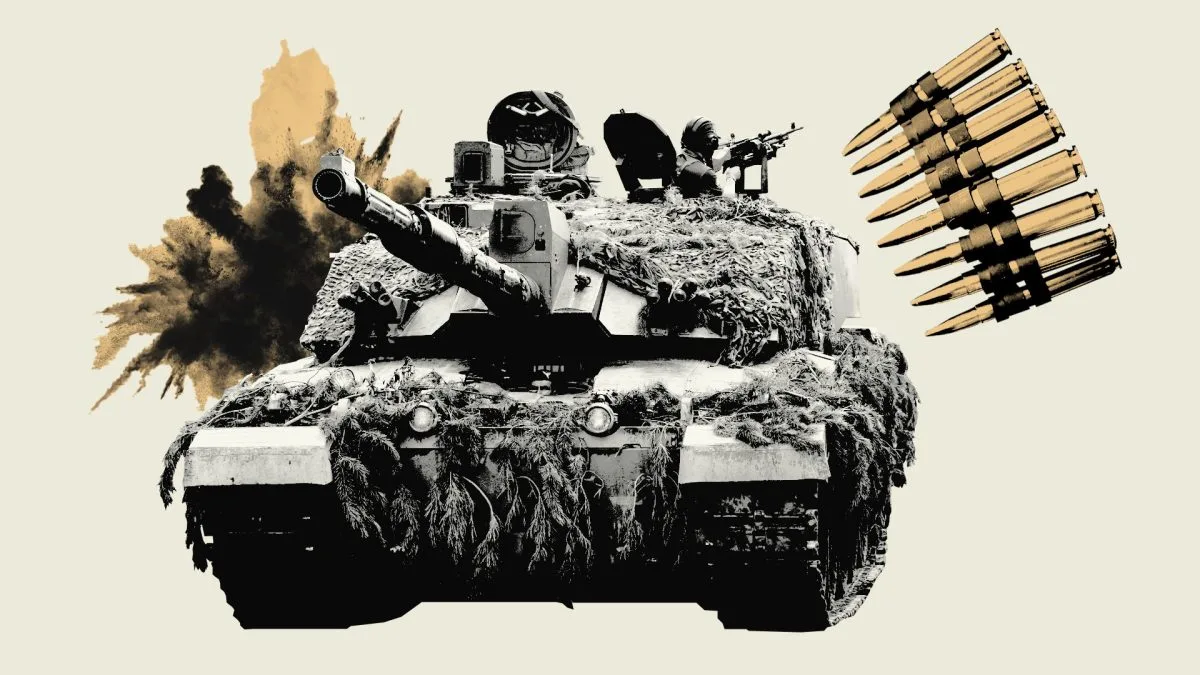
Britain is facing a more dangerous world than in 1937, yet its defence posture remains stuck in peacetime. The recent Iran conflict highlighted critical gaps: only three Navy ships capable of defending against drone attacks, and the Greek navy had to be drafted in to assist.
Military capabilities have dwindled dramatically since 1990: from over 50 frigates and destroyers to barely half a dozen deployable; from five Army divisions to perhaps one credible war-fighting division; from 36 RAF fast jet squadrons to just six. High-intensity conflict still demands serious hardware, as seen in Ukraine and the Middle East.
The government has offered grand rhetoric and long-term pledges to raise defence spending to 3.5% of GDP by 2035, but no action. Last year's Strategic Defence Review, led by Lord Robertson, General Sir Richard Barrons and Fiona Hill, laid out the threats and capability gaps, yet nearly a year later no major procurement decisions have been made.
The Treasury argues the country cannot afford more defence spending, but security and prosperity are symbiotic. Half of Britain's GDP relies on international trade; disruptions to sea lanes or undersea cables carrying trillions in daily transactions would impose huge economic costs. Cyber attacks are relentless, and Russia has Britain in its crosshairs.
Failing to invest does not save money; it increases the bill later. London lacks a dedicated air defence shield, the Army would exhaust ammunition in days in a Ukraine-scale conflict, and Britain has no standing industrial capacity to replace tank losses. Russia produces hundreds of tanks annually on a war footing.




