Larry the Cat Celebrates 15 Years as Britain's Chief Mouser at Downing Street
In an era of political turbulence, stability in Britain often comes with four legs, whiskers, and a well-documented fondness for napping. Larry the cat, the official rodent-catcher and unofficial first feline of the British government, celebrates a remarkable 15-year tenure this Sunday, having served as a reassuring presence through the administrations of six prime ministers. Many observers humorously note that it sometimes seems the prime ministers have served under him, rather than the other way around.
A Symbol of Stability in a Changing Political Landscape
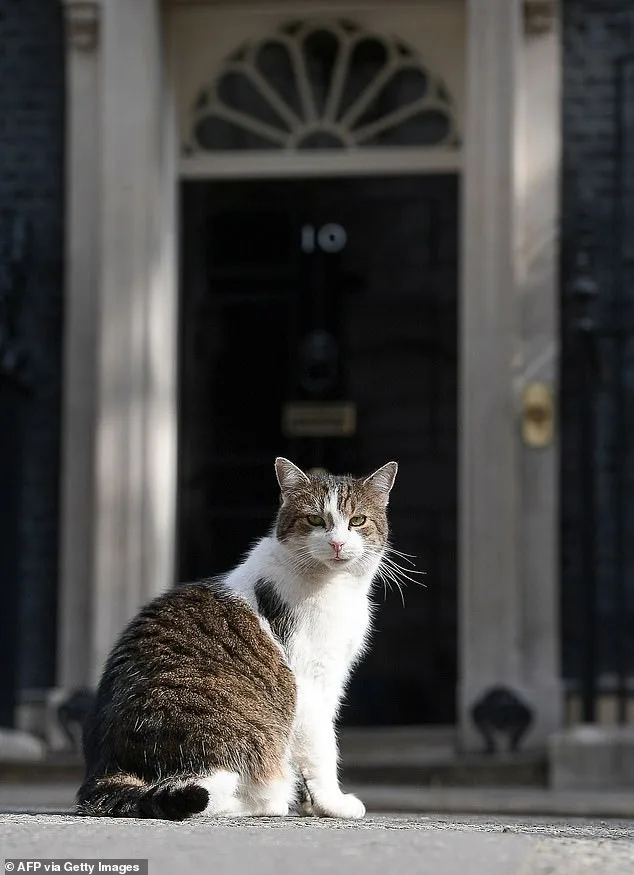
"Larry the cat's approval ratings will be very high," remarked Philip Howell, a Cambridge University professor specializing in the history of human-animal relations. "And prime ministers tend not to hit those numbers. He represents stability, and that's at a premium." The gray-and-white tabby's journey from a stray on London's streets to the seat of power at 10 Downing Street is a classic rags-to-riches tale. Officially titled the Chief Mouser to the Cabinet Office, Larry was adopted from the Battersea Dogs and Cats Home by then-Prime Minister David Cameron and entered Downing Street on February 15, 2011.
According to his official profile on the UK government website, Larry's duties are multifaceted, including "greeting guests to the house, inspecting security defenses, and testing antique furniture for napping quality." He roams freely around the famous address and has developed a particular talent for upstaging world leaders as they arrive at the iconic black door, much to the delight of the assembled press corps.
Master of the Photo-Bomb and Feline Diplomacy
"He's great at photo-bombing," said Justin Ng, a freelance photographer familiar with Larry's habits. "If there's a foreign leader about to visit, we know he'll just come out at the exact moment that meet-and-greet is about to happen." Over the years, Larry has encountered numerous global figures, often requiring them to step around or over him. His interactions are famously selective; he is largely reported to be unfriendly to men, though he showed affection for former US President Barack Obama and managed to draw a smile from Ukrainian President Volodymyr Zelenskyy during a visit to London.
One memorable incident occurred during US President Donald Trump's 2019 visit, when Larry crashed the official doorstep photograph and subsequently took a nap beneath the presidential armored car, known as the Beast. While reports on his rodent-catching prowess are mixed—he has been photographed catching the occasional mouse and once a pigeon, which escaped—his primary role seems to be one of charm over chase.
"He's more of a lover than a fighter," Ng observed. "He's very good at what he does: lounging around and basically showing people that he's very nonchalant."
Cohabitation and Rivalries in the Political Pet World
Larry's tenure has not been without its domestic challenges. He has cohabited, sometimes uneasily, with other prime ministerial pets, including Boris Johnson's Jack Russell cross, Dilyn, and Rishi Sunak's Labrador retriever, Nova. He is carefully kept separate from current Prime Minister Keir Starmer's family cats, JoJo and Prince, who reside in the private quarters while Larry maintains dominion over the working areas of Downing Street.
His most notable rivalry was with Palmerston, the diplomatic top cat at the Foreign Office across the street from Number 10. The two were caught tussling on several occasions before Palmerston retired in 2020. Palmerston passed away this month in Bermuda, where he had been serving as a "feline relations consultant" to the governor.
Enduring Presence and National Icon Status
Now estimated to be 18 or 19 years old, Larry has slowed down slightly but continues to patrol his territory and sleep on a favored window ledge above a radiator just inside the Number 10 door. He stands as a unique form of British soft power in feline form, and any prime minister considering his removal would likely face significant public backlash.
"A cat-hating PM, that seems to me to be political suicide," Professor Howell stated. He highlighted how Larry's status as a nonpartisan "official pet" distinguishes him from the often strategically deployed presidential pets in the United States, which are typically dogs. "The fact that cats are less tractable is part of the charm, too," Howell explained. "He's sort of whimsically not partisan in a political sense, but he tends to take to some people and not to others and he won't necessarily sit where you want him to sit and pose where you want him to pose. There is a certain kind of unruliness about Larry which I think would endear him, certainly, to Brits."
As Larry marks this significant milestone, he remains an enduring, beloved fixture at the heart of British political life, a whiskered witness to history whose very presence offers a touch of continuity amidst the constant churn of governance.