

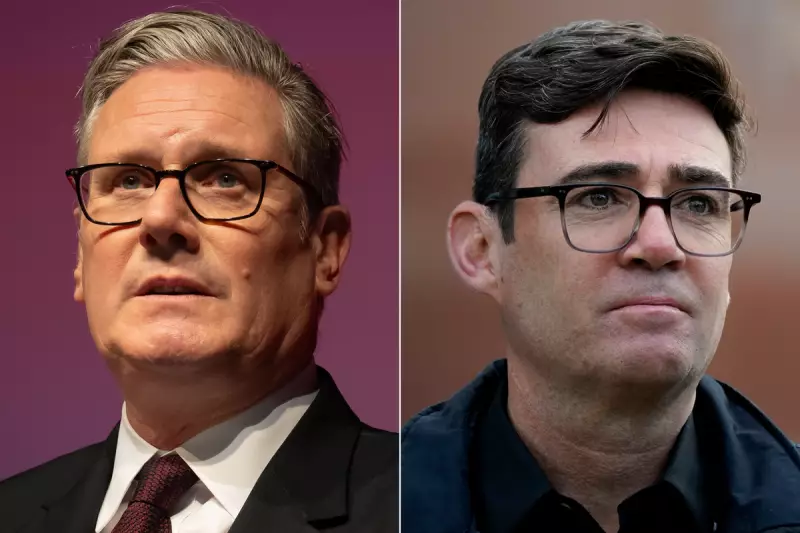
Labour Rebels Accuse Starmer of 'Stitch-Up' as Burnham's Westminster Return Blocked
Labour rebels have launched a fierce attack on Sir Keir Starmer and his allies, branding the blocking of Andy Burnham from running as an MP in the upcoming Gorton and Denton by-election as a deliberate "stitch-up". The decision by Labour's National Executive Committee (NEC), which voted 8-1 against the Greater Manchester mayor's application, has ignited a significant internal party row, with backbenchers circulating a letter demanding a reevaluation.
Internal Backlash and Factional Tensions
The letter, shared among Labour MPs, warns that losing the seat to Reform UK would be "unimaginable" and criticises the move as undermining devolution. It describes the decision as "a remote stitch-up from a small group of people at the very top in London", highlighting deep-seated factionalism that some fear could "destroy the Labour Party". Supportive MPs have expressed outrage, with one labelling it "completely outrageous" and "incredibly disappointing".
In response, Mr Burnham took to social media to voice his disappointment, stating: "I am disappointed by today's NEC decision and concerned about its potential impact on the important elections ahead of us." He also criticised "the way the Labour Party is being run these days", hitting back at those supporting the block. His remarks have fuelled the perception of a leadership rift, as allies of Sir Keir reportedly worried that allowing Burnham a path back to Westminster might pose a threat to his leadership.

Leak Controversy and Cabinet Minister's Admission
The controversy deepened with allegations that the NEC decision was leaked to the media before Mr Burnham was informed. He claimed that "the media was informed of the NEC decision before I was", arguing this reveals much about the party's management. Cabinet minister Douglas Alexander admitted on Sky News that the decision may have been leaked, stating: "It wouldn't be the first time that what was supposed to be a confidential meeting about internal matters in the Labour party with a large number of people in the room leaked out."
Sources close to Burnham noted that The Guardian posted the decision on social media at 11.56am, while he wasn't called by the party until 12.12pm and emailed at 12.20pm. Labour sources initially denied the allegations as "categorically untrue", but Mr Alexander's comments suggest a possible breach of protocol, adding to the turmoil.
Strategic Justifications and Electoral Risks
Cabinet ministers have defended the decision, framing it as a matter of strategic focus rather than factionalism. Scottish Secretary Douglas Alexander argued that allowing Burnham to stand would not have been a "risk-free choice", as it could trigger a mayoral by-election in Greater Manchester, diverting resources. He explained: "There would have been the equivalent of 20 by-elections diverting time, energy and money to a Manchester mayoral contest", which Labour might lose given Reform UK's significant spending advantage.
Mr Alexander emphasised that the judgment was "more about focus than factionalism", acknowledging Sir Keir's involvement but noting it was an NEC subcommittee decision. He warned of the electoral risks, stating: "Reform are outspending us about 10-to-one at the moment... you can never take anything for granted." This perspective aims to downplay internal strife, but rebels remain unconvinced.
Broader Implications and Party Unity
The blocking of Mr Burnham, seen as a potential leadership rival, raises questions about Sir Keir's leadership style and party governance. An editorial highlighted that while Sir Keir has faced criticism for policy U-turns, he has shown determination in enforcing party discipline, as seen in past actions against figures like Jeremy Corbyn. The backlash piles pressure on him to deliver on manifesto pledges and maintain unity.
Labour MP Karl Denton warned of "a lot of bloodletting" following the decision, calling it a "mistake". Meanwhile, in a blunt exchange, Mr Burnham responded to a Starmer biographer's comment about adding to "psychodrama" by saying: "I'm not sure losing a by-election does us any good either." This underscores the high stakes and personal tensions involved.

As the party grapples with this internal crisis, the focus shifts to how Sir Keir will navigate the fallout and whether the NEC will reconsider its stance. The episode not only highlights factional divides but also tests Labour's cohesion ahead of critical elections, with implications for its electoral strategy and public perception.





