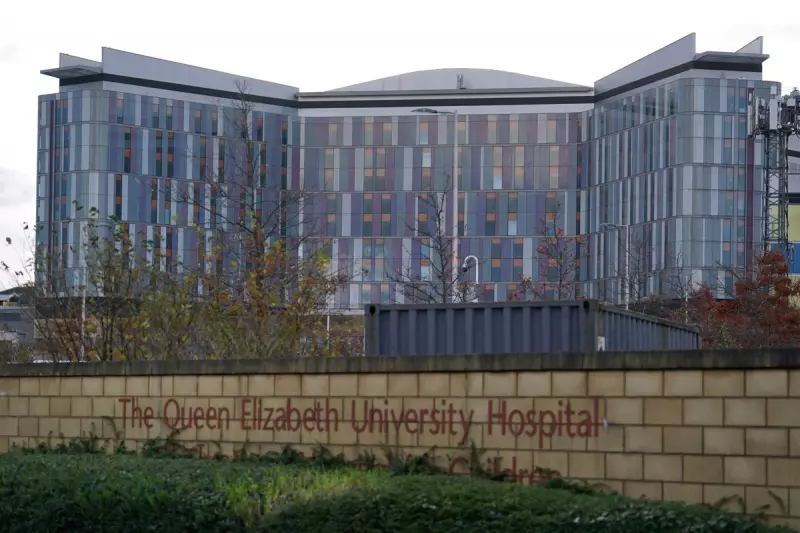
Scottish Labour is set to trigger a significant parliamentary confrontation this Wednesday, forcing a Holyrood vote that demands immediate and comprehensive disclosure of all government communications surrounding the Queen Elizabeth University Hospital infection scandal.
Motion Calls for Full Transparency
The party has formally lodged a parliamentary motion that explicitly calls upon Scottish Government ministers to publish and permanently preserve every record connected to the hospital's troubled history. This includes all documentation regarding contaminated water supplies, ventilation system failures, and what Labour describes as the "premature opening" of the facility.
Furthermore, the motion insists on the release of all subsequent communications related to how infection outbreaks were managed at the site. Scottish Labour has also submitted formal requests for information from the SNP administration, specifically questioning whether any emails, text messages, letters, documents, or other records from the relevant period—including WhatsApp messages and other digital communications—have been deleted or destroyed.

A Scandal of Historic Proportions
The Queen Elizabeth University Hospital (QEUH) and the adjoining Royal Hospital for Children, both located on the same Glasgow campus, have been under intense scrutiny. The Scottish Hospitals Inquiry, which concluded its hearing of closing submissions just last week, was established to investigate the design, construction, and operational failures at these hospitals.
This inquiry was launched following a series of tragic deaths linked to infections acquired within the hospital, most notably including the death of 10-year-old Milly Main in 2017. These events have cast a long shadow over Scotland's devolved health service.
Labour Leader's Stern Accusations
Scottish Labour leader Anas Sarwar has framed the situation in the starkest possible terms. "What happened at the Queen Elizabeth University Hospital is the single biggest scandal in the history of devolution," he stated emphatically.
Mr Sarwar accused the establishment of actively obstructing justice, saying, "Families seeking answers have been blocked at every turn by powerful people trying to protect themselves—and whistleblowers have been intimidated and bullied for doing the right thing." He demanded an end to what he called a "culture of secrecy and cover-up," insisting that "those responsible must be held to account."
"People have died and their families deserve the truth—and they deserve it urgently," he added, underscoring the human cost at the heart of the political battle.
Historical Context and Political Pressure
The hospital first opened its doors in 2015, under the tenure of key SNP figures: Nicola Sturgeon as First Minister, John Swinney as Deputy First Minister and Finance Secretary, and Shona Robison as Health Secretary. The scandal's roots, therefore, reach into the highest levels of the previous Scottish administration.
During First Minister's Questions last Thursday, the current First Minister, John Swinney, indicated a potential willingness to publish relevant documents. However, Scottish Labour has signalled it will use the upcoming debate to formally request this information once more, applying sustained parliamentary pressure.
Demanding Sunlight as Disinfectant
Anas Sarwar remained unconvinced by vague assurances, arguing for total transparency. "John Swinney has failed to come clean about what the SNP Government knew, when it knew it, and what role it played in the premature opening of this hospital," he asserted.
Invoking a famous aphorism, Mr Sarwar concluded, "Sunlight is the best disinfectant. John Swinney and his ministers must publish and preserve all their communications from that time, so we can establish once and for all whether it was negligence or criminal incompetence that got us here."
The Scottish Government has been approached for comment regarding the impending vote and the serious allegations levelled by the opposition. The outcome of Wednesday's parliamentary manoeuvre could have profound implications for governmental accountability and the quest for answers from grieving families.