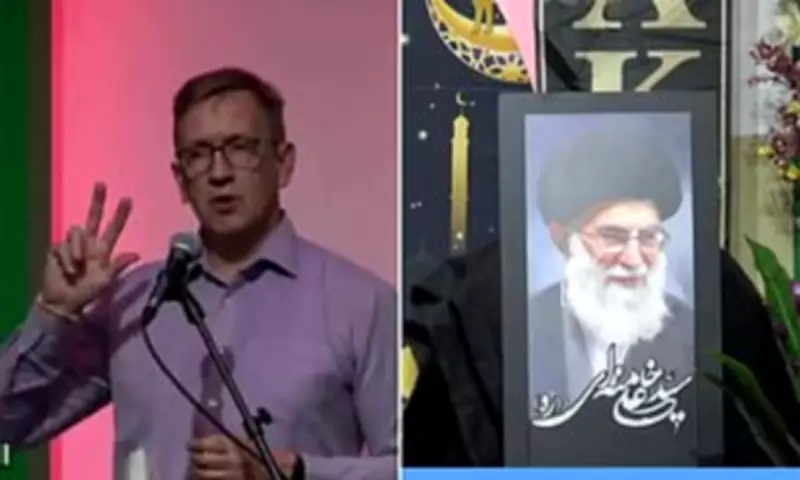
A resurfaced video has revealed Labor MP Julian Hill promising substantial federal funding to an Islamic community organisation during the 2025 election campaign, a commitment that has now been abruptly cancelled following the group's controversial mourning vigil for Iran's late supreme leader.
Funding Pledge and Subsequent Cancellation
In March 2025, speaking through a live translator to a packed community room, Julian Hill announced that if the Federal Labor Government was successful at the upcoming election, they would provide $670,000 to the Taha Humanity Association. The funding was specifically earmarked for developing community infrastructure including classrooms, kitchens, and halls at their Dandenong-based centre.
Hill explicitly emphasised that the money was intended solely for community facilities development, not for religious activities or land purchases. During the same event, he addressed Labor's migration and citizenship reforms, highlighting the end of discrimination for partner visa applicants while managing audience expectations about standard processing timelines.

Minister's Decision on Social Cohesion Grounds
On Wednesday evening, Multicultural Affairs Minister Dr Anne Aly announced she had reviewed the grant and decided to cancel it entirely. "Due to social cohesion concerns I've decided to not go ahead with a grant for the Taha Humanity Association," Dr Aly stated definitively. "We are not proceeding with this election commitment."
The government confirmed that the $670,000 grant has been formally axed, marking a significant reversal of the earlier election promise made by the Labor MP.
Controversial Vigil Sparks Political Backlash
The context surrounding the funding commitment shifted dramatically when the Taha Association, a Shia Muslim community organisation, hosted a mourning ceremony following the death of Ayatollah Ali Khamenei, who was killed in US-Israeli airstrikes. During the vigil, the group praised the Iranian leader, describing him as "a Muslim leader who remained committed to faith, justice and dignity" who "stood for unity among Muslims and supported those in need."
This tribute proved immediately controversial given Khamenei's regime has been linked to mass atrocities, including the killing of over 30,000 protesters during his rule. The mourning ceremony triggered significant political backlash across Australian political circles.
Opposition Criticism and Government Defense
Shadow Home Affairs Minister James Paterson accused the government of failing to conduct proper due diligence before making the funding announcement. "I think we do have to ask some questions about the due diligence of the Albanese Government in making this announcement," Paterson told the ABC.
He suggested Hill should have understood the group's likely views and dismissed claims that the MP could not have foreseen the 2026 event. "Any organisation that thinks it is a good idea to mourn the Ayatollah Khamenei is probably an organisation that is rife with extremist views," Paterson asserted. "I would be shocked if Julian Hill was unfamiliar with those issues."
Labor MP Ed Husic countered this criticism, calling such expectations unfair and insisting that Hill could not reasonably predict how the centre would react to future overseas events. "I don't recall seeing him with a crystal ball," Husic remarked pointedly. He noted that while supporting community facilities is routine government practice, such support must always comply with legal and social cohesion standards.
Broader Implications for Community Funding
This incident highlights the complex challenges facing multicultural funding programs in Australia, particularly when community organisations express views about international figures that conflict with Australian values. The cancellation demonstrates how social cohesion considerations can override previous political commitments, even those made during election campaigns.

The controversy raises important questions about due diligence processes for community grants and the extent to which politicians can or should anticipate how recipient organisations might respond to future international events. As Australia continues to navigate multicultural policy implementation, this case serves as a significant example of how geopolitical events can unexpectedly influence domestic funding decisions.