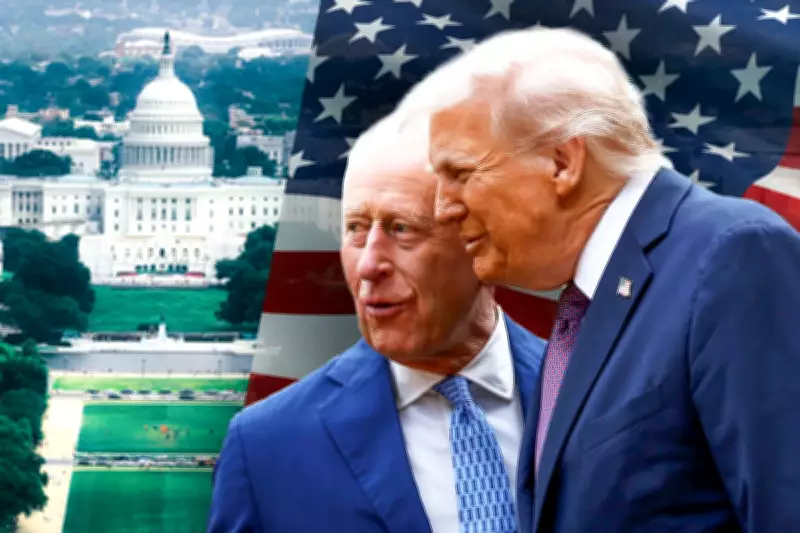
King Charles's Washington Visit Faces Trump Tensions and Epstein Fallout
King Charles III's scheduled visit to Washington this April, the first by a British sovereign in nearly two decades, has become increasingly fraught with diplomatic challenges and personal complications. The historic trip, intended to strengthen transatlantic ties, now unfolds against a backdrop of deteriorating relations between US President Donald Trump and UK Prime Minister Sir Keir Starmer, compounded by the ongoing Epstein scandal involving the King's brother, Andrew Mountbatten-Windsor.
Diplomatic Landscape Shifts Dramatically
Just last year, Sir Keir Starmer appeared to execute a masterstroke of pragmatic diplomacy when presenting President Trump with an unprecedented second state visit invitation from the King. However, the diplomatic atmosphere has since soured significantly. President Trump recently launched a barrage of criticisms against Prime Minister Starmer, particularly targeting his response to US requests to use British bases for operations against Iran.
"This is not Winston Churchill that we're dealing with," Trump declared publicly, casting aspersions on Starmer's statesmanship. In subsequent interviews, the president described the prime minister as "not helpful" and characterised the transatlantic discord as "very sad." These remarks have inevitably raised serious questions about whether the Special Relationship between the United States and United Kingdom has suffered irreparable damage.

Epstein Scandal Casts Long Shadow
Complicating matters further, King Charles must navigate the ongoing fallout from his brother's connection to the late financier and convicted sex offender Jeffrey Epstein. Andrew Mountbatten-Windsor's recent arrest on suspicion of misconduct in public office has reignited the Epstein scandal at precisely the moment Charles prepares to meet with President Trump, who was once part of the same social circles as Epstein.
US Representative Robert Garcia, who previously called for Mountbatten-Windsor to testify before Congress, described the arrest as an "enormous step forward" while questioning why the US Department of Justice hasn't shown similar urgency. "It's time for the United States to end this White House cover-up," Garcia stated, adding that "President Trump and his Epstein administration are not above the law."
While Buckingham Palace has issued statements expressing sympathy for abuse victims, Washington observers believe the King should publicly urge his brother to cooperate with US authorities. This places Charles in a perilous position, forcing him to balance family loyalty against institutional accountability and diplomatic necessity.
Growing Calls for Cancellation
Former Republican strategist Steve Schmidt, founder of the anti-Trump Lincoln Project, has emerged as a leading voice calling for the King to cancel his Washington visit. Schmidt warns that proceeding with the trip would result in "brutal" humiliation for the monarchy, promising to personally guarantee such an outcome through targeted advertising campaigns.
"If the King comes to America in April, he is coming in support of a man who is defiling American values by choice," Schmidt asserts. "And if he makes that decision, he will be greeted with an advertising campaign that will boggle the British imagination."
Schmidt specifically references potential billboards in Times Square featuring images of Charles and Camilla alongside Donald and Melania Trump, Jeffrey Epstein, and Ghislaine Maxwell. He also promises to resurrect the "Tampongate" scandal from 1989, when a private phone call between then-Prince Charles and Camilla Parker Bowles became public knowledge.
Legal and Political Complications
The legal landscape presents additional challenges for the royal visit. While Congress lacks statutory power to compel foreign citizens to testify, any formal subpoena would be triggered if Andrew Mountbatten-Windsor sets foot on US soil. Furthermore, a Mutual Legal Assistance Treaty could petition British courts to force a deposition on UK territory during criminal investigations.

Should Democrats regain control of the House of Representatives or Senate in November's elections, current polite requests for interviews could be replaced by Oversight Committee subpoenas and televised hearings focused specifically on the Epstein files. This creates a hostile atmosphere that Palace insiders must strategise around as they prepare for every eventuality.
Domestic Pressures Mount
King Charles also faces significant domestic pressures as he prepares for his Washington trip. Grassroots campaigns in the UK are calling for boycotts of American products and even suggesting British withdrawal from the 2026 World Cup. This places the monarch in an impossible position: he must act as a diplomat protecting British business interests while risking being perceived as an enabler of an administration many find repugnant.
To younger generations accustomed to the more outspoken advocacy of figures like the Duke and Duchess of Sussex, the King's diplomatic neutrality and constitutional constraints might appear strange or inadequate. Yet Charles brings considerable experience to this challenging situation, having spent a lifetime observing and participating in royal diplomacy.
Potential for Royal Soft Power
Despite the numerous challenges, supporters point to the King's track record of deft diplomatic moves during political chaos. Last year, following President Trump's high-profile clash with Ukrainian leader Volodymyr Zelenskyy, Charles quietly invited Zelenskyy to Sandringham days later. This demonstrated royal "soft power" at its most effective, signalling British solidarity without publicly rebuking the White House.
Additionally, the King's decisive actions in stripping his brother of remaining titles and privileges suggest a monarch willing to prioritise institutional integrity over personal sentiment. Charles may also rely on America's substantial royalist contingent—those who travelled across the Atlantic for Queen Elizabeth II's funeral and continue to view the British sovereign as a symbol of stability.
For these Americans, the pomp and circumstance of a royal visit might represent not a political endorsement but a welcome reprieve from domestic and international tensions. As the April date approaches, the fundamental question remains whether Charles can leverage this unique heritage to repair relations with the Trump administration and endear himself to the American public, or whether he will become a pawn in a global crisis with unpredictable consequences.