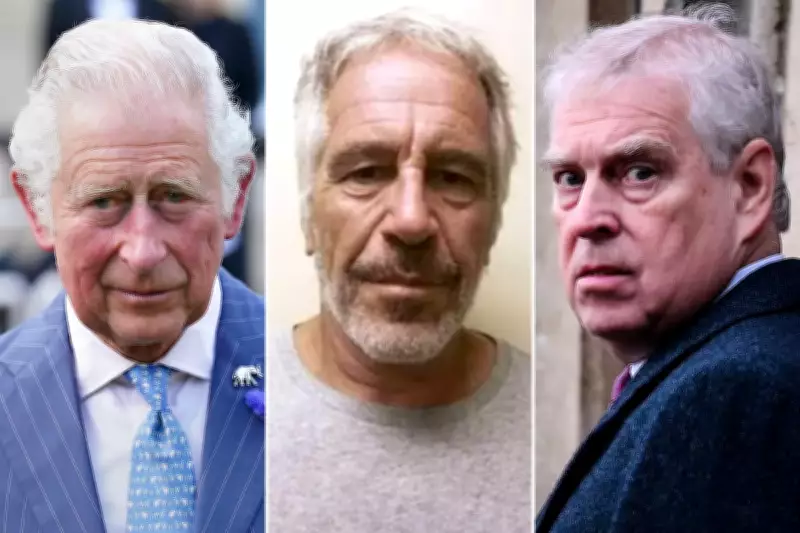
Royal Silence on Epstein Scandal: Constitutional Constraints Clash with Public Demands
As Prince William releases a carefully worded statement expressing concern over the continuing revelations from the Epstein files, King Charles faces mounting scrutiny for his continued silence regarding his brother Andrew Mountbatten-Windsor's association with the convicted paedophile Jeffrey Epstein. During a recent royal visit to Lancashire, the King was heckled once again about his brother's connections, highlighting the growing public frustration with the royal family's handling of this sordid global story.
Competing Headlines and Political Fallout
The two primary British figures implicated in the Epstein files – Andrew Mountbatten-Windsor and former Labour lord Peter Mandelson – have spent the past week competing for unenviable headlines. Mandelson briefly overtook interest in Andrew when revelations emerged that he had weaponised his position as business secretary to share confidential state information with Epstein across the Atlantic. This extraordinary abuse of power has forced current Labour Prime Minister Keir Starmer to defend his party's judgement and his own.
However, the royal family remains firmly in the spotlight. Prince Edward's recent attempt to deflect an Epstein question during an appearance in Dubai – claiming the audience was "not the least bit interested" – proved spectacularly misguided. Meanwhile, Prince William's statement ahead of his official visit to Saudi Arabia, while expressing concern for victims, notably avoided any direct reference to Epstein, Andrew, or his ex-wife Sarah Ferguson, further compounding perceptions that the royal family has failed to grasp the enormity of the situation.

Prime Minister's Constitutional Breach
In a significant development, Prime Minister Keir Starmer has broken with constitutional convention by suggesting that Andrew Mountbatten-Windsor should give evidence before a US congressional committee investigating the Epstein case. During the final leg of his Asian tour, Starmer stated: "You can't be victim-centred if you're not prepared to do that." While stopping short of explicitly demanding Andrew's testimony, the Prime Minister made his position clear: "I have always said anybody who has got any information should be prepared to share that information in whatever form they are asked to do that."
This represents a clear departure from Starmer's previous position that testifying was a decision for Andrew alone. The intervention has provided ammunition for American politicians, with Vice President JD Vance responding: "I saw Keir Starmer said something about this. I'm certainly open to it."
Palace Displeasure and Constitutional Tensions
According to palace sources, King Charles was "incandescent" that Starmer suggested Andrew should give evidence without consulting the royal family first. Constitutionally, political statements involving the royal family are typically run past the palace beforehand, making Starmer's intervention particularly problematic. The Prime Minister's actions have created unwelcome pressure on the monarchy at a time when Andrew faces fresh police investigations into allegations that Epstein trafficked a woman to the UK for his pleasure.
The King's frustration is compounded by the fact that while he enjoys 60 percent approval ratings, Starmer struggles with dismal public standing. This dynamic has led many to question why the Prime Minister can speak out while the King remains silent. The answer lies in constitutional convention: the monarch must remain politically neutral and above legal processes both domestically and internationally.
Royal Family's Delicate Balancing Act
The royal family faces a difficult dilemma. While Queen Camilla has been refreshingly forthright on issues of domestic abuse and violence against women – even making a television documentary on the subject – the family appears keen to steer away from suggestions that Andrew should testify. Their concern is understandable: Andrew has proven himself loose with the truth, and the prospect of him giving evidence under oath in America could create a media and legal circus with potentially dire ramifications for the entire royal family.

Unlike in the United States, where lying under oath carries prison sentences (as evidenced by Ghislaine Maxwell's incarceration), Andrew remains protected within Britain's legal jurisdiction. However, Starmer's comments have flicked a political switch that places unwelcome pressure on the King to navigate this constitutional minefield.
Historical Precedents and Future Implications
While tensions between monarch and prime minister are not unprecedented – the late Queen experienced differences with Margaret Thatcher over South African apartheid, conflicts with Tony Blair following Princess Diana's death, and Brexit-related issues with Boris Johnson – the current situation presents unique challenges. The weekly audience between Charles and Starmer provides opportunity for constitutional correction, with the King possessing both the "right to be consulted" and the "right to warn" his prime minister.
In this era of political showmanship, the cold reality is that realpolitik may dictate that Andrew cannot be allowed to speak publicly again, let alone give evidence under oath. If this makes his royal protectors appear hypocritical, so be it. The only court that will ultimately judge the Windsors' handling of this crisis is the court of public opinion. While King Charles currently enjoys strong poll ratings, the long-term trajectory of monarchy's popularity is downward. If not handled carefully, history may judge this Carolingian era as the beginning of the end for popular constitutional monarchy in Britain.