Keir Starmer's Leadership Crisis: Alienating All Sides in British Politics
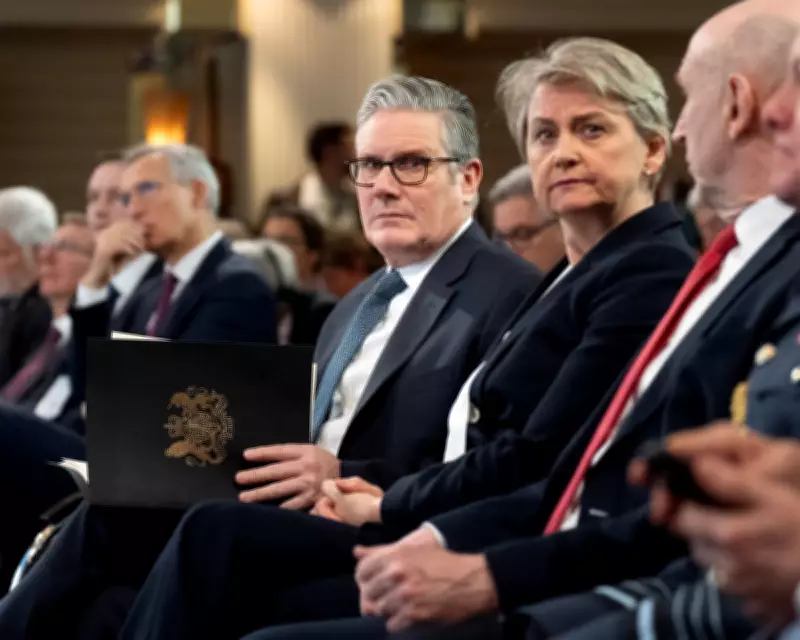
Keir Starmer, alongside Foreign Secretary Yvette Cooper and Defence Secretary John Healey, attended the Munich Security Conference on Saturday, where he called for a remaking of western alliances and enhanced European defence cooperation. This move provided a brief respite from the swirling sense of imminent demise around his leadership, but it is likely only a temporary hiatus. Starmer finds himself in a deep hole, with his persistent unpopularity stemming from an abundance of reasons for everyone to deplore him.
Policy Missteps and Perceived Lack of Principle
In policy terms, Starmer has taken stances that have established him in the minds of many as devoid of principle and compassion. On Gaza, he got it wrong from the start, from his early assertion that Israel had the right to cut off water and power to refusing calls for a ceasefire and cracking down on protest—a move later judged unlawful by the high court. This positioned him against a huge domestic swell of distress. Additionally, cuts to disability benefits made him appear callous after years of austerity, reinforcing an impression of a politician with instincts akin to a state apparatchik, enforcing pre-existing conventional wisdoms regardless of damage or unpopularity.
Immigration Rhetoric and Continuity Consensus
Feeding into this is his feverish immigration rhetoric and policy. The "island of strangers" speech, hectic imagery of crackdowns and deportations, and measures making life harder for legal workers and refugees—such as extending settlement qualifying times and ending family reunification—simply build on the immigration hysteria of the late Tory years. This communicates that under Starmer, Labour is a continuity consensus party, alienating both progressive and conservative voters.

Personality and Communication Deficits
Starmer himself adds to the problem. While personality alone does not make a politician, a sense of tangibility is essential. Starmer is impalpable, hiding behind generic terms and staccato sentences using repetitive themes like "change" or his working-class roots, connected by meaningless phrases like "let me be clear." He summons characters from corporatised lives—the middle manager or jobsworth—communicating that he is just doing his job while holding the most powerful office in the country, appearing as a state representative rather than a leader with volition and conviction.
Constituency Alienation and Polling Nosedive
Who is Starmer's constituency? Not the left, to which he has made clear through policy and purges that this is not its Labour party. Not the right, which will never be at home in Labour despite deportations and capital courting. And not the centre any more, as his incompetence and lurching from debacle to debacle become increasingly hard to rationalise. This has led to a nosedive in the polls, with no clear group banging the tables for his leadership, unlike past prime ministers who had explicit constituencies like Brexiters or anti-immigration ultras.
Appointments and Establishment Deference
Further issues include appointments of lords to senior roles despite associations with sex offenders, and disruption from changing personnel after related staff departures. This lack of judgment indicts Starmer's tendency to defer to establishment names and networks, staffing a government that is a mash-up of zombie New Labour and austerity management inertia, reinforcing a sense of broken politics.
Broader Political Context and Public Disillusionment
Starmer's problem is even bigger, as disliking him has become an expression of being thwarted and let down by politicians. He feels the impact of recent government instability, corruption, and short premierships, with little time to prove himself after the Brexit and pandemic years. Expected to wipe the slate clean, he has further sullied it with his own record. His failure to understand that the political establishment was on probation, needing dramatic breaks with the past in policy and affect, has left the public on high alert for cliquishness and chaos.

The feelings of those who hate Starmer are sharpened by the fact that even he—a Labour leader campaigning on decency and uprightness—could not deliver, inspiring strong disappointment from those who expected better. This doesn't fit neatly with macro-concerns about paving the way for Reform or risks of economic instability, but it doesn't refute the reasons for his unpopularity. In many ways, Starmer is a manifestation of the dead end in British politics, caught between far-right populism and his own volatile, unintelligible, and remote regime.