A federal judge in Washington, D.C. has rejected a historic preservation group's legal attempt to block President Donald Trump's ambitious $400 million White House ballroom project. However, the judge left a narrow opening for the group to potentially revive its challenge under a different legal framework.
Judge Leon Dismisses Preservation Group's Lawsuit
U.S. District Judge Richard Leon issued a detailed opinion on Thursday denying the National Trust for Historic Preservation's request for a preliminary injunction. The injunction sought to halt construction of the massive White House ballroom, which is currently being built with private funds without congressional approval. The project occupies the site where the East Wing previously stood until it was demolished on President Trump's orders in October 2025.
Legal Theories Deemed Insufficient
In his ruling, Judge Leon characterized the preservation group's legal arguments as "a ragtag group of theories" that failed to meet the necessary legal standards. The group had based its lawsuit on provisions of the Administrative Procedure Act and constitutional claims, but Judge Leon determined these approaches were fundamentally flawed.

The judge explained that the White House Office of the Executive Residence does not qualify as an "agency" under the Administrative Procedure Act, which undermined a central pillar of the preservation group's case. This technical distinction proved crucial in the court's decision to deny the requested injunction.
Ultra Vires Claim Missing from Complaint
Judge Leon identified another significant deficiency in the preservation group's legal filing. He noted that the National Trust had failed to include an ultra vires claim in its complaint. This Latin legal term, meaning "beyond one's authority," could potentially apply to the ballroom project's use of private donations and its circumvention of congressional oversight.
"Unless and until Plaintiff amends its existing complaint to include the necessary ultra vires claim, the Court cannot address the merits of the novel and weighty issues raised by this statutory challenge," Judge Leon wrote in his opinion. This statement suggests that while the current lawsuit has been rejected, the door remains open for a revised legal challenge.
Project Background and Controversy
The White House ballroom project has generated significant controversy since its announcement. The $400 million structure is being funded entirely through private donations, bypassing the traditional congressional approval process for White House renovations. The demolition of the East Wing in October 2025 to make way for the new ballroom sparked particular concern among historic preservation advocates.
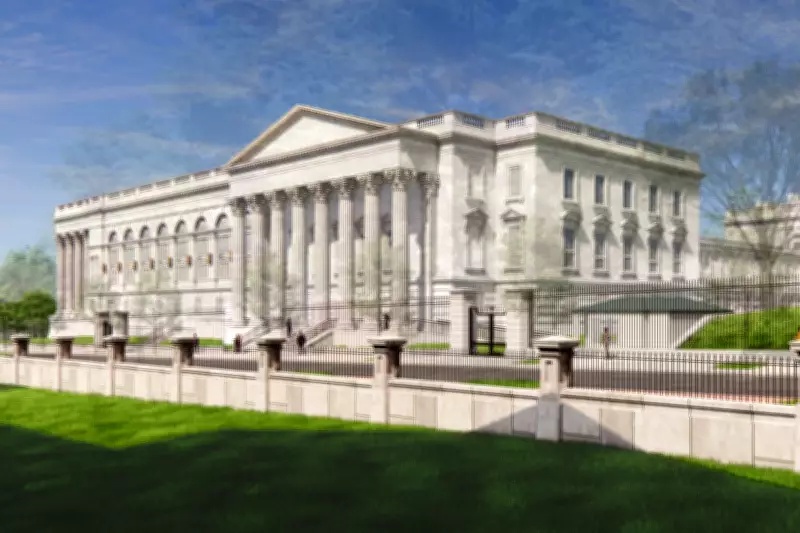
Computerized renderings of the proposed ballroom, created by Shalom Baranes Associates, show an expansive, opulent space that would significantly alter the White House's architectural footprint. Preservationists argue that the project threatens the historical integrity of the presidential residence, while supporters maintain it will create a world-class venue for state functions and diplomatic events.
Potential for Revised Legal Challenge
Although Judge Leon denied the current injunction request, his opinion carefully leaves room for the National Trust for Historic Preservation to amend its complaint. By specifically mentioning the ultra vires theory as a potentially viable approach, the judge has provided a roadmap for how the preservation group might structure a renewed legal challenge.
This development means the legal battle over the White House ballroom is likely to continue, even as construction proceeds on the controversial project. The preservation group now faces the decision of whether to refile its lawsuit with the additional ultra vires claim that Judge Leon indicated might have greater legal merit.
The case represents a significant test of presidential authority regarding White House modifications and the limits of private funding for executive branch projects. As construction continues, all eyes will be on whether preservation advocates can successfully reformulate their legal arguments to halt what they view as an unprecedented alteration to one of America's most historic buildings.