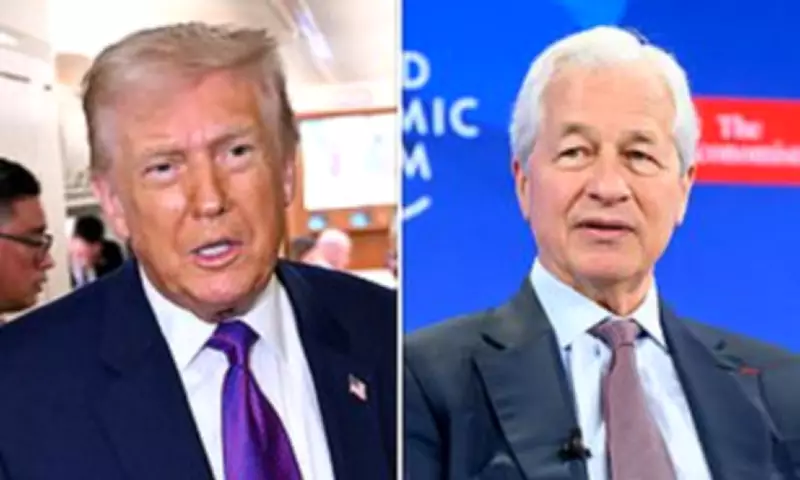
Conservatives Express Fury Over JPMorgan Chase's Decision to Close Trump Accounts
Conservative figures have reacted with outrage after JPMorgan Chase, America's largest bank by assets, admitted to closing dozens of Donald Trump's personal and business bank accounts in the aftermath of the January 6 attack on the US Capitol in 2021. The bank's confirmation came to light through documents released last Friday as part of the discovery process in a $5 billion lawsuit Trump filed against the institution and its CEO, Jamie Dimon, last month.
Bank Letters Reveal Account Closures Without Specific Reason
The released documents include two letters sent by Chase to Trump on February 19, 2021, informing him that the bank was terminating its relationship with him and closing his accounts. The letters did not cite any specific reason for the decision, merely stating that sometimes "we may determine that a client’s interests are no longer served by maintaining a relationship with J.P. Morgan Private Bank." One letter respectfully informed Trump that the bank needed to end the current relationship, giving him two months to transfer his assets to another institution.
Conservative Backlash and Allegations of Political Motivation
Prominent conservative voices have vehemently criticized the bank's actions. Steve Guest, a former communications aide to Republican Senator Ted Cruz, took to social media to declare that Dimon "has some serious explaining to do." Guest warned, "JPMC finally admitted they de-banked the President of the United States. If they can do it to POTUS, they’ll do it to you." Jason Miller, a longtime strategist for Trump, reacted more bluntly, writing: "I mean, what the f***."

Trump's legal team has framed the account closures as politically motivated. In their complaint, first filed in Florida state court on January 22, they argued that JPMorgan's decision "came about as a result of political and social motivations, and JPMC’s unsubstantiated, 'woke' beliefs that it needed to distance itself from President Trump and his conservative political views." They claimed the bank de-banked Trump because it believed "the political tide at the moment favored doing so," leading to "extensive reputational harm" and financial difficulties as Trump had to seek other institutions to handle his millions.
Legal Battle and Bank's Defense
A spokesperson for Trump's legal team told Reuters that the letters are "a devastating concession that proves President Trump's entire claim," alleging JPMorgan "admitted to unlawfully and intentionally de-banking President Trump, his family, and his businesses, causing overwhelming financial harm." However, the bank has previously stated that Trump's case is without merit and did not immediately respond to recent requests for comment.
In February, Chase filed a motion to move the case from state court to federal court in Miami immediately, with plans to permanently transfer it to New York federal court, arguing most relevant accounts and businesses were based there. The bank's lawyers also contended that Dimon was "fraudulently joined" in the case, as Trump's team invoked the Florida Deceptive and Unfair Trade Practices Act (FDUTPA) to allege Dimon personally directed the de-banking. JPMorgan's legal representatives assert that FDUTPA exempts federally-regulated bank officers like Dimon from such lawsuits.
Frosty Relationship Between Trump and Dimon
The account closures add another layer to the already strained relationship between Trump and Dimon. Notably, Dimon refused to donate to Trump's White House ballroom project, citing concerns about perception and regulatory risks. In a November interview, Dimon explained, "We have to be very careful how anything is perceived, and also, how the next DOJ is going to deal with it. We're quite conscious of the risk we bear by doing anything that looks like buying favors." Despite this, JPMorgan did donate $1 million to Trump's second inauguration, alongside other corporate contributors.

Dimon has publicly criticized Trump's understanding of economics, stating in 2023 that the former president failed to grasp the concept of the debt ceiling, calling it "one more thing he doesn't know very much about." This followed Trump's comments during a CNN townhall suggesting defaulting on US debt might be preferable to unchecked government spending, a stance nearly all economists warn would have catastrophic global consequences.
In the 2024 GOP presidential primary, Dimon backed Nikki Haley over Trump, prompting Trump to label him a "highly overrated globalist." Trump has previously called Dimon a "nervous mess" in 2018 and doubted his intelligence for presidential potential. As the legal proceedings continue, the controversy highlights ongoing tensions between financial institutions and political figures, with conservatives decrying what they see as targeted de-banking based on ideological grounds.