Chaos Engulfs Downing Street While Key Adviser Holds Firm
Panic swept through Downing Street yesterday as wickets fell and master strategists appeared to be reaching for cyanide pills. Aides scurried in all directions, their faces pale and trousers flapping in the frantic atmosphere. Amid this turmoil, one figure remained conspicuously unmoved—Jonathan Powell, the National Security Adviser, appeared secure in his position while others faced the consequences of recent government disarray.
The Shadowy Figure Behind Key Decisions
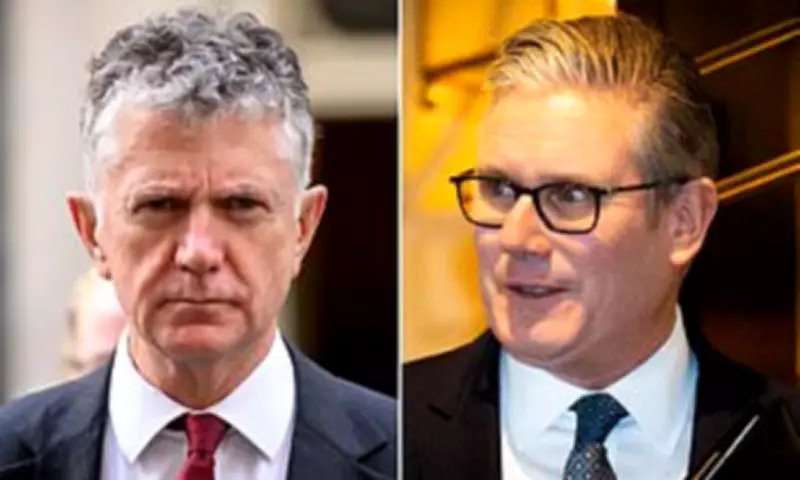
Jonathan Nicholas Powell operates as a spectral presence in Westminster, preferring the shadows to the spotlight. Unlike more visible figures such as Peter Mandelson and Morgan McSweeney, who have embraced their public reputations, Mr. Powell functions as an eminence grise—a whisperer in corridors of power who imparts advice and ensures his own survival through careful maneuvering.
It is now widely acknowledged that Mr. Powell was instrumental, alongside Mr. McSweeney, in encouraging Prime Minister Keir Starmer to appoint Lord Mandelson as ambassador to Washington DC. While Mr. McSweeney has departed following the controversial decision, Mr. Powell clings to his position with remarkable tenacity.

The Real Foreign Secretary?
Though officially titled National Security Adviser, some Westminster insiders refer to Mr. Powell as "the real Foreign Secretary." While Yvette Cooper holds the formal title, it is said she exercises limited influence over foreign policy and major diplomatic appointments. Sir Keir consistently defers to the tousle-haired Powell on geopolitical strategy, as evidenced by his presence during the Prime Minister's meeting with Chinese President Xi Jinping in Beijing recently.
Mr. Powell cut a picture of patrician confidence during that encounter, pushing back his chair and crossing his legs with apparent conceit. His involvement in high-level diplomacy extends to Sir Keir's meeting with Donald Trump at the White House last year, where he was photographed carrying an enormous briefcase.
A Career Built on Connections
At 69 years old, Jonathan Powell appears to the manner born, perhaps unsurprisingly given his family background. His older brother Charles served as Margaret Thatcher's foreign affairs adviser, while Jonathan himself joined the Foreign Office in 1979. His career breakthrough came in the early 1990s when, posted to Washington, he was instructed to cultivate relationships with then-presidential candidate Bill Clinton.
When Mr. Clinton entered the White House, Powell suddenly became the Foreign Office's foremost expert on US affairs, catching the attention of newly elected Labour leader Tony Blair. Mr. Blair appointed him as chief of staff, a position he maintained throughout the decade of Blair's premiership.
During this period, Mr. Powell was involved in several historic moments:
- The handover of Hong Kong to Chinese authorities
- Negotiations with the IRA to end their campaign
- Britain's involvement in Afghanistan and Iraq following 9/11
His approach to international relations was perhaps best captured by his instruction to then-British ambassador Sir Christopher Meyer regarding relations with the Bush administration: "Get up the a*** of the White House and stay there." This coarse directive revealed a worldview that critics argue demonstrates a lack of national confidence.
Controversial Decisions in the Starmer Government
Following Gordon Brown's decision not to retain his services after Blair's departure, Mr. Powell published a revealing account of the Blair-Brown struggles. Few anticipated his return to Downing Street, but Sir Keir Starmer appointed him following the 2024 election victory.
Since his appointment, Mr. Powell has been associated with several controversial decisions:

- The so-called Chagos Isles surrender, in which Britain agreed to transfer ownership of its strategically vital Indian Ocean air base to Mauritius while committing to pay billions for future use of facilities it previously owned outright.
- The replacement of experienced ambassador Karen Pierce with Lord Mandelson as Washington envoy, despite Ms. Pierce's established relationships with the Trump administration and proven diplomatic capabilities.
Both decisions appear driven by what critics describe as post-imperial guilt rather than strategic national interest. The Mandelson appointment particularly defied civil service convention, reflecting the Blairite approach that prioritizes personal connections over established procedures.
Surviving Against the Odds
What remains most remarkable is Mr. Powell's survival amid the current turmoil. While other advisers have fallen, he maintains his position despite being arguably "the most culpable for the disarray of the Starmer Government," according to critics. His ability to navigate political storms while controversial decisions unravel around him continues to baffle observers.
The National Security Adviser—dubbed by some as the "National Self-Loathing Adviser" for his apparent willingness to cave to international critics—represents a particular approach to British foreign policy that prioritizes accommodation over assertion. As Downing Street continues to experience upheaval, Jonathan Powell's continued presence raises fundamental questions about influence, accountability, and the direction of Britain's role on the world stage.