JD Vance's Political Future Hangs in the Balance Amid Trump's Unpredictable Loyalty
As the 2028 presidential race looms on the horizon, Vice President JD Vance emerges as a likely candidate, but his path is fraught with uncertainty under the shadow of Donald Trump's mercurial leadership. Anne McElvoy observes that far from demonstrating steadfast loyalty, Trump may be biding his time to strategically discard his deputy when it suits his political interests. This dynamic places Vance in a precarious position, where every move is scrutinized and his ambitions could be undone at a moment's notice.
Vance's Diplomatic Maneuvers and International Profile
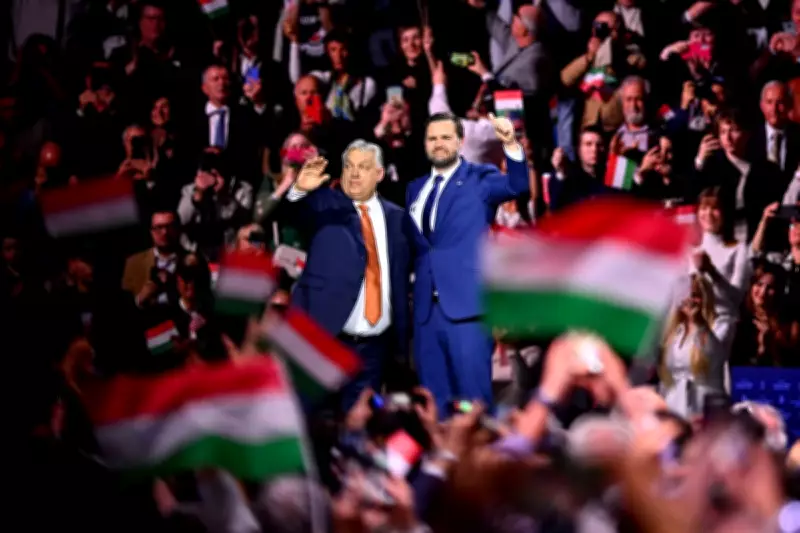
JD Vance has adeptly re-entered the spotlight following a period of low visibility during the Iran conflict. Known for his aversion to "forever wars," he has taken on a new diplomatic role, facilitated by Pakistan, aimed at de-escalating tensions between Tehran and Washington. This initiative seeks to provide off-ramps for both nations, ensuring that Operation Epic Fury does not culminate in a catastrophic failure for the United States. Simultaneously, Vance has bolstered his transatlantic influence by publicly supporting Viktor Orban, Hungary's autocratic leader, who faces a formidable challenge from anti-corruption candidate Peter Magyar in upcoming elections.
For Vance, this alliance exemplifies what he terms "moral cooperation" between the United States and smaller European nations, grounded in shared Christian values and social conservatism. Underpinning this partnership is a mutual disdain for Ukraine's pursuit of independence from Russia and the European Union's endorsement of that goal. Vance's evolution from the author of Hillbilly Elegy, a tribute to America's forgotten communities, to a ruthless truth-teller on the global stage has solidified his reputation as the "voice of America" abroad. This role is particularly pronounced when Trump is preoccupied domestically or seeks to amplify his Maga message internationally.

The Complex Dynamics of Trump's Inner Circle
Despite his elevated profile, Vance remains outside Trump's inner sanctum, a fact highlighted when he was left to manage affairs in Washington DC while the president oversaw strikes on Venezuela from Mar-a-Lago. Similarly, his absence during key meetings, such as Trump's discussions with Israeli Prime Minister Netanyahu regarding Iran hostilities, underscores his peripheral status. Trump's strategy of divide and rule aims to prevent ambitious figures like Secretary of State Marco Rubio from gaining excessive influence over America's international stance.
Both Vance and Rubio are contenders for the presidency, but history shows that few vice presidents successfully ascend to the Oval Office without a president's death in office. Within the Trump penumbra, trust is a scarce commodity. Insiders suggest Vance is deployed on sensitive tasks, such as the Pakistan talks, because he can be easily disowned if they falter, while Trump can claim credit for any successes. This calculated use of Vance reflects the president's preference for maintaining control and avoiding the elevation of potential rivals.
Policy Divisions and the Path to Succession
While Trump and Vance share a foundation in culture wars and grievances, their approaches to foreign intervention reveal significant differences. In leaked Signal conversations about authorizing attacks on Iran-backed Houthi militants, Vance expressed caution, warning of inconsistencies with Trump's European messaging and potential spikes in oil prices. His background as a combat correspondent in Iraq informs his skepticism of "forever wars," a stance that may resurface as Republicans evaluate the costs of the Iran mission.
The succession race is expected to pit the hawkish Rubio, who advocates for targeting Cuba after Venezuela and Iran, against Vance in a battle for the Maga crown. Trump's endorsement will be pivotal, likened by a source to "a giant Maga version of The Apprentice." Vance's activities—from championing autocratic leaders to critiquing European governments and cultivating ties with Silicon Valley—are all part of a calculated plan for advancement. However, this plan is vulnerable to Trump's contrarian whims, and with a year of Trump's dominance ahead, the path forward feels interminably long amidst the shifting loyalties of Trumpworld.

In summary, JD Vance navigates a complex landscape where his diplomatic efforts and cultural critiques enhance his profile, but his future hinges on Trump's unpredictable loyalty. As the 2028 election approaches, Vance must balance ambition with caution, aware that his boss may ultimately throw him under the bus to secure his own legacy.