Irish Government Faces No Confidence Vote Amid Fuel Protest Chaos
Fresh fuel protests have sparked significant traffic disruption across Ireland's motorways on Monday, despite the government's announcement of a half-a-billion-euro package aimed at addressing rising fuel costs. This ongoing crisis has escalated to a political showdown, with the Irish government now facing a motion of no confidence in parliament on Tuesday.
Continued Protests Despite Government Measures
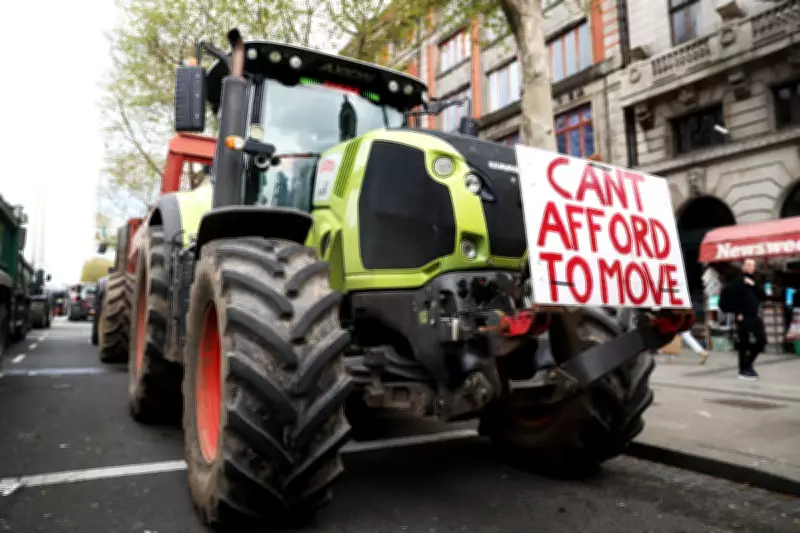
While blockades at fuel depots and Ireland's only oil refinery were lifted over the weekend, smaller but disruptive protests persisted on motorways near Dublin. Slow-moving convoys of large vehicles caused substantial delays on key routes including the M50 southbound, the M1 southbound in County Louth, and the M9 at Athy in County Kildare.
A Facebook page serving as a primary source of protest information posted conflicting messages on Sunday night, suggesting both continued action on Monday and that "all protestors and Gardai go home." This confusion reflects the decentralized nature of the demonstrations, which have been largely led by hauliers, farmers, and agricultural workers.

Government's Response and Political Fallout
The government announced a package worth approximately 505 million euros on Sunday evening, specifically targeting fuel-dependent workers affected by rising costs. These price increases have been triggered by the US and Israeli war in Iran and Iran's effective shutdown of the Strait of Hormuz. This latest package comes on top of 250 million euros worth of measures announced almost three weeks earlier.
Social Protection Minister Dara Calleary defended the government's actions, stating that engagement had been ongoing with farming and transport representative groups before protests began last Tuesday. He emphasized that the two packages announced by the Irish government were among the largest in Europe and would influence the government's budget in October.
Opposition Criticism and No Confidence Motion
The main opposition party Sinn Fein is tabling the no confidence motion, criticizing the government for not reconvening the Dail last week and failing to engage directly with protesters. Sinn Fein finance spokesman Pearse Doherty described the government's measures as "laughable" and insufficient.
"Again, they come up short, and that's why so many people are annoyed this morning," Mr. Doherty stated on Monday. "Nobody wanted to be out there. The government forced people to take to the street."
Doherty added that while fuel costs were a primary concern, the protests also reflected broader pressures including energy costs, groceries, and rising rents. He accused the government of moving from "insulting people, to demeaning them, to threaten them with the army, to refuse to talk to people and try and resolve this."
Protesters' Perspective and Loss of Control
John Dallon, a Kildare farmer and agriculture contractor who participated in the Dublin protest, acknowledged that protesters had "achieved something small" with the government measures but expressed concern about the movement's direction.
"This protest is out of my hands, it escalated to somewhat so big, and I don't know where it's going to end, but it's the government's fault," he told Newstalk radio. "We achieved something small, but this is something way bigger now, and I have no control over it."
Dallon highlighted that while he welcomed measures on green diesel, the government "should have done something" on kerosene. He concluded with a stark assessment: "It's gone to the stage that it seems like, looking out there, that the people of the island of Ireland have no confidence in this government anymore."
The seventh day of disruption coincides with the impending parliamentary vote, creating a perfect storm of political and social unrest that threatens the stability of the Irish government as it attempts to navigate both economic pressures and public discontent.