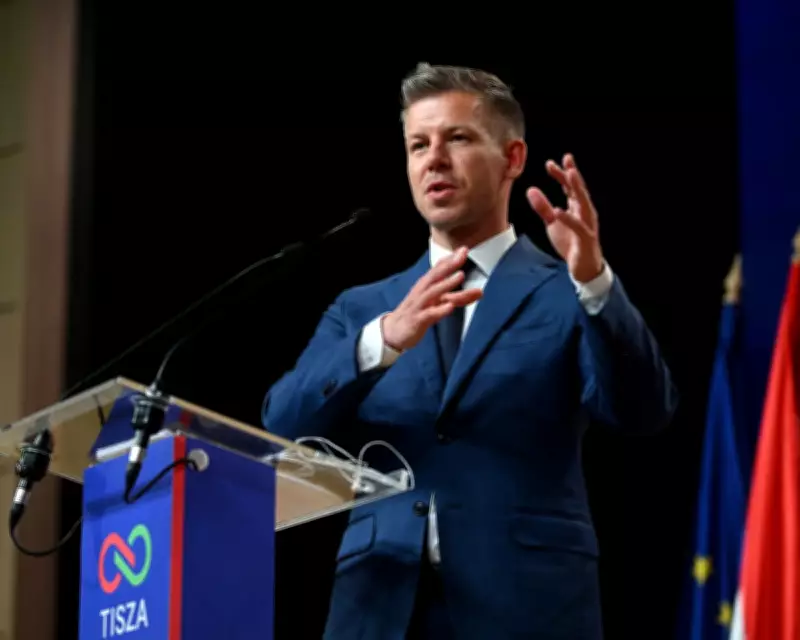
Hungary's New Leader Vows to Pursue 'Plunderers' After Landslide Victory
Hungary's prime minister-elect, Péter Magyar, has pledged to pursue those who "plundered, looted, betrayed, indebted and ruined" his country, promising a "new era" after a decisive election victory over his far-right predecessor Viktor Orbán. Magyar's centre-right Tisza party secured at least 138 of the 199 seats in parliament, granting him a powerful two-thirds supermajority.
A Swift Transition and Ambitious Reforms
Magyar stated that the full election results should be confirmed by 4 May, with hopes of installing his government the very next day. "Our country has no time to waste," he declared during a wide-ranging press conference on Monday. He emphasised that the Hungarian people voted not for a simple change of government, but for a "complete change of regime."
The new leader, a former Orbán loyalist, now possesses the parliamentary strength to roll back laws that facilitated Orbán's transformation of Hungary into an "illiberal democracy" over 16 years. Orbán's governments had systematically eroded the rule of law, packing courts with loyal judges, turning 80% of media into government mouthpieces, and enriching a close circle of cronies.

Restoring Rule of Law and Unlocking EU Funds
Magyar outlined a comprehensive agenda focused on swift anti-corruption measures, restoring judicial independence, and ensuring media freedom. These steps are crucial for the rapid unfreezing of billions in EU funds, which were blocked due to Orbán's contentious policies on justice, migration, and Ukraine.
Key initiatives include:
- Establishing a national asset recovery office to hold "political and economic criminals" accountable.
- Joining the European Public Prosecutor's Office to empower EU fraud investigations.
- Amending the constitution to limit future prime ministers to two terms (eight years), a rule that would retroactively bar Orbán from running again.
- Suspending state-funded propaganda broadcasts until unbiased coverage is ensured by a new supervisory board.
Magyar insisted his government would "fundamentally restore the rule of law, plural democracy, and checks and balances" without using anti-democratic measures. He also called for the resignation of key figures from Orbán's era, including the heads of Hungary's highest courts and the president, Tamás Sulyok, whom he described as a mere "puppet" appointed to sign documents.
European Reactions and Future Challenges
EU leaders responded enthusiastically to Magyar's victory. European Commission President Ursula von der Leyen stated that Brussels would start working with the new government "as soon as possible" to progress on issues like releasing frozen funds. She celebrated the result, saying, "today Europe is Hungarian without any question."
Germany's chancellor, Friedrich Merz, called it "a good day" that sent a clear signal against right-wing populism, noting that EU decision-making—long hampered by Orbán's vetoes—should now become easier. However, Magyar's policies on migration and Ukraine's EU accession may still cause friction with the bloc.
Orbán, who had the backing of Donald Trump and Vladimir Putin, repeatedly clashed with the EU, blocking a €90bn loan to Ukraine and delaying sanctions on Russia. In contrast, Magyar's government aims to reset Hungary's European path, though far-right groups in the European Parliament lamented the result as a setback for "democratic self-determination."
As Hungary prepares for this political transformation, the world watches to see if Magyar can deliver on his promises of accountability, reform, and a renewed commitment to European values.