The House of Representatives has decisively rejected a legislative effort to impose constraints on President Donald Trump's military operations in Iran, with Republican leaders firmly asserting that the United States is not engaged in a formal war. The vote, which took place on Thursday, saw the resolution defeated by a margin of 219 to 212, highlighting deep partisan divisions over the conflict.
Vote Breakdown and Resolution Details
The War Powers Act resolution, introduced by Representatives Thomas Massie, a Republican from Kentucky, and Ro Khanna, a Democrat from California, aimed to establish strict congressional oversight over troop deployments. Under its provisions, the president would have been required to notify Congress within 48 hours of deploying forces and withdraw them within 60 days, with a potential 30-day extension only if Congress had not declared war or authorized military force.
In the House vote, nearly all Democrats supported the measure, with only four exceptions, while just two Republicans joined Massie in voting in favor. This outcome underscores the overwhelming opposition from the GOP, which has consistently backed the administration's stance on the issue.

Republican Leadership's Stance
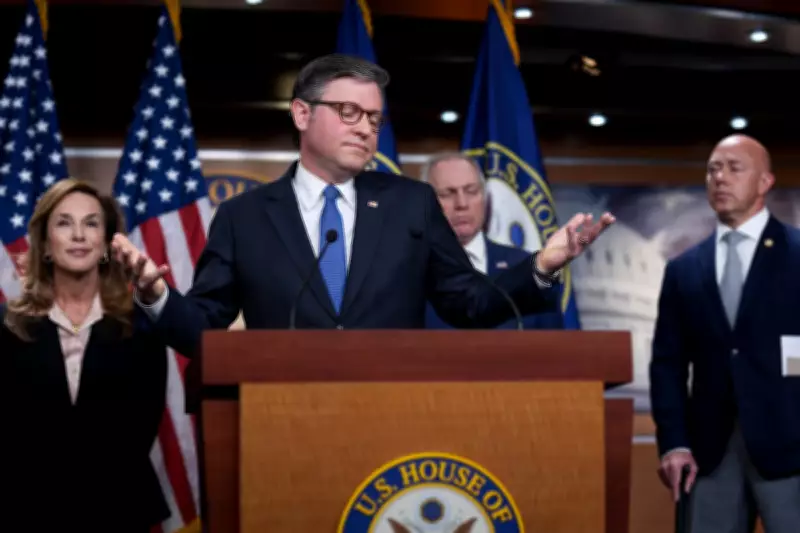
House Speaker Mike Johnson vehemently opposed the resolution, arguing ahead of the vote that the United States is not currently at war. "We're not at war right now; we're four days into a very specific, clear mission and operation," Johnson stated. He warned that passing the resolution would "put the country in serious harm and certainly jeopardize the lives of our troops and all those involved in making these great sacrifices to defend this."
Other Republicans have echoed this sentiment, with some contending that the U.S. has been in an undeclared conflict with Iran since 1979, following the overthrow of the U.S.-friendly Shah's government. This perspective persists despite President Trump and Defense Secretary Pete Hegseth having previously characterized the operations as a "war," creating a notable contradiction within the administration's messaging.
Democratic Pushback and Senate Parallels
Democrats strongly criticized Speaker Johnson's characterization of the conflict. Representative Alexandria Ocasio-Cortez of New York remarked, "I don't know how tuned in Mike Johnson is with the president of the United States, but the president himself has said that we are at war, which would make his actions patently illegal." This rebuke highlights the ongoing debate over the legal and factual status of U.S. military engagements.
The House vote followed a similar rejection in the Senate, where a War Powers Act resolution was voted down the previous day. In that chamber, all but one Democrat—Senator John Fetterman of Pennsylvania—supported the measure, while only one Republican—Senator Rand Paul of Kentucky—opposed it, reflecting a broader pattern of partisan alignment on war powers issues.
Casualties and Public Opinion
Amid these legislative battles, the human cost of the conflict continues to mount. So far, six U.S. service members have been killed in the war, with operations extending into Kuwait. This toll adds urgency to the debate over congressional oversight and the duration of military involvement.
Public opinion further complicates the political landscape. A recent poll conducted by Hart Research Associates and Public Opinion Strategies for NBC News reveals that 54% of Americans disapprove of President Trump's handling of the war in Iran, with only 41% approving. This disapproval is compounded by rising energy prices, which are causing additional financial strain for Americans at the gas pump, linking economic concerns to foreign policy decisions.
As tensions persist, the rejection of the War Powers resolution signals a continued reliance on executive authority in military matters, setting the stage for future confrontations between Congress and the administration over war powers and accountability.