House Republicans Block DHS Funding Bill, Deepening Government Shutdown
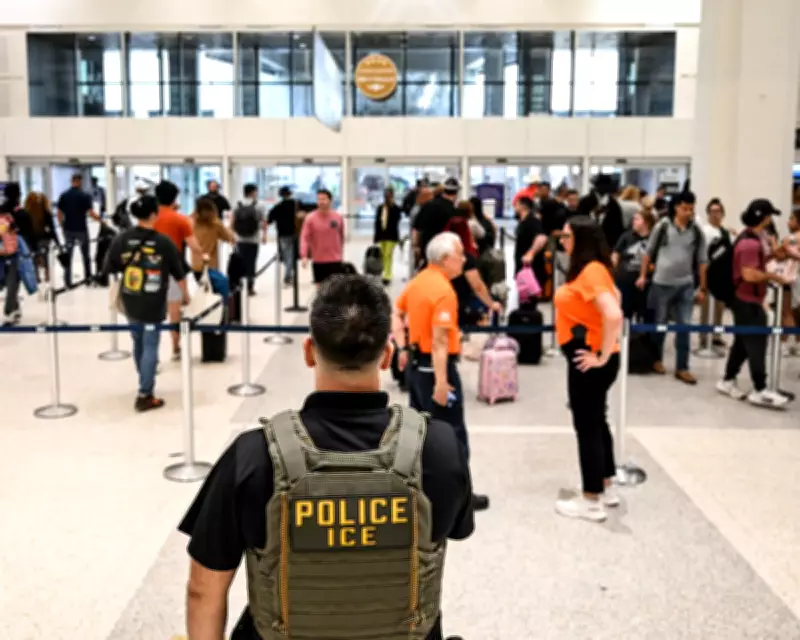
House Republicans have decisively rejected legislation, previously passed by the Senate, that would finance most of the Department of Homeland Security (DHS) while withholding funds from Immigration and Customs Enforcement (ICE) and parts of Customs and Border Protection (CBP). This move critically endangers efforts to conclude a 42-day partial government shutdown, which has resulted in thousands of DHS employees missing paychecks and caused significant travel disruptions due to extended airport security queues.
GOP Proposes Short-Term Solution Amidst Political Deadlock
Mike Johnson, the Republican House Speaker, announced on Friday that his party intends to introduce a short-term funding bill to maintain DHS operations through 22 May. He expressed hope to swiftly vote on this stopgap measure in the House, where Republicans hold a narrow majority, and forward it to the Senate promptly. Following a two-hour conference call with Republican colleagues, Johnson vehemently criticised the Senate package, labelling it a "joke" and questioning whether all Senate Republicans had thoroughly reviewed its contents.
He condemned Democratic tactics as "unconscionable," accusing them of forcing negotiations in the early hours and imposing the bill on the American public. Johnson also revealed he consulted with former President Donald Trump before his press briefing, stating, "He understands what we’re doing and why, and he supports it." This announcement comes as Johnson faces challenges in unifying his fractured party, with many conservative hardliners dismissing the Senate bill as unacceptable.

Conservative Opposition and Democratic Stance
Republican Representative Chip Roy, a key member of the House Rules Committee, denounced the Senate's predawn agreement as "laughably bad" and asserted that colleagues would outright reject it. He argued the bill is offensive for failing to fund border patrol and core ICE components, and indicated plans to attach concessions, such as voter identification measures, to advance Trump's agenda. The Senate-passed measure aimed to fund DHS subagencies impacted by the nearly six-week funding lapse, including the Transportation Security Administration (TSA), US Coast Guard, Federal Emergency Management Agency (FEMA), and Cybersecurity and Infrastructure Security Agency (CISA).
House GOP leaders' rejection sets up a confrontation with the Senate, compelling lawmakers—many already departed from Washington—to return from recess to vote on the House's continuing resolution. This proposal is unlikely to gain Democratic support; Senate Minority Leader Chuck Schumer has already declared it "dead on arrival" in the upper chamber, making it nearly impossible to secure the 60 votes needed to overcome a filibuster.
Broader Implications and Ongoing Struggles
Congress has been deadlocked for two months over comprehensive DHS funding. Democrats have insisted on stronger safeguards for federal immigration enforcement, particularly following fatal shootings during the Trump administration's crackdown in Minneapolis. Senate Republicans eventually acquiesced to a last-minute deal, reopening only affected agencies and excluding funding for ICE and border patrol. Although the bill lacks key Democratic reforms, such as requiring judicial warrants for property entries and banning officer masks, Schumer hailed it as a party victory, vowing to continue fighting for reforms against what he termed Trump's "rogue and deadly militia."
Meanwhile, the funding lapse has severely impacted TSA workers, with Acting TSA Chief Ha Nguyen McNeill reporting that some officers are sleeping in cars, selling plasma, and that 40% have ceased reporting to work. The White House noted nearly 500 officers have resigned since last month. In response, Trump signed an executive order directing DHS to pay 60,000 airport security workers, citing an "unprecedented emergency situation" and blaming Democrats for prioritising "criminal illegal aliens" over American citizens.

Efforts to secure ICE funding persist, with Senate Republicans pledging to advance federal immigration enforcement money through reconciliation, requiring only a simple majority. Senator Lindsey Graham, chair of the Senate Budget Committee, committed to proceeding swiftly to ensure ICE and other homeland security functions, along with military and voter integrity efforts, are protected from Democratic resistance.