

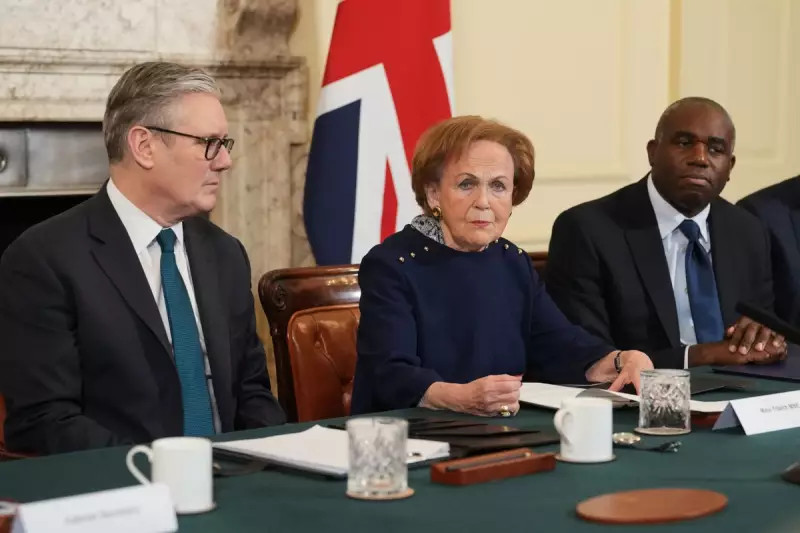
Senior government ministers were visibly overcome with emotion, wiping away tears as 95-year-old Holocaust survivor Mala Tribich delivered a powerful address to the full Cabinet at 10 Downing Street. The historic moment marked the first time a Holocaust survivor has ever spoken directly to the UK's highest government ministers during an official meeting.
A Historic First at Number Ten
Mrs Tribich received a standing ovation following her five-minute speech on Tuesday, which coincided with Holocaust Memorial Day. Prime Minister Sir Keir Starmer welcomed her to Downing Street, describing the occasion as "incredible" and noting the profound significance of her presence.
"You are the first Holocaust survivor ever to address the Cabinet in this country, and so it really is an incredible occasion," Sir Keir stated. "All of us, myself included, are humbled by your courage and inspired by your story."

An Urgent Plea to Confound Contemporary Hatred
Mrs Tribich, who was made an MBE in 2012 for services to Holocaust education, delivered a stark warning about the resurgence of antisemitism. She revealed that she and fellow survivors had been "shaken to the core" by recent terror attacks targeting Jewish communities in Manchester and Sydney during Hanukkah celebrations.
"We survivors never imagined we would witness antisemitism at the level it is today," she told the assembled ministers. "How, 81 years after the Holocaust, can these people once again be targeted in this way? Remembering the past is no longer enough."
Her address took on particular poignancy as she noted: "Soon there will be no eyewitnesses left. That is why I ask you today not just to listen, but to become my witnesses."
From Bergen-Belsen to the Cabinet Table
Mrs Tribich's personal history adds profound weight to her message. At approximately 14 years old, she was deported to the notorious Bergen-Belsen death camp with her younger cousin. She spent less than three months there, largely incapacitated by typhus, before witnessing from her sickbed as people ran toward what she would later learn were British liberation troops.
The camp, where tens of thousands including diarist Anne Frank perished, was liberated by British forces on April 15, 1945. Mrs Tribich now dedicates her life to sharing her testimony in schools and colleges across the United Kingdom.
A Call for Action, Not Just Remembrance
Addressing the government directly, Mrs Tribich issued a heartfelt plea: "I speak to you, leaders of this country I proudly call home, and I plead that you do what needs to be done."
Prime Minister Starmer responded by thanking her for her "powerful words" and committing his government to action. "It is our duty not just to hear and listen, but also to act and to absolutely deal with anybody who tries to deny or distort what happened in the Holocaust," he affirmed. He pledged the government would do "everything to tackle antisemitism wherever it reared its ugly head."
The Weight of Passing Memory
Karen Pollock CBE, chief executive of the Holocaust Educational Trust, reflected on the profound significance of the meeting. "As the Holocaust passes from living memory into history, today's meeting with the Prime Minister and Cabinet is a poignant reminder of the responsibility to confront anti-Jewish hatred and ensure that the legacies of Holocaust survivors endure," she said.
The emotional scene in the Cabinet room saw ministers lowering their heads and drying their eyes as Mrs Tribich shared her story. Her appearance served as both a memorial to the six million Jewish victims of the Nazi genocide and a urgent contemporary warning about the dangers of unchecked hatred in modern society.






