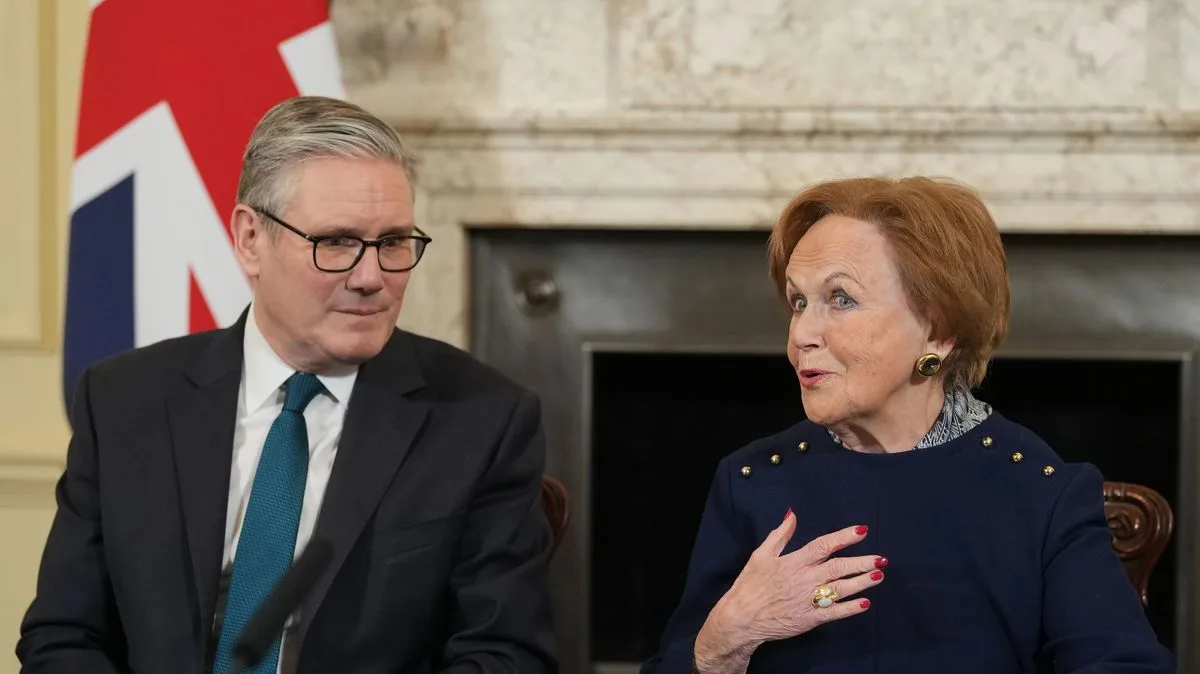
Senior government ministers were visibly moved to tears during an unprecedented Cabinet meeting on Tuesday, as 95-year-old Holocaust survivor Mala Tribich delivered a powerful five-minute address at 10 Downing Street. The historic moment, occurring on Holocaust Memorial Day, saw the Prime Minister describe the occasion as "incredible" while ministers lowered their heads and wiped their eyes in emotional response.
An Unprecedented Address to Government Leaders
Mrs Tribich received a sustained standing ovation following her speech, becoming the first Holocaust survivor ever to address a British Cabinet. Prime Minister Sir Keir Starmer welcomed her to Number 10, stating: "You are the first Holocaust survivor ever to address the Cabinet in this country, and so it really is an incredible occasion." He added that all present were "humbled by your courage and inspired by your story," emphasising the government's duty to act against Holocaust denial and distortion.
A Plea for Action Against Modern Antisemitism
Speaking directly to the assembled ministers, Mrs Tribich revealed that she and fellow survivors had been "shaken to the core" by recent terror attacks in Manchester and Sydney. She expressed disbelief that antisemitism had reached current levels, stating: "We survivors never imagined we would witness antisemitism at the level it is today. What we have seen in Manchester, and Sydney on Hanukkah, has shaken us to the core."
The survivor posed a poignant question to the government: "How, 81 years after the Holocaust, can these people once again be targeted in this way?" She emphasised that "remembering the past is no longer enough" and made a direct plea to the nation's leaders: "I speak to you, leaders of this country I proudly call home, and I plead that you do what needs to be done."
From Bergen-Belsen to the Cabinet Table
Mrs Tribich shared her personal history with ministers, explaining how she was deported to the Bergen-Belsen death camp with her younger cousin when she was approximately 14 years old. She spent less than three months at the camp, largely incapacitated by typhus, before watching from her sickbed window as people ran towards what she would later learn were British troops. The camp, where tens of thousands including diarist Anne Frank perished, was liberated by British forces on April 15, 1945.
Now serving as a representative of the British Holocaust survivor community, Mrs Tribich told Cabinet members: "I sit before you as one of the last remaining eyewitnesses to one of the darkest chapters in human history. For decades, we have spoken to people across the country, sharing our painful memories. Soon there will be no eyewitnesses left. That is why I ask you today not just to listen, but to become my witnesses."
Continuing Legacy of Education and Remembrance
Mrs Tribich, who was made an MBE in 2012 for services to education, continues to share her testimony in schools and colleges across the United Kingdom. Her Cabinet address represents a significant extension of this educational work, bringing her message directly to the heart of government. The Prime Minister thanked her for her "powerful words," acknowledging the profound impact of her testimony on those charged with national leadership.
The emotional response from ministers throughout the address underscored the continuing relevance of Holocaust remembrance in contemporary British society, particularly as concerns about rising antisemitism prompt renewed calls for governmental action and societal vigilance.




