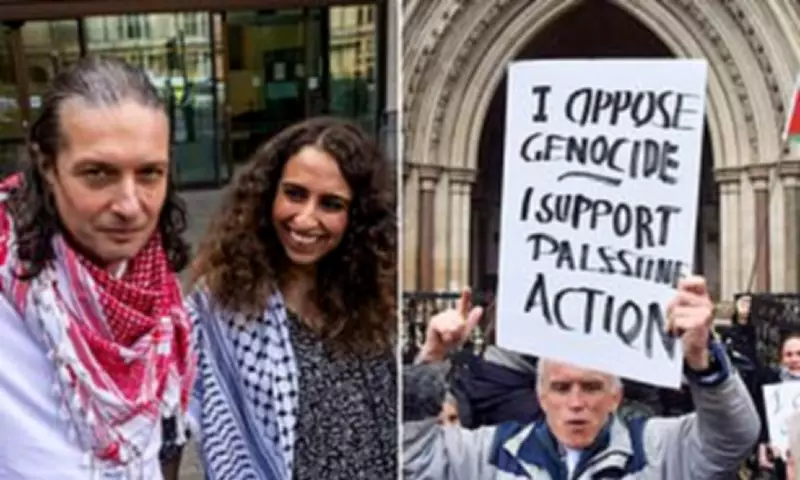
In a landmark and contentious ruling, High Court judges have overturned the Home Office's decision to proscribe Palestine Action as a terrorist organisation. The judicial panel, comprising Dame Victoria Sharp, Mr Justice Swift, and Mrs Justice Steyn, delivered a verdict that has sparked significant political and legal debate.
Contradictory Findings on Terrorist Activities
The judges acknowledged that Palestine Action had "organised and undertaken actions amounting to terrorism" in their assessment. However, they concluded that the group had "not yet" demonstrated the "level, scale and persistence" of activities necessary to justify a full proscription under current legislation.
Remarkably, the ruling stated that only a "very small number of its actions have amounted to terrorist action", creating what government sources described as a "bonkers" legal paradox where a group can commit terrorist acts yet avoid being classified as a terrorist organisation.

Human Rights Considerations Take Precedence
The court determined that banning Palestine Action represented a "stark" interference with members' human rights, particularly their rights to "freedom of peaceful assembly and freedom of association" as protected by the European Convention on Human Rights.
This aspect of the ruling presents particular challenges for Prime Minister Sir Keir Starmer, whose legal career has consistently emphasised international human rights frameworks. The decision effectively allows Palestine Action to "shelter behind human rights law" despite acknowledged terrorist activities.
Immediate Consequences and Legal Fallout
While the group remains temporarily banned pending further legal proceedings, the Metropolitan Police has announced it will pause arrests of individuals expressing support for Palestine Action. This creates an immediate enforcement dilemma for authorities.
Home Secretary Shabana Mahmood has confirmed she will appeal the ruling, though legal experts anticipate the case may ultimately reach the Supreme Court, meaning "any chance of clarity is months and months away" according to court observers.
Calls for Legislative Reform
The ruling has prompted calls for emergency measures to strengthen the process for proscribing terrorist organisations. There is growing pressure on the government to:
- Modify the entire terrorist group banning process
- Eliminate legislative weaknesses exploited by groups like Palestine Action
- Provide clearer criteria for what constitutes sufficient terrorist activity to warrant proscription
Ministers face mounting demands to "pull out all the stops" to address what critics describe as a legal "shambles" that could potentially protect individuals engaged in terrorist activities under human rights protections.
Broader Political Implications
The ruling comes amid separate revelations about former EU trade commissioner Peter Mandelson's connections with Russian oligarch Oleg Deripaska during 2004 tariff discussions on aluminium. These disclosures further complicate the government's position, raising questions about vetting processes for diplomatic appointments.
As the legal battle continues, the government faces dual pressures: addressing perceived weaknesses in counter-terrorism legislation while managing political fallout from historical associations with controversial figures. The situation underscores the complex intersection of national security, human rights law, and political accountability in contemporary British governance.