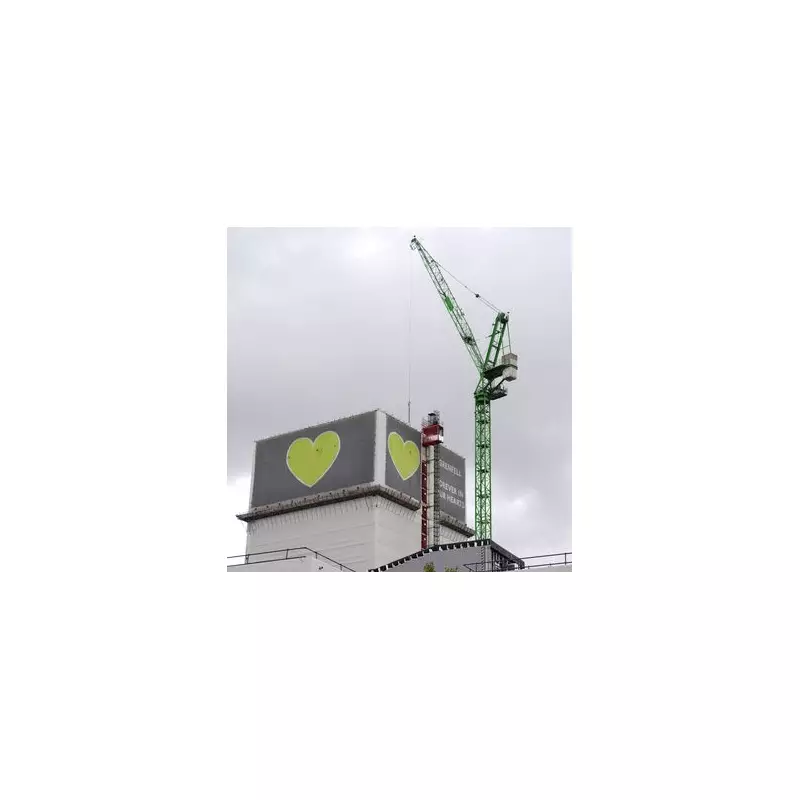
Grenfell Demolition Proves Deeply Challenging for Surrounding Community
Nine years after the devastating fire that claimed seventy-two lives, the final removal of Grenfell Tower is testing the resilience of local schools, families, and survivors in profound ways. The government pledged that the two-year floor-by-floor deconstruction by Deconstruct UK would be carried out with great care and sensitivity, designed specifically to minimise noise and disruption in the surrounding West London area.
Painful Memories Surface During Demolition Process
A quarter of the way into the demolition process, the project is beginning to surface painful memories of the 2017 inferno for the surrounding community. For those directly connected to the tragedy, the visible, final removal of the tower – which has served as a raw monument to the event – is proving deeply challenging on an emotional level.
"Nine years ago doesn't feel that long here, for some of the community it's an especially hard time because of the tower coming down," said Lindsay Johnson, Deputy Head of Thomas Jones Primary School, located just five minutes away from the site. "No matter how sensitively it's being removed, inevitably there is a strong stirring of emotion."

Emotional Difficulty Compounded by Absence of Criminal Justice
The emotional difficulty is significantly compounded by the current absence of criminal justice. The demolition continues amidst considerable controversy, as some bereaved families had hoped the tower would remain in place as a visible reminder of the tragedy until charges were brought against those they deem responsible for the fire.
The Metropolitan Police investigation remains ongoing, with charges not expected until late 2026, and prosecutions potentially beginning in mid-2027. This timeline creates a complex emotional landscape where physical removal precedes legal resolution.
School's Critical Role in Community Support
Thomas Jones Primary School, recently crowned the UK's number one primary school, became a critical pillar of support in the immediate aftermath of the inferno. Headteacher David Sellens and Deputy Head Lindsay Johnson instinctively went to support families in whatever way possible during those initial traumatic days.
"We just felt an instantaneous sense of wanting to support our families," Johnson recalled. "We couldn't really offer anything at that point, but we just wanted to tell them that we were there for them."
Innovative Educational Response to Trauma
In the weeks following the fire, as many children suddenly found themselves commuting from distant hotels, the school operated in an innovative hybrid model. Lessons continued alongside dedicated quiet time and one-to-one support sessions, creating a stable educational environment amidst chaos.
Sellens reflected on this period: "Whatever we did it must have worked because the children continued to come into school, and some of the families were sending in photographs of children in their hotels scribbling away at their homework at breakfast despite losing a family member the week before."
Building Identity Beyond Tragedy
From the outset, Sellens maintained a clear vision for the community's identity. "I said I wasn't going to allow the community to be defined by this," he recalls. "The tragedy becomes part of their identity – but not all of it. Children are multifaceted. They can say: yes, I lost someone, but I'm also a Thomas Jones scholar. I'm also aspirational."
The trajectory of former pupils, including one now studying at Brown University, taught Sellens something vital about education's role in healing: "Learning is a great distraction. It's also a way to change your life. When life becomes very hard, that matters even more."
Continuing Legacy and Memorialisation
Today, Thomas Jones Primary School continues to support twenty families directly connected to Grenfell. An orchard blooms on school grounds in memory of the families who lost their lives, while current pupils move through corridors and classrooms designed to stretch their abilities.

Students write essays on loss and redemption in Shakespeare, and walk home chattering and laughing along streets where dangerous cladding once rained down. The school represents both a memorial to what was lost and a testament to what can be rebuilt through community resilience and educational excellence.