Republican Lawmakers Confront Charlotte Officials Over Crime Policies
Republican legislators in North Carolina have confronted Charlotte-area leaders regarding crime prevention strategies in the wake of recent violent incidents on the city's light-rail system. The oversight committee hearing, held on Monday, featured intense exchanges about public safety failures and systemic issues within the criminal justice framework.
High-Profile Stabbings Spark Political Debate
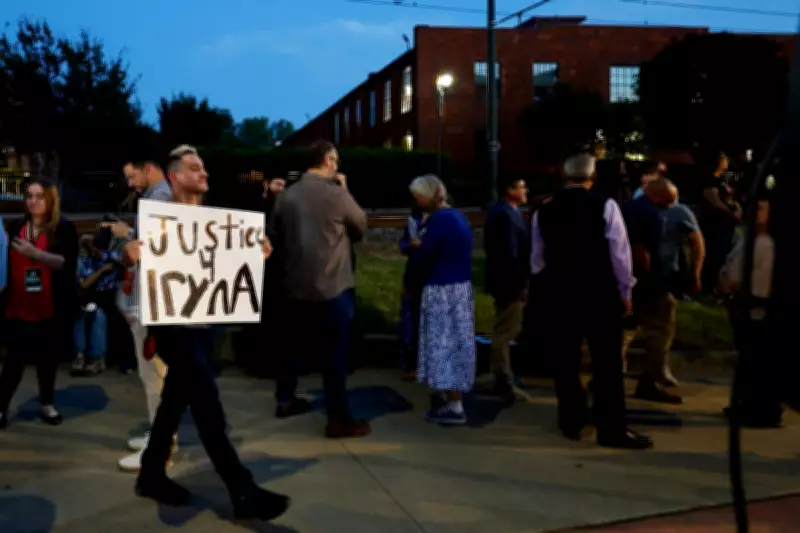
The fatal stabbing of Ukrainian refugee Iryna Zarutska in August, followed by a non-fatal attack on the same Charlotte rail network in December, has ignited significant political criticism. Both suspects face charges in state and federal courts, with their cases highlighting broader concerns about repeat offenders and mental health interventions.
GOP Representative Brenden Jones, co-chairman of the state House oversight committee, delivered a scathing assessment during the testimony. "Her life was cut short not by one individual but by a system that allowed a career criminal to roam your streets," Jones declared, directly addressing Charlotte officials. He attributed Zarutska's death to widespread "incompetence" within local governance structures.

Political Accusations and Policy Responses
Republican lawmakers, alongside former President Trump and Vice President JD Vance, have consistently blamed Democratic leadership in Charlotte and across North Carolina for what they characterize as lenient crime policies. These policies, they argue, permitted suspects with extensive criminal histories to remain free in the community.
Charlotte Mayor Vi Lyles, who testified during the hearing, had previously described Zarutska's death as a "tragic failure by the courts and magistrates." Following the incidents, city officials have implemented enhanced safety measures for the light-rail system, though these actions have done little to mollify Republican critics.
Cordial Exchanges Amidst Partisan Tensions
Despite the confrontational opening statements, committee members maintained a respectful tone during questioning of key officials including Mayor Lyles, new Charlotte-Mecklenburg Police Chief Estella Patterson, and Mecklenburg District Attorney Spencer Meriweather. The officials outlined various initiatives aimed at reducing violent crime, building upon declines recorded last year.
District Attorney Meriweather emphasized the need for additional resources, specifically more assistant prosecutors and earlier mental health interventions. He also highlighted the growing challenge of juvenile crime within the region. Police Chief Patterson expressed appreciation for the legislative attention, stating the meeting demonstrated that "the General Assembly cares about Charlotte and they want to work with us to make our city safer."
Immigration Enforcement Controversy
A significant portion of the hearing focused on immigration enforcement policies, particularly regarding Sheriff Garry McFadden's office. McFadden has faced years of criticism from lawmakers who accuse him of failing to cooperate with federal immigration agents seeking to detain individuals in his jail.
A recent state law now mandates that sheriffs honor detainers issued by Immigration and Customs Enforcement (ICE). McFadden defended his department's actions, stating jail officials "have always followed the law in notifying ICE" but noted that subsequent actions remain the responsibility of federal agents. Representative Jones countered this assertion, claiming data indicates "the sheriff's not doing his job in Mecklenburg County."
Legislative Outcomes and Ongoing Investigations
Zarutska's death has already prompted legislative action, resulting in a new state law that eliminates cashless bail for certain violent offenses and repeat offenders. The legislation also seeks to ensure more defendants undergo comprehensive mental health evaluations. Additionally, Democratic Governor Josh Stein recently issued an executive order designed to improve mental health treatment for individuals encountered by law enforcement and those within the correctional system.

Both suspects in the light-rail attacks remain in custody. Decarlos Brown Jr., accused in Zarutska's death, has been ordered to undergo psychiatric evaluations in both state and federal courts to determine his competency to stand trial. The suspect in the December attack, identified as Oscar Gerardo Solorzano-Garcia, has a history of immigration violations including convictions for illegal reentry into the United States.
Partisan Reactions and Future Implications
Following the hearing, Democratic committee members issued a statement accusing the oversight panel of engaging in "cynical partisan theatre to paint Charlotte in a negative light." This political division underscores the ongoing debate about crime prevention, immigration enforcement, and mental health policies that will likely influence future legislative sessions and local governance decisions across North Carolina.