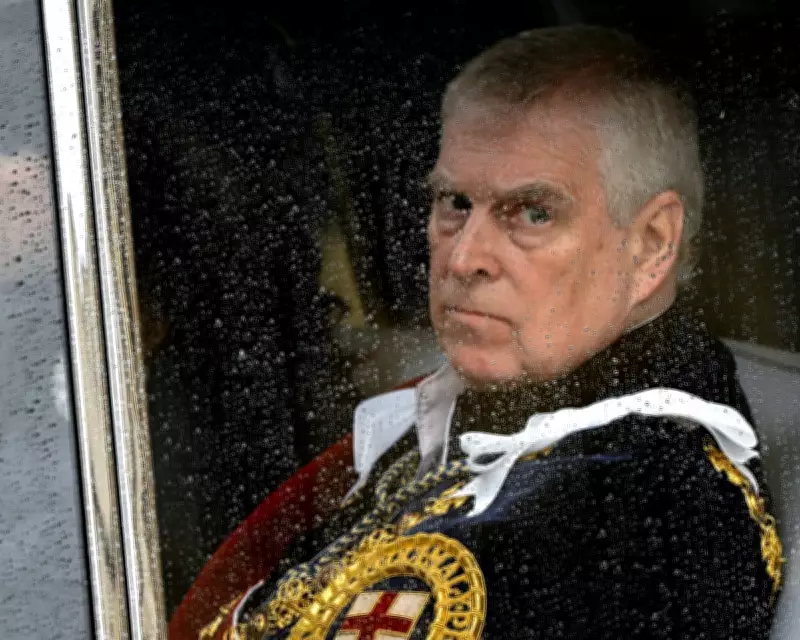
This week marked a historic moment in the United Kingdom, as for the first time since 1647, a member of the royal family was arrested. Prince Andrew, formerly known as Prince Andrew Mountbatten-Windsor, was taken into custody not over allegations of sexual misconduct, but for trade-related communications with Jeffrey Epstein, the supplier of victims in a trafficking ring, to whom he is accused of leaking state secrets. The public outrage in the United States regarding Epstein forced the government to release files, including emails now under investigation in the criminal case.
The Path to Accountability
The arrestee was accused by Virginia Giuffre of having had sex with her when she was a minor being trafficked by Epstein. He has consistently denied any wrongdoing. Until his arrest on suspicion of misconduct in public office, only his family had held him accountable for his ongoing association with Epstein after Epstein's 2008 conviction for soliciting a minor for prostitution. "Today our broken hearts have lifted," Virginia Giuffre's family stated, "at the news that no one is above the law, not even royalty."
Feminism's Transformative Power
Without feminism, the sequence of events that led to Mountbatten-Windsor's arrest would never have occurred. It serves as a powerful reminder that feminism is transformative, which is why there is significant pushback from those who benefit from old inequalities and silences. The milestones on this road include an international surge of feminist outcry about violence against women and misogyny, which gained momentum around 2013.

Early topics of debate included alleged abuses by figures such as Woody Allen and Bill Cosby. This public discourse educated society on how these crimes occur, how victims are silenced through threats, victim-blaming, non-disclosure agreements, or the realistic fear of not being believed. This new receptivity allowed long-suppressed stories to emerge, leading to the apprehension of individuals like Jeffrey Epstein, Sean Combs, Larry Nassar, and Harvey Weinstein, who had committed crimes with impunity for decades.
The Role of Earlier Feminist Waves
Older waves of feminism placed women in positions of power as judges, lawyers, editors, producers, and elected officials, equipping many men to treat women as human beings with rights. As a result, a handful of high-profile men have been charged and convicted, though these cases represent only a tiny fraction of the global pandemic of sexual abuse, silencing, and trafficking that often goes unpunished.
The MeToo Movement and Beyond
The 2017 wave of stories dubbed #MeToo is often seen as a beginning, but it was the culmination of work that started earlier in the decade. It was not the start of celebrity sexual abuse scandals, as charges against figures like Woody Allen had already been aired. By 2017, a shift occurred, with journalists like Megan Twohey, Jodi Kantor, and Ronan Farrow publishing exposes on Harvey Weinstein, opening the gates for further investigations.
This editorial support enabled Julie K. Brown at the Miami Herald to embark on an epic investigation of Jeffrey Epstein, who was at large after a light prison sentence. Brown's reports led to the downfall of Alex Acosta, Trump's former secretary of labor, and Epstein's arrest in July 2019. Thanks to Brown, who gained the trust of dozens of Epstein victims, the public learned the true scale of his crimes.
Ongoing Conflicts and Systems
The conflict between systems that grant women rights and those that deny them shapes our society. If the Trump administration and its allies have their way, the latter may prevail. Figures on the far right, including Nick Fuentes and pastors reposted by Pete Hegseth, even assert that women should not have the right to vote, alongside losing reproductive rights and other forms of equality.
Epstein's network of rape and trafficking, adjacent to exploitative industries he and Trump dabbled in, treated women and girls as commodities. According to Virginia Giuffre, Epstein viewed women as "a life-support system for a vagina." These crimes enact and enforce inequality, with many men, sometimes aided by women like Ghislaine Maxwell, celebrating their impunity in a culture of misogyny.

Exposure of Elite Networks
The Epstein files have exposed a mostly male elite focused on self-advancement and unconcerned with human rights, as they continued associations with a convicted sex offender. That many involved were financial industry titans underscores how capitalism, taken to its logical end, transforms everything into commodities, demolishing rights that interfere with profiteering.
Feminism is a long campaign to reclaim rights, freedoms, and dignity lost under patriarchy. This week, it had a tangible impact with Prince Andrew's arrest, but the work continues. As Rebecca Solnit notes, the outcry and activism of the 2010s, enabled by earlier generations of feminists, brought us to this moment, yet opposing forces remain strong.