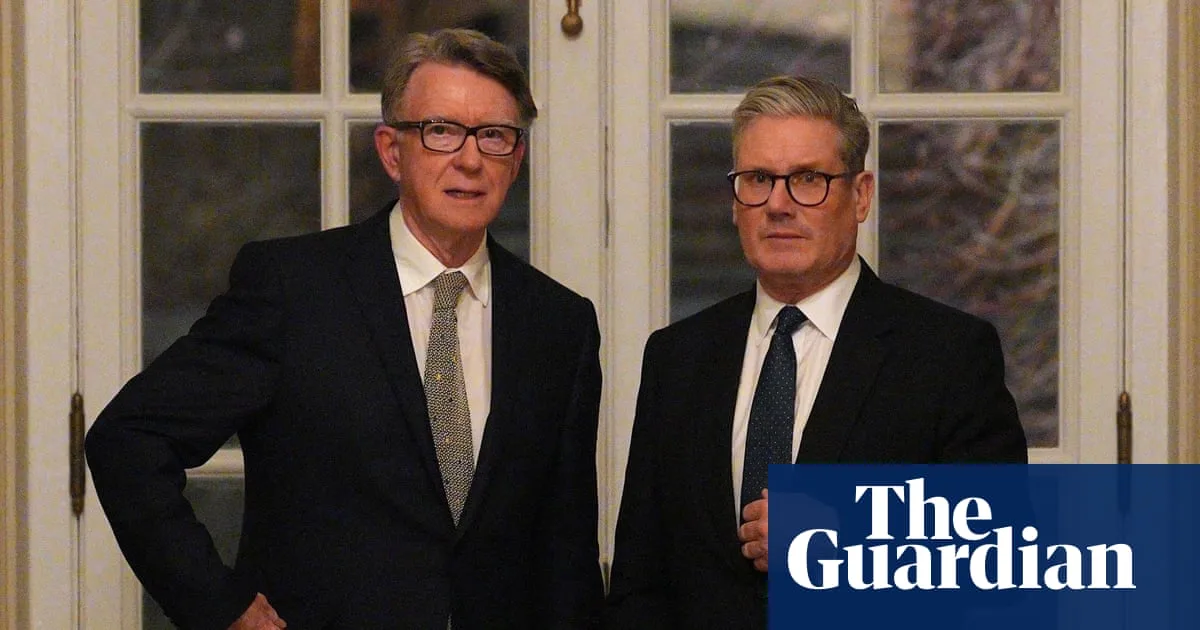
How the Epstein Scandal Has Shaken the British Government to Its Core
The political fallout from the Jeffrey Epstein scandal has now reached the heart of the British government, creating a crisis that threatens to topple Prime Minister Keir Starmer's administration. While the Epstein revelations have caused shockwaves internationally, it is in the United Kingdom where the political establishment faces its most severe test.
Mandelson's Controversial Return to Government
At the centre of the storm is Peter Mandelson, the former British ambassador to the United States whose long and turbulent political career has taken its most damaging turn yet. The 72-year-old politician, once nicknamed the "Prince of Darkness" for his mastery of political manoeuvring, now faces criminal investigation by London police over allegations he shared sensitive government information with Epstein while serving as business minister in 2009.
The allegations are particularly serious: Mandelson is accused of leaking government emails and market-sensitive information during the financial crisis, including alerting Epstein that the British government planned to prop up the struggling euro. Separate reports indicate Mandelson and his husband received payments totalling at least $75,000 from Epstein-related sources, creating what many describe as the acrid whiff of government secrets being sold.
Starmer's Fatal Judgment Call
Prime Minister Keir Starmer now faces mounting pressure over his decision to bring Mandelson back into government despite knowledge of his connections to Epstein. In a dramatic parliamentary statement, Starmer admitted he had been misled, declaring that Mandelson had "betrayed our country" and lied repeatedly about his relationship with Epstein.
"I regret appointing him," Starmer told parliament. "If I knew then what I know now, he would never have been anywhere near government." This admission has done little to quell the growing discontent within his own party, with many Labour MPs questioning Starmer's judgment and leadership capabilities.
A Pattern of Controversy
Mandelson's current troubles represent merely the latest chapter in a career marked by controversy. He was previously forced out of government twice: first in 1998 when he resigned as trade and industry secretary after failing to disclose a secret £375,000 loan for a London property from a colleague under investigation, and again in 2001 when he stepped down as Northern Ireland secretary amid allegations he helped secure a British passport for an Indian billionaire who had pledged £1 million to a project Mandelson was overseeing.
Despite this checkered history, Starmer brought Mandelson back to advise on winning the 2024 election, and following Labour's landslide victory, appointed him as ambassador to Washington. Within a year, Mandelson was fired after emails revealed his ongoing friendship with Epstein. The latest cache of documents released by the US Department of Justice has made those earlier revelations seem almost trivial by comparison.
Widespread Political Fallout
The impact of Mandelson's fall from grace has reverberated throughout the Labour party. Health Secretary Wes Streeting, who has openly expressed leadership ambitions, spoke of feeling "personally shaken" by the revelations, noting that Mandelson had mentored him as a rising parliamentarian.
"I cannot state strongly enough how bitterly that betrayal feels for those of us in the Labour party," Streeting declared. "He has fundamentally betrayed our values and the things that motivate us and the things that brought us into politics, which is public service and national interest, not self-service and self-interest."
Even Starmer's most loyal MPs have warned that his days as prime minister may be numbered, particularly after his admission that he knew about Mandelson's Epstein connections before the appointment. One MP described the atmosphere in parliament as "dark" following Starmer's statement, while another noted that "the most terminal mood is among the super-loyal."
Broader Implications for British Politics
The scandal has exposed deeper concerns about Starmer's leadership style, with internal critics accusing him of lacking political and intellectual core, making him vulnerable to manipulation by others. The story of how Morgan McSweeney, Starmer's chief adviser, persuaded him to appoint the already compromised Mandelson to one of government's most sensitive positions has become emblematic of these concerns.
This political turmoil unfolds against a backdrop of rising support for Nigel Farage's hard-right Reform party, which has led opinion polls for months. For voters beyond Westminster's political intrigue, the main message may be simply that corruption within the British establishment runs deeper than previously acknowledged.
International Connections and Continuing Investigations
The Epstein scandal continues to reveal connections between powerful figures on both sides of the Atlantic. While Prince Andrew remains the best-known Briton entangled in Epstein's web, having been stripped of his royal titles last year, the latest documents have brought renewed scrutiny to other high-profile figures.
Richard Branson referred in emails to Epstein's "harem," while new photographs show Prince Andrew in compromising positions that further damage the monarchy's reputation. Mandelson himself served on the privy council until recently, a ceremonial committee that advises the king, highlighting how deeply Epstein's connections penetrated British institutions.
In the United States, Deputy Attorney General Todd Blanche has declared that last Friday's release of approximately 3.5 million files means prosecutors' review of the Epstein case "is over," though survivors continue to demand further investigation. In Britain, where Mandelson has now quit the Labour party, the political fallout may have only just begun, with the scandal threatening to reshape the country's political landscape in fundamental ways.