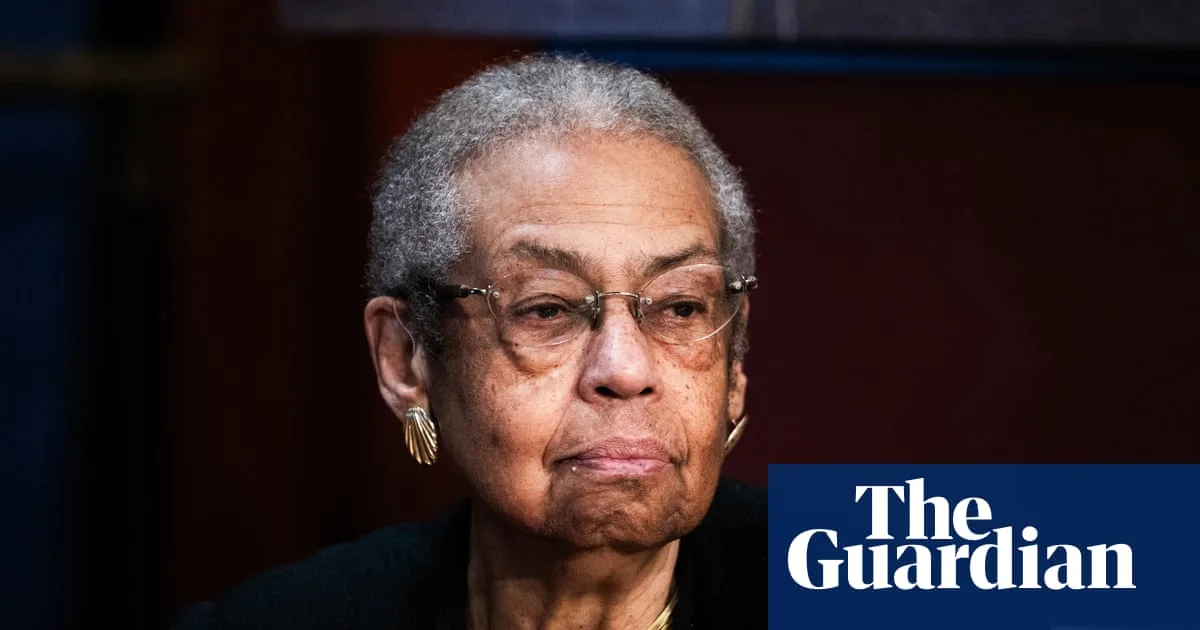
Eleanor Holmes Norton, the longstanding non-voting House delegate representing Washington DC, has formally declared she will not pursue another term in Congress. The 88-year-old Democrat made the announcement on Tuesday, signalling the conclusion of a remarkable 33-year tenure defined by relentless advocacy for the district's rights and statehood.
A Career Defined by Advocacy and Principle
In a detailed post on the social media platform X, Norton reflected on her decades of service. "With fire in my soul and the facts on my side, I've raised hell about the injustice of denying 700,000 taxpaying Americans in DC the same rights given to residents of the states for 33 years," she stated. "Now, with pride in our accomplishments, gratitude to DC, and confidence in the next generation, I announced I'll retire at the end of this term."
Maximising Limited Influence
First elected to the House in 1990, Norton became renowned for utilising the constrained powers of her position to their fullest extent. As one of six non-voting delegates, she could introduce legislation and participate in committee votes, though she was barred from voting on the House floor. This did not deter her from becoming a formidable and persistent voice for her constituents.
Her tenure began during a particularly challenging period for the nation's capital. Washington DC was grappling with significant population decline, chronic disinvestment, and the devastating emergence of the crack cocaine epidemic. Norton proved instrumental in compelling often-distracted federal lawmakers to approve policies that contributed to the city's gradual turnaround and revitalisation.
The Unwavering Fight for Statehood
A central, defining mission of her career was the pursuit of statehood for Washington DC. Alongside the city's overwhelmingly Democratic political leadership, Norton championed the cause for granting the district's approximately 700,000 residents full voting representation in Congress. Despite paying federal taxes and possessing three electoral votes in presidential elections, DC lacks voting members in the US House and Senate, a population larger than that of states like Wyoming or Vermont.
Norton was present in Congress when the House passed a historic bill in 2021 to establish most of Washington DC as the 51st state. However, the legislation faced vehement Republican opposition and ultimately stalled in the Senate, lacking the necessary support to become law.
Navigating Later Challenges and Legacy
In her final months in office, questions regarding her capacity to continue serving emerged. Once celebrated as a forceful and dynamic orator, observers noted she increasingly relied on reading from prepared scripts during committee hearings. In 2025, she encountered a primary challenge from a city council member.
Further scrutiny arose following a report by local broadcaster NBC Washington, which cited a police report describing Norton as being in the "early stages of dementia" after she fell victim to a scam, losing over $4,400. These developments cast a shadow over the concluding chapter of her long public service.
Eleanor Holmes Norton's retirement marks the end of an era for Washington DC's representation. Her career was characterised by a dogged determination to advance the district's interests, combat federal overreach, and tirelessly argue the moral and practical case for DC statehood, leaving a complex and impactful legacy for her successors to inherit.




