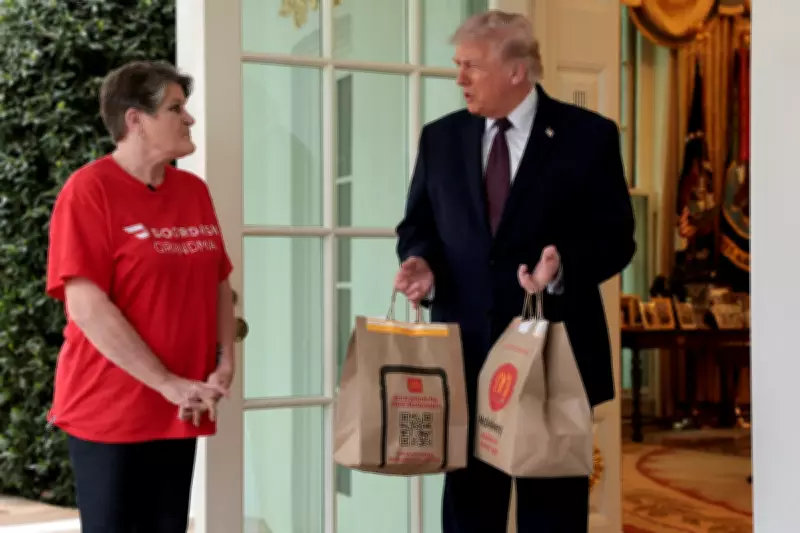
In an unusual turn of events at the White House, President Donald Trump received a McDonald's delivery from a DoorDash driver at the Oval Office on Monday, April 13, 2026. Following the delivery, Trump proceeded to brief reporters on the ongoing Iran war, with the delivery driver standing beside him during the impromptu press conference.
Iran War Update and Nuclear Negotiations
Standing next to the driver, whom he referred to as "DoorDash Grandma," Trump provided an update on the collapsed peace talks with Iran. He emphasized that nuclear weapons remained the primary "sticking point" in negotiations over the weekend. Additionally, Trump discussed efforts to reopen the Strait of Hormuz, a critical waterway for global oil shipments, highlighting the strategic importance of the region in the conflict.
AI-Generated Image Controversy
During the briefing, Trump was questioned about an AI-generated image he had posted and subsequently deleted from his Truth Social platform. The image depicted him as Jesus Christ, but Trump claimed he believed it showed him as a doctor. This incident sparked further discussion about the use of artificial intelligence in political messaging and its potential implications for public perception.

Policy Promotion and Personal Invitations
Aside from delivering Trump's lunch, the DoorDash driver was present to promote Trump's initiative to end taxes on tipped wages. The driver expressed strong support for this measure, which aims to provide financial relief for service industry workers. In a gesture of appreciation, Trump invited the driver and her sick husband to an upcoming UFC match at the White House. He also extended an invitation for her to come inside the Oval Office, showcasing a personal touch amid the formal proceedings.
The event underscored the blending of everyday activities with high-stakes political discourse, as Trump seamlessly transitioned from a fast-food delivery to addressing international conflicts and domestic policies. This unique briefing highlighted the president's unconventional approach to governance and media engagement, drawing attention from both supporters and critics alike.