
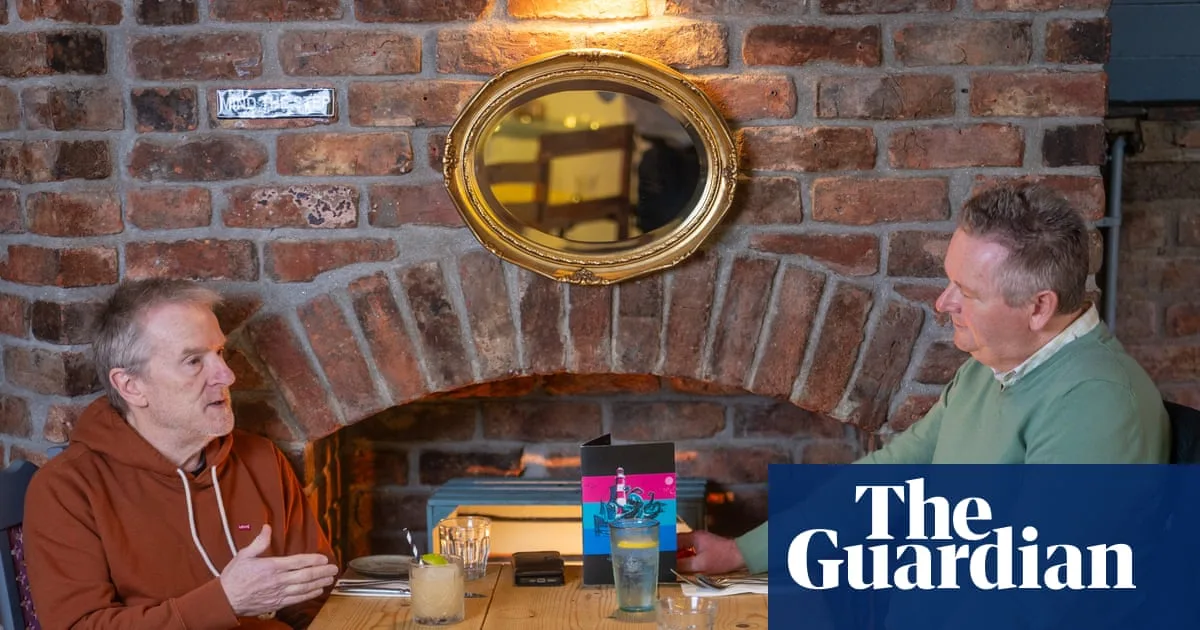
Two south-westerners who share a passion for boats sat down for a meal to discuss politics, finding common ground on some issues while sharply disagreeing on others. Grant, a former bottle diver who sold his collection for $28,000 and bought a home by age 18, voted for Sir Keir Starmer in 2024. Peter, a lifelong dinghy sailor who has historically voted Conservative, spoiled his ballot paper in the same election, saying no one was worthy of his vote.
Over black bream with tempura prawns and mocktails, the pair debated university tuition. Grant argued that student loans create a psychological barrier for bright students from less privileged backgrounds. 'For every bright person who doesn't get where they need to go, we all lose,' he said, calling for free university education. Peter countered that too many people attend university, describing institutions as 'bloated,' with vice-chancellors on 'massive salaries' and graduates failing to secure well-paid jobs. He argued for reducing student numbers, saying society does not need them.
On the NHS, both agreed it was a cherished institution. Grant praised it as a 'levelling device' that is 'partially broken' due to exhaustion. Peter took an economic view, suggesting that those who can afford private hip or knee replacements should do so to relieve pressure on the health service. However, Grant agreed with Peter that simply throwing more money at the NHS is not the answer, attributing its malaise to a 'sick society' rather than a broken machine. Peter blamed 'middle managers protecting their budgets' and accountants for the problems.
The conversation also touched on welfare. Grant, who described being on the dole as 'psychologically bad,' said he has no problem if the benefits system is abused, since everything gets abused. Peter, while supporting a welfare state, argued that the system should encourage people to work and make it easier to move between welfare and employment. Despite their differences, the pair parted on good terms, with Peter inviting Grant to visit his industrial estate. 'If you put two people in a room who both like boats, that's bound to happen,' Peter said.




