

Democrats Escalate Calls for Homeland Security Secretary's Impeachment
Congressional Democrats are intensifying pressure on Homeland Security Secretary Kristi Noem, with more than 150 House members now supporting a resolution for her impeachment. This dramatic escalation follows two fatal shootings by federal immigration officers in Minneapolis during the Trump administration's ongoing border enforcement operations.
Democratic Leadership Issues Stark Ultimatum
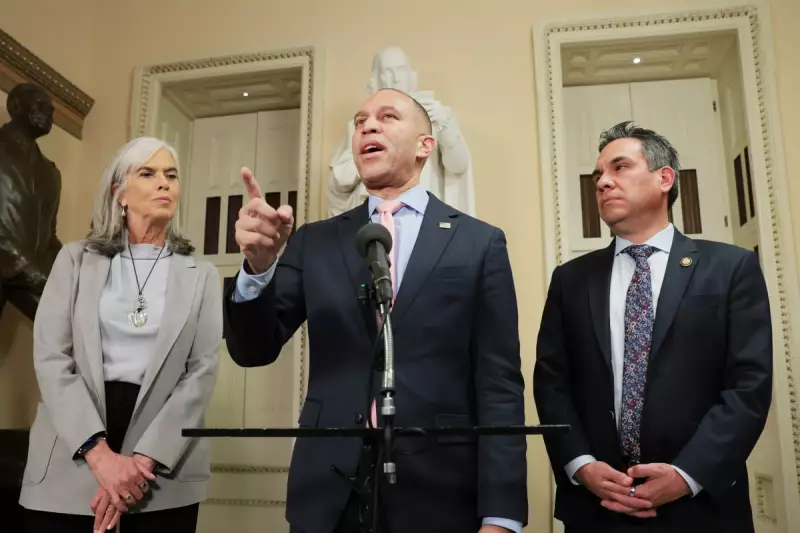
House Democratic Leader Hakeem Jeffries, alongside Minority Whip Katherine Clark and House Democratic Caucus chair Pete Aguilar, has delivered a forceful joint statement demanding immediate action. "We can do this the easy way or the hard way," they declared, warning that Noem "should be fired immediately, or we will commence impeachment proceedings."
The political confrontation has reached critical levels as Democratic leaders explicitly link funding for the Department of Homeland Security to substantial policy changes. With a crucial vote approaching on a $1.3 trillion government spending package that includes DHS funding, Senate Democrats have declared they will not support the allocation without implementing new guardrails for immigration enforcement operations.

Constitutional Concerns and Fatal Incidents
The impeachment push gained significant momentum following two separate fatal shootings in Minneapolis involving federal officers. Customs and Border Protection agents fatally shot Alex Pretti, while an Immigration and Customs Enforcement officer previously shot and killed Renee Good. These incidents have sparked outrage among Democratic lawmakers who accuse Noem of constitutional violations.
Representative Jamie Raskin, the top Democrat on the House Judiciary Committee, has been particularly vocal in his criticism. He asserts that under Noem's leadership, Homeland Security has "unleashed a shocking assault on the most basic Constitutional rights and freedoms of the American people." Raskin further alleges that Noem immediately labeled both victims as "domestic terrorists" and engaged in systematic efforts to obstruct legitimate investigations into their deaths.
Republican Resistance and White House Support
Despite the growing Democratic pressure, the impeachment effort faces substantial political hurdles in the Republican-controlled Congress. The White House has firmly backed Noem, with President Trump insisting she is "doing a very good job" and dismissing calls for her resignation. White House press secretary Karoline Leavitt reinforced this position, stating Noem enjoys "the utmost confidence and trust of the president of the United States."
Department of Homeland Security officials have dismissed the impeachment threats as political theatre, accusing Democratic lawmakers of focusing on "showmanship and fundraising clicks" rather than substantive policy discussions. Meanwhile, the administration has quietly reshuffled leadership for the Minnesota operation, deploying border czar Tom Homan to Minneapolis while border patrol commander Greg Bovino is expected to leave the state imminently.
Funding Battle and Government Shutdown Threats
The impeachment controversy coincides with a looming budgetary confrontation that could trigger another government shutdown. House Democratic leaders have issued stark warnings about Republican intentions, stating: "Republicans are planning to shut large parts of the government down on Friday so that the DHS killing spree unleashed in Minnesota can continue throughout America."
They condemned this approach as "immoral" and demanded criminal prosecution for federal agents who have broken the law, cessation of paramilitary tactics, and redirection of taxpayer funds toward making life more affordable for Americans rather than what they describe as "kill[ing] them in cold blood."

As the political standoff intensifies, President Trump has reportedly expressed private concerns about potential impeachment hearings should Democrats regain congressional majority in the upcoming midterm elections. The situation represents one of the most significant constitutional confrontations of the current administration, with profound implications for immigration policy, executive authority, and inter-branch governmental relations.





