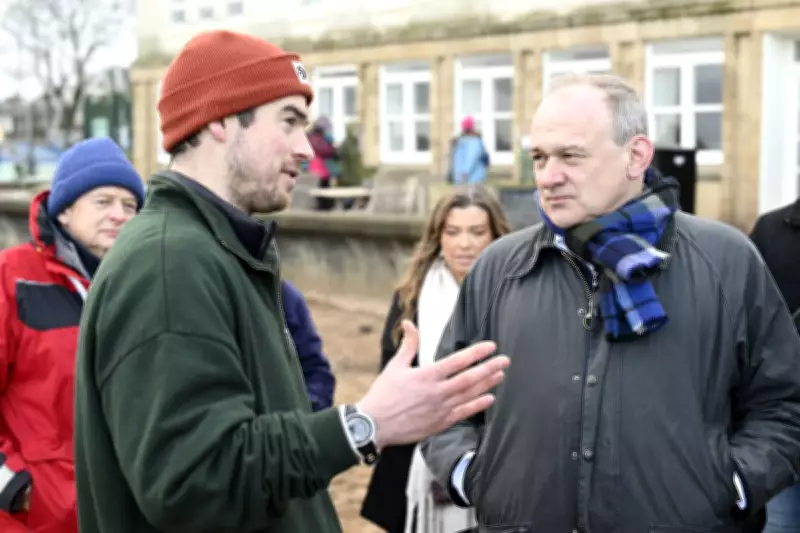
Sir Ed Davey, the UK leader of the Liberal Democrats, has firmly stated that his party's support for the Scottish Government's Budget should not be interpreted as a precursor to a potential alliance with the SNP following the upcoming Holyrood election. This declaration came during a visit to Edinburgh on Friday, where he addressed media inquiries about the implications of the recent budgetary agreement.
Budget Deal Secures Key Concessions
The Scottish Liberal Democrats announced on Thursday that they had successfully negotiated a deal with the Scottish Government, which includes significant enhancements to the Budget. Notably, the agreement secures increased funding for hospices and raises the rates relief for hospitality firms from the initially proposed 15% to 40%. This move is seen as a major win for the business and care sectors in Scotland.
Strategic Negotiations Amidst Political Landscape
Sir Ed Davey emphasized that the Budget was already set to pass without the Liberal Democrats' support, as Scottish Labour had previously announced its intention to abstain, effectively allowing the Budget to proceed through its three parliamentary stages. However, the Liberal Democrats leveraged their negotiating skills to extract concessions, highlighting their ability to influence policy even in a non-pivotal role.

"We got a hugely brilliant deal for Scottish business and the care and hospice sector here – I'm really proud of that," Sir Ed stated during an interview with the Press Association on Edinburgh's Portobello Beach. He added, "The Budget was going to go through, because Labour had said they were going to abstain, but we still managed to use our skill to negotiate a brilliant deal, particularly on business rate relief for the hospitality sector."
Denial of Future Cooperation with SNP
When questioned about whether this deal signals potential future cooperation with the SNP, Sir Ed Davey responded with a definitive "No." He underscored that the Liberal Democrats' success in securing the deal sets them apart from other opposition parties, which he claimed had failed to achieve similar outcomes.
"The failure of the Scottish Conservatives is huge," he remarked. "Scottish Labour failed, the Scottish Greens failed. It was the Liberal Democrats who managed, even though this Budget was going to go through without our support, to get something for Scottish business, and I'm so proud of (Scottish Lib Dem leader) Alex Cole-Hamilton and the team in Holyrood."
Implications for Post-Election Dynamics
At Holyrood, where no single party holds a majority, the largest party after May's election will need to seek support from other groups to ensure its leader becomes first minister and can govern effectively. This context makes the Liberal Democrats' stance particularly significant, as they have clarified their willingness to engage in issue-based negotiations without committing to broader alliances.
The deal demonstrates the Liberal Democrats' strategic approach to policymaking, focusing on tangible benefits for constituents while maintaining political independence. As the election approaches, this episode may influence how parties position themselves in potential coalition talks, with the Liberal Democrats asserting their role as pragmatic negotiators rather than ideological partners.