Foreign Secretary Condemns Opposition Parties' Stance on NATO Alliance
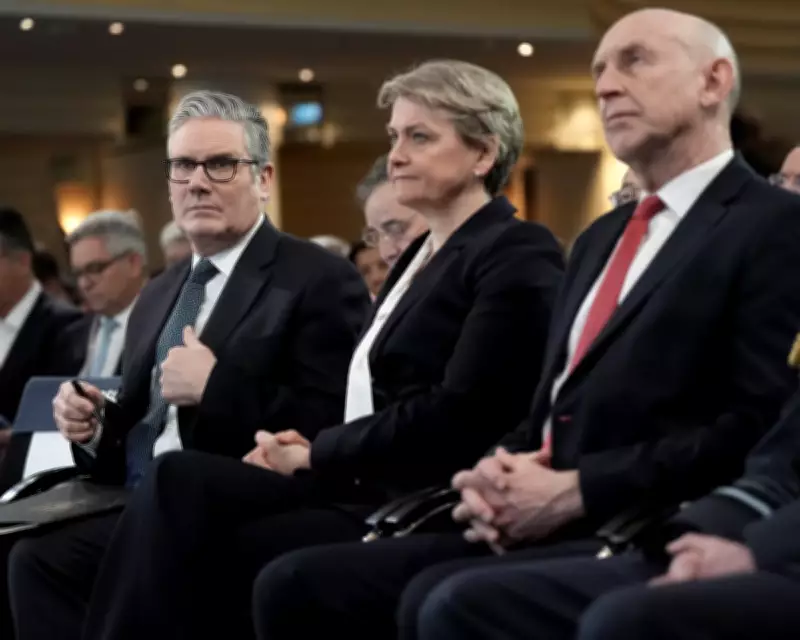
Foreign Secretary Yvette Cooper has launched a sharp critique against Reform UK and the Green Party, accusing both political groups of actively undermining Britain's fundamental commitment to the NATO military alliance. Cooper delivered these pointed remarks during her attendance at the prestigious Munich Security Conference over the weekend, where she was joined by Prime Minister Keir Starmer and Defence Secretary John Healey.
Labour's National Security Offensive
In a comprehensive interview with Sky News, Cooper articulated that Britain's national security is intrinsically dependent on maintaining robust international partnerships. "Our national security depends on us having partnerships abroad that make us strong and we have seen both Reform and the Greens undermine that commitment to the NATO alliance," she stated unequivocally. This criticism aligns directly with Prime Minister Starmer's own conference speech, where he labelled Labour's populist rivals as being "soft on Russia and weak on NATO."
Cooper specifically targeted Reform UK, asserting that the party has consistently failed to take the grave threat posed by Russia with appropriate seriousness. She highlighted the party's refusal to investigate allegations of Russian interference within its own ranks, a point underscored by the conviction of former MEP and Nigel Farage colleague Nathan Gill. Gill was jailed for accepting bribes from a suspected Russian asset to promote pro-Kremlin viewpoints.

Historical Aggression and Current Threats
"They have too often dismissed the aggression and the threat from Russia even at the point where we have seen lethal poisons being used again as it was in Salisbury," Cooper added, referencing the 2018 Novichok attack in the English city. This criticism extends to the recent, widely condemned murder of Russian opposition leader Alexei Navalny, which Britain and other nations have attributed to Russian state actors using similar poisonous substances.
This renewed Labour offensive on national security credentials follows controversial comments from Reform UK figurehead Nigel Farage. On BBC Radio 4's Political Thinking podcast, Farage reiterated his longstanding claim that Western expansion of NATO and the EU provoked Russia's invasion of Ukraine. He described the 2014 protests that ousted pro-Russian Ukrainian President Viktor Yanukovych as a "street coup" that destroyed democracy by pulling Ukraine westward.
Green Party's Ambiguous NATO Position
Labour's criticisms also encompassed the Green Party, whose co-leader Zack Polanski presented a notably ambiguous stance on the alliance. While Polanski told Sky News he would commit to NATO's foundational Article 5—which mandates collective defence if a member state is attacked—he conspicuously left open the possibility of the UK ultimately leaving the alliance altogether.
"If we're in NATO as we are, then it's clear that we need to sign up to the articles. And Article 5 says an attack on one is an attack on all," Polanski stated. However, he has previously advocated for a UK exit from NATO, reduced spending on American weaponry, and a broader dismantling of the UK-US defence partnership, although these views do not constitute official Green Party policy.
This political clash at the Munich Security Conference underscores the deepening fractures in UK foreign policy discourse as the nation approaches a general election. The Labour government is positioning steadfast support for NATO and a hardline stance against Russian aggression as non-negotiable pillars of national security, while opposing parties face accusations of fostering vulnerability through scepticism of the Western alliance.